


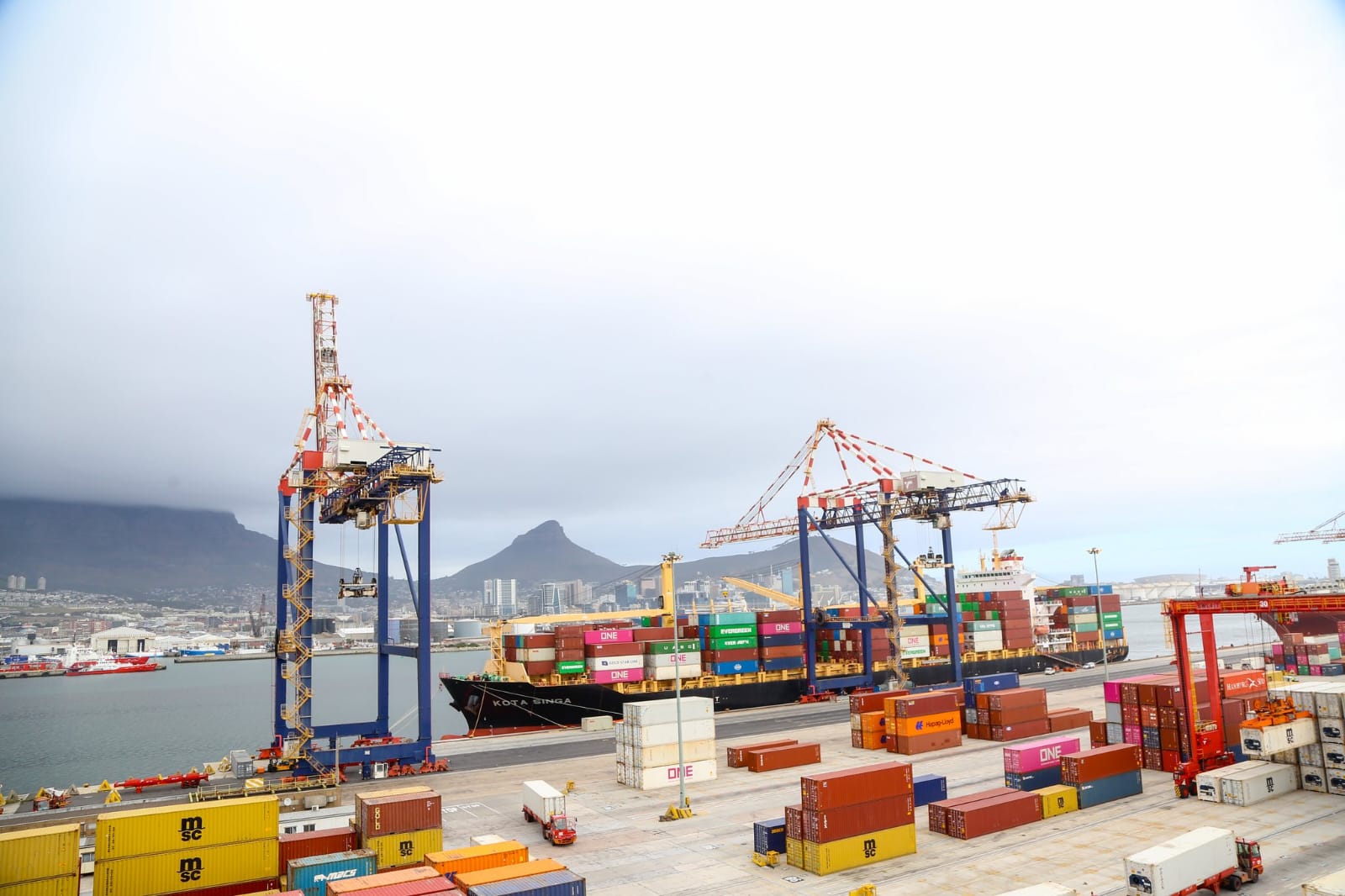
How does Durban balance its ambitions as a major African maritime hub with the need to protect one of its most valuable natural and tourism assets? That question, posed by Terry Hutson in a recent Africa PORTS & SHIPS feature, cuts to the heart of a strategic dilemma facing South Africa’s busiest port city.
Durban remains the country’s principal container gateway and a critical node for Southern African trade. Its efficiency—or lack thereof—ripples through manufacturing, automotive supply chains, retail, and the broader economy. Yet the indefinite postponement of the proposed Dig-Out Port has left planners focused on expanding the existing harbour. This approach raises difficult choices: how far can the current facility grow, how much additional shipping traffic can it absorb, and what long-term consequences will that impose on Durban Bay and its waterfront?
There is little doubt that Durban needs a stronger, more competitive port. Persistent congestion, vessel queues measured in days or weeks, equipment constraints, and landside bottlenecks have repeatedly damaged the city’s reputation and raised costs for exporters and importers. Recent private-sector involvement—notably the ICTSI partnership at what is now Durban Gateway Terminal—was intended to reverse years of underperformance. Early results have been mixed: throughput has improved in places, but backlogs and operational friction persist, underscoring that capacity and reliability remain unfinished business.
Port development, however, cannot be considered in isolation from the wider city and its economic future. Tourism is an important part of that picture. During the first five months of 2026, eThekwini recorded approximately 1.8 million domestic trips, generating an estimated R14.5 billion in visitor spending. The waterfront, beaches, harbour character, and the bay itself contribute directly to that appeal. Treating Durban Bay merely as spare space for berths, yards, and truck routes would be short-sighted. The harbour is an industrial asset, but it is also part of the city’s public landscape and identity.
The challenge is therefore not simply to accommodate more ships and cargo. It is to develop a sustainable maritime strategy that recognises the value of the port, the bay, and the city beyond the harbour gates. Expanding container capacity around the Point or intensifying activity along the former Victoria Embankment (Margaret Mncadi Avenue) may solve one problem while creating others: heavier road traffic, diminished waterfront amenity, reduced recreational and commercial potential, and a less attractive urban environment for residents and visitors alike. Congestion transferred from the quay to city streets is not progress; it is a costly transfer of the same problem.
The shelved Dig-Out Port concept, once planned for the former Durban International Airport site, was ambitious precisely because it offered room for growth outside the constrained existing harbour. Its postponement reflected legitimate concerns over cost, financing, and environmental impact. Yet the underlying question remains: is indefinite intensification of the current port the only realistic path, or should South Africa periodically re-examine whether a greenfield or expanded alternative better serves long-term national interests while preserving Durban’s distinctive urban and natural assets?
A coherent strategy would integrate several strands. First, continued operational recovery and targeted capacity upgrades at the existing terminals, supported by private expertise and clear performance accountability. Second, parallel investment in rail and road corridors so that additional cargo can move efficiently inland rather than clogging local streets. Third, deliberate protection and enhancement of the waterfront as a mixed-use public asset rather than an afterthought. Fourth, a realistic assessment of whether—and when—a new or substantially expanded facility outside the bay becomes necessary and feasible.
Durban does not face a binary choice between port and city. It faces a planning choice about coexistence. Ports and cities have long lived in productive tension; the most successful ones manage that tension deliberately rather than allowing one function to erode the other. A competitive regional port and a liveable, visitable waterfront city are both legitimate goals. The test of policy will be whether Durban can pursue both without irreversibly damaging the bay that gives the city much of its character and economic diversification potential.
The question Hutson raises is therefore not merely technical or environmental. It is strategic: what kind of port city does Durban intend to be in twenty or thirty years? One defined primarily by throughput numbers, or one that balances maritime efficiency with the broader urban and tourism value of its bay? Answering that question honestly—and planning accordingly—will determine whether Durban strengthens its position as Southern Africa’s premier gateway or gradually constrains the very city it is meant to serve.