


How quickly it processes information and moves cargo is becoming just as important.
A modern port is not judged by its cranes and berths alone. How quickly it processes information and moves cargo is becoming just as important. At the Port of Mombasa, the next phase of development is taking shape in automated gates and computer systems designed to make cargo movement faster and more efficient.
Kenya Ports Authority PLC Chief Executive Officer Capt. William Ruto is keen to see this change take root. Having overseen significant investment in port infrastructure, he is now pushing technology to catch up with the physical improvements made across KPA facilities.
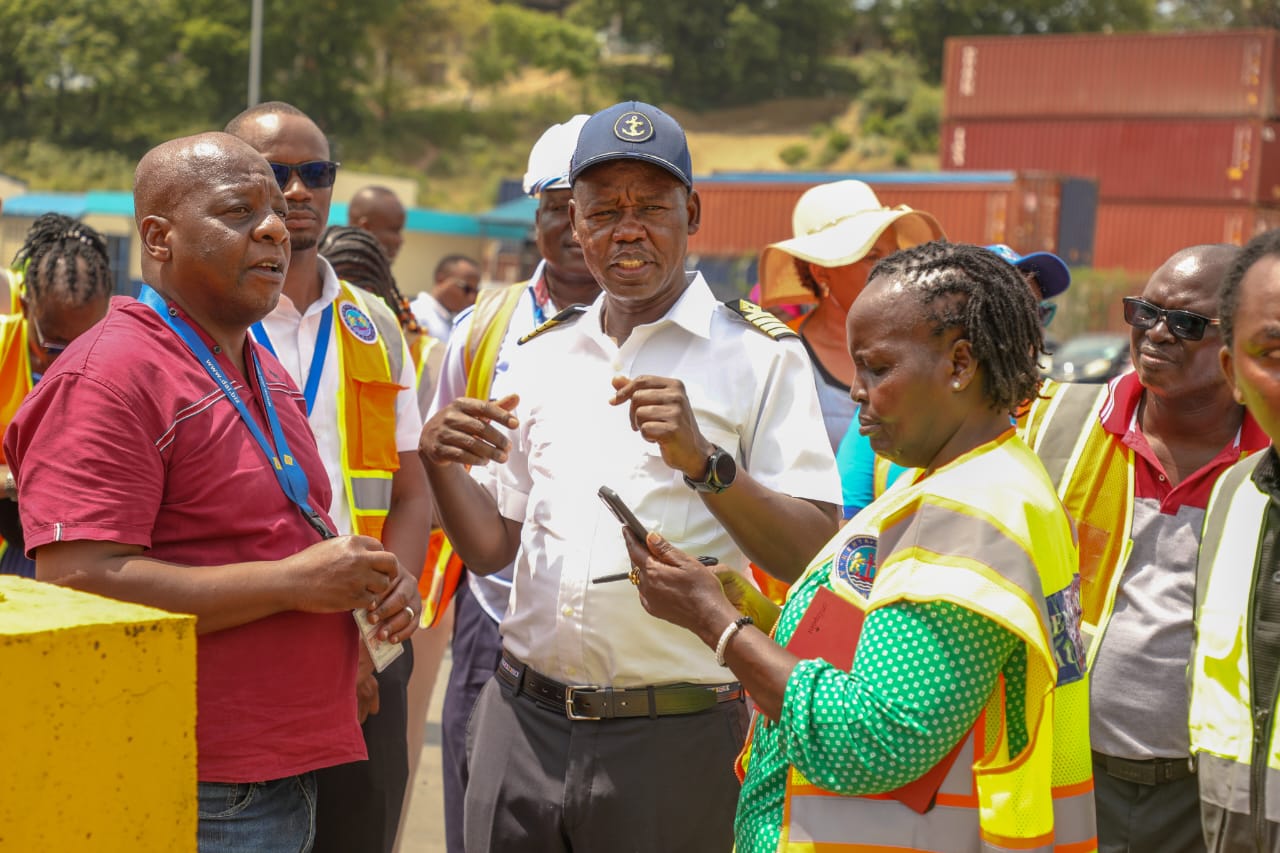
During an inspection of the Smart Gate automation system, Capt. Ruto reviewed preparations for its rollout at Gate 24. The system is designed to replace manual checks with digital verification, speeding up truck entry and exit, reducing delays, and supporting round-the-clock port operations. But Smart Gate is only part of the plan. The CEO also met more than 60 staff members undergoing training on the new Terminal Operating System (TOS), which will help manage cargo movements, berth and yard planning, container tracking, gate operations, and billing.
This matters because improving one part of port operations is not enough. A truck may pass through a gate quickly, but if its cargo details are delayed or the receiving yard is not ready, the time saved at the gate can easily be lost elsewhere. The bigger ambition is to make different parts of the operation work together. KPA has invested heavily in expanding its physical capacity through new berths, equipment, and cargo-handling facilities. That is why the digital transformation agenda extends beyond the TOS and Smart Gates.
From Concrete to Code
The Port of Mombasa has long been East and Central Africa’s primary maritime gateway, serving Kenya and a hinterland of more than 250 million people across Uganda, Rwanda, Burundi, South Sudan, the Democratic Republic of Congo and beyond. Physical expansion has delivered results: higher container throughput, improved berth productivity, new equipment including twin-lift ship-to-shore cranes, and projects such as Berth 19B (adding roughly 300,000 TEUs of capacity), the Second Container Terminal phases, and the Dongo Kundu Special Economic Zone berth. Cargo volumes have grown steadily, with transit cargo accounting for a significant share of throughput.
Yet demand has outpaced capacity in key areas. Up to 5,000 trucks can pass through the port daily. Manual processes at the gates create queues, congestion on surrounding roads, and variability in truck turnaround times. Separate recording by KPA, the Kenya Revenue Authority and other agencies multiplies friction. A modern port’s competitiveness is increasingly measured in dwell times, predictability, and the seamlessness of the end-to-end logistics chain rather than quay length alone.
Capt. Ruto has framed the challenge clearly in regional and international forums: competition is shifting from individual seaports to entire logistics corridors. The winners will be those that integrate infrastructure, technology, and operations into a reliable system.
Smart Gate and the TOS form the practical response. Gate 24 (and related work at Gate 25) handles a large share of traffic. Automation replaces fragmented manual checks with a single digital platform that integrates with KRA’s Integrated Customs Management System. The result should be faster verification, better security, reduced human intervention, and support for continuous operations. Parallel training on the TOS aims to give planners and operators a unified view of berths, yards, containers, gates and billing. When these systems talk to each other, a truck that clears the gate efficiently is more likely to find the yard ready and the cargo data already processed.
Complementary investments reinforce the shift. A Sh1 billion Vessel Traffic Management and Information System provides real-time vessel tracking, radar, communications and environmental monitoring across key sites, improving marine safety and resource allocation. Collaboration with KRA includes the Advanced Cargo Declaration system, which enables pre-arrival documentation and processing. Partnerships with development partners such as TradeMark Africa support the gate automation, while discussions with ports such as China’s Nanjing Port explore knowledge exchange on automation, data analytics and paperless processes. An ERP migration toward a more modern enterprise platform is also underway as part of the broader digital backbone.
The Logic of Integration
Isolated improvements rarely deliver their full potential. A faster gate without matching yard visibility or billing accuracy simply moves the bottleneck downstream. Conversely, sophisticated planning software is underused if trucks still queue for hours at the entrance. The real prize is systemic: shorter truck turnaround times, lower logistics costs for importers and exporters, greater transparency that reduces opportunities for rent-seeking, improved security through better tracking, and the ability to sustain 24/7 operations when demand requires it. These gains matter for Kenya’s exporters—tea, fresh produce and other time-sensitive goods already benefit from green channels and prioritised handling—and for the region’s landlocked economies that depend on predictable transit times.
There are risks and hard requirements. Technology projects of this scale demand disciplined change management. Staff must be trained not only in new interfaces but in new ways of working; the 60-plus officers already in TOS training represent a start, not the finish. Integration between KPA, KRA and other agencies must be deep and reliable rather than superficial. Cybersecurity and data integrity become critical as more processes move online. Physical capacity constraints will not disappear overnight; digital tools can optimise what exists and buy time, but sustained investment in berths, equipment and hinterland connections remains essential. Success also depends on the wider port community—shipping lines, freight forwarders, CFS operators and transporters—adopting the new processes and providing feedback that improves them.
A Strategic Imperative
Capt. Ruto’s emphasis on technology catching up with infrastructure is timely. Global shipping continues to evolve toward larger vessels, tighter schedules and higher expectations for visibility and reliability. Regional rivals are also modernising. Mombasa’s advantage will rest less on any single crane or berth and more on its ability to move cargo and information with speed and predictability. The Smart Gate pilot, TOS rollout, VTMIS and related digital efforts are not glamorous in the way a new quay wall can be, yet they determine whether the physical investments already made deliver their full economic return.
The test will be in the metrics that matter to users: average truck turnaround time, cargo dwell time, schedule reliability, and the cost of moving a container from ship to hinterland. Early indicators—collaboration between KPA and KRA, staff training under way, and the explicit recognition that partial digitalisation is insufficient—are encouraging. Sustained leadership, rigorous implementation, continuous stakeholder engagement and willingness to adjust based on operational data will decide whether Mombasa consolidates its position as the region’s leading maritime trade hub or merely keeps pace.
A modern port is indeed judged by more than its steel and concrete. At Mombasa, the shift from expanding capacity to orchestrating information and movement is under way. Getting it right will determine how competitively Kenya and its neighbours trade in the years ahead.