


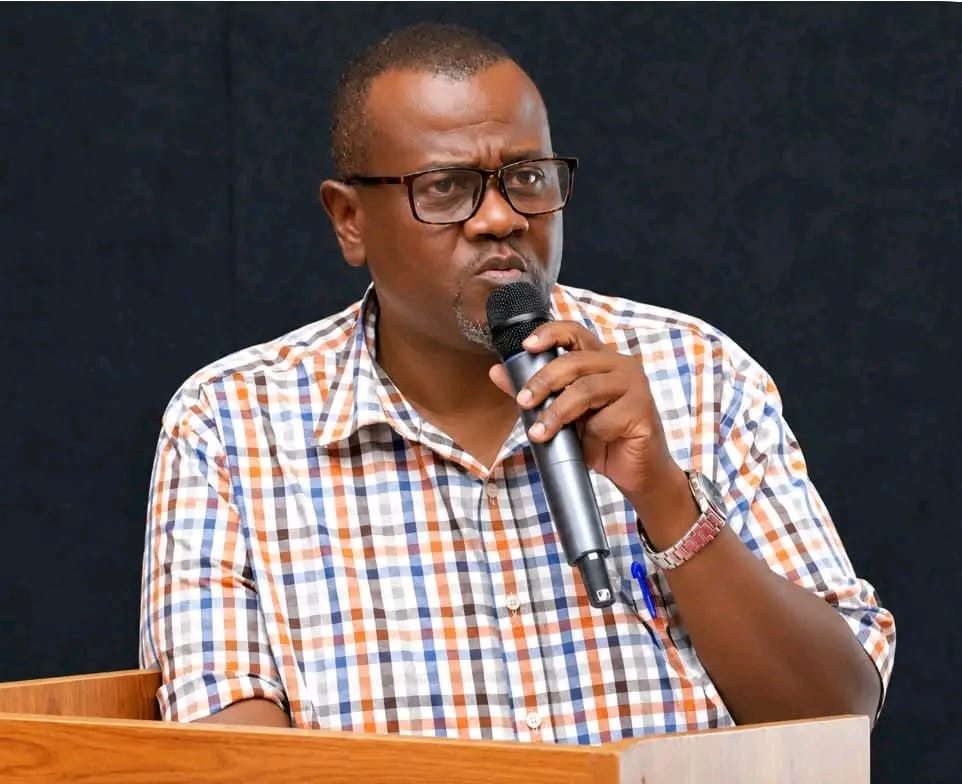
The Kenya Maritime Authority (KMA) is hosting a Trade Facilitation Workshop at the KMA Auditorium, bringing together about 60 clearing and forwarding agents, mainly from the Kenya International Freight and Warehousing Association (KIFWA). The workshop was officially opened by Mr. Juma Ahmed, Deputy Director, Ports and Shipping Services, on behalf of the KMA Director General.
Participants are being equipped with practical skills in cargo documentation, clearance, marine insurance, claims management and the use of digital trade systems. The forum also brings together key stakeholders, including KRA, KPA, KenTrade, KEBS, Kenya Railways, the Insurance Regulatory Authority and the Kenya Ships Agents Association.
With the Port of Mombasa handling a record 45.45 million tonnes of cargo in 2025, the workshop underscores the need for efficient, predictable and transparent cargo clearance.
“Accurate documentation, timely submissions and sound professional advice can prevent costly problems before cargo arrives,” the KMA Director General said.
KMA remains committed to strengthening professional capacity, enhancing stakeholder collaboration and supporting seamless trade through the Port of Mombasa.
Why This Workshop Matters
Clearing and forwarding agents are the human interface between global supply chains and Kenya’s domestic economy. When they get documentation right, cargo moves. When they get it wrong, containers sit at the port, demurrage costs mount, and the ultimate price is paid by consumers and businesses. The workshop’s focus on practical skills—cargo documentation, clearance procedures, marine insurance, claims management, and digital trade systems—targets exactly where the friction originates.
The presence of KRA, KPA, KenTrade, KEBS, Kenya Railways, the Insurance Regulatory Authority, and the Kenya Ships Agents Association is not incidental. Trade facilitation failures rarely stem from a single agency. They emerge from coordination gaps between institutions—documents required by one agency but unknown to another, digital systems that don’t talk to each other, or procedures that agents learn through trial and error rather than structured training. By convening all stakeholders in one room, KMA is addressing the coordination problem directly.
The Mombasa Context
The Port of Mombasa’s record 45.45 million tonnes of cargo in 2025 is both an achievement and a warning. Volume growth without corresponding improvements in clearance efficiency creates bottlenecks that undermine competitiveness. Regional ports—particularly Dar es Salaam and Djibouti—are competing for transit cargo destined for Uganda, Rwanda, South Sudan, and the Democratic Republic of Congo. Efficiency is not a luxury; it is a market share issue.
The workshop’s emphasis on digital trade systems is particularly relevant. KenTrade’s single-window platform has simplified some processes, but adoption and proficiency remain uneven. Training agents to use these systems effectively is as important as building them. Similarly, the inclusion of marine insurance and claims management reflects a recognition that risk literacy is part of trade facilitation—agents who understand insurance are better equipped to advise clients and prevent costly disputes.
The KMA Role
KMA’s convening role here is significant. As a regulator, it could simply set rules and enforce compliance. Instead, it is investing in capacity building and stakeholder dialogue. This approach recognizes that regulation without understanding—on both sides—produces friction rather than efficiency. The workshop is not a one-off event but part of a broader effort to professionalize the clearing and forwarding sector, strengthen collaboration among agencies, and support seamless trade through Mombasa.
The challenge now is to sustain this momentum. One workshop trains 60 agents; Kenya has thousands. The lessons from this forum should feed into continuous professional development, certification pathways, and ongoing dialogue between KMA and KIFWA. If that happens, the record cargo volumes at Mombasa will be matched by record efficiency in clearing them.