


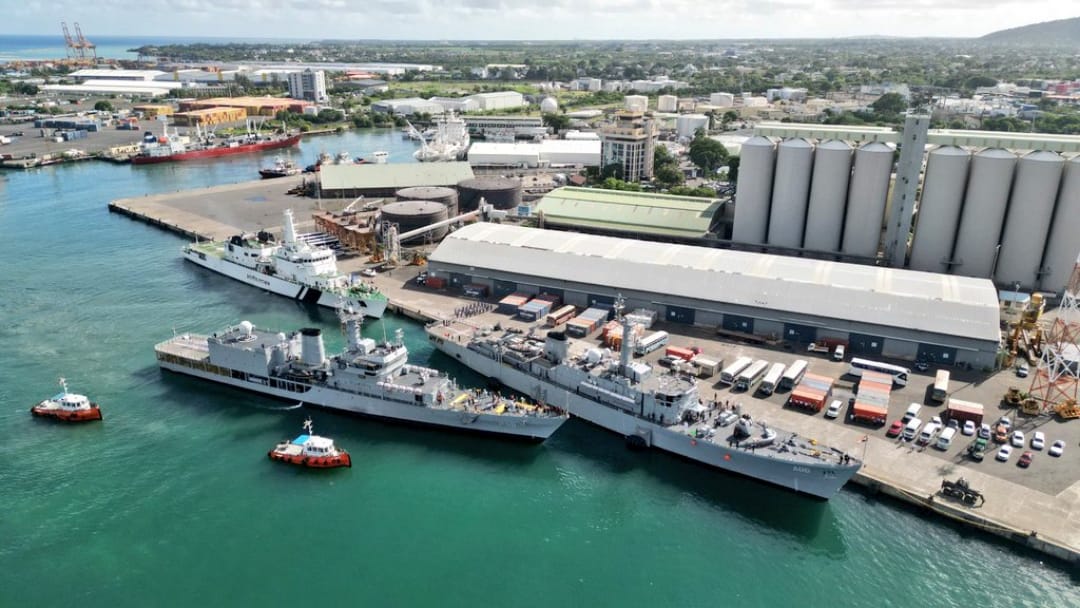
Across Africa, governments are opening their ports to the global shipping lines that move most of the cargo through them. Mauritius is the latest case.
The government plans to open up to 40% of Cargo Handling Corporation, the state company that runs container handling at Port Louis, to Maersk and MSC. They would also take an operational role in managing container handling. The state would keep the majority. The transfer is targeted for February 2027, alongside a Rs56.3 billion (about €1.1 billion) programme to modernise the port over six to eight years.
The need is real. Port Louis is the main gateway for Mauritius’ external trade, yet it ranks 369th out of 405 ports in the World Bank’s Container Port Performance Index. Business groups have complained formally about container delivery delays, and shipping lines have responded with congestion surcharges on cargo bound for the port. Modernisation is not optional. The question is what kind of modernisation serves the country, and who will carry its risks if the promised gains do not arrive.
The concern is about who writes the rules once the partners arrive. MSC already describes itself as the largest shipping line calling at Port Louis. Maersk and MSC are also major customers of the port. A firm that holds part of the terminal and is also its biggest client has a conflict of interest. A partner that controls the terminal has every incentive to decide how fast its own boxes move, and how quickly everyone else’s do.
This debate is not new. In the early 2010s, the government examined a DP World proposal for a 40% stake in CHCL and a long-term management contract, and made no final decision. The question now is whether Mauritius writes terms that protect the public this time.
The leadership of the company is already changing. Mauritian press reports say CHCL’s board will not renew the contract of Its Managing Director, Gassen Dorsamy, when it ends on 11 December 2026. A source cited in the press says the Prime Minister’s Office has endorsed the decision. The reports give no reasons. They also say Maersk is expected to appoint the next chief executive. A change of leadership before the partnership is signed makes the questions in this piece more urgent: who answers for the terminal, and on what terms?
Global operators bring capital, equipment and management skill that many African ports lack. Partnerships can work when the public keeps the upper hand. Four safeguards should be settled before signature, not negotiated afterwards.
The first is independent regulation. The Mauritius Ports Authority remains the infrastructure owner and regulator. It must be strong enough to hold a terminal operator to account once that operator has a stake and a say in management. The government has said it will review the authority’s structure and the Ports Act. That review should come before the deal, so the regulator’s powers are known when the contract is written.
The second is performance with consequences. Dwell times, crane productivity and reliability should be measured against published targets, with penalties for missing them and a clear route out if performance does not improve.
The third is equal access. Every shipping line and cargo owner should get the same terminal access. The concession already sets tariff ceilings for CHCL, and those ceilings should bind the new managers too.
The fourth is transparency on value. The adviser valuing the state’s shares should publish its method and findings. Selling 40% of a national asset is a public decision, and the public should be able to examine the price.
Labour needs the same care. The government says it has secured a guarantee that no jobs will be lost. Unions have raised reservations. That assurance should be written into the agreement, not left as a press remark.
Ports are infrastructure with monopoly features. When a government hands management to the operators that dominate its trade, it takes a decision that outlasts the current administration and affects every business that depends on the port. Mauritius has capable institutions and a clear ambition to become a regional hub. Those are the tools to make this partnership work for Mauritians, rather than for the companies sitting on both sides of the table.
Harry Arigi is a Maritime Consultant and MIHR. He comments on Regional Trade, Maritime Logistics, Safety, and Development Policy.