


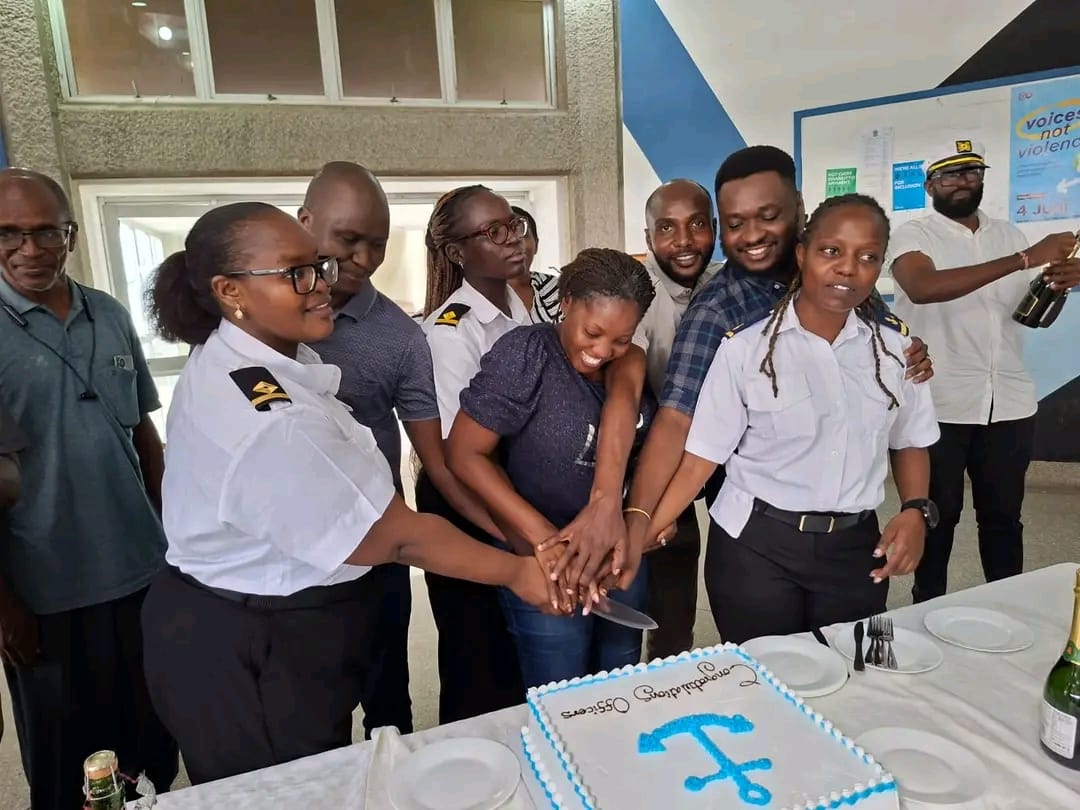
On December 3, 2026, Bandari Maritime Academy in Mombasa will mark a defining moment in Kenya’s maritime history. The institution’s inaugural graduation ceremony is more than a ceremonial milestone for its pioneer class—it represents the tangible fruits of a deliberate national effort to build a skilled workforce capable of driving the Blue Economy, an ambition long discussed in policy circles but only now beginning to materialize in graduates ready to step into the industry.
Dr. Eric Katana, the Academy’s Chief Executive Officer, captured the gravity of the occasion in a recent address. He congratulated the pioneering cohort for making history, expressed pride in their achievement, and extended appreciation to the board, management, faculty, industry partners, parents, and guardians whose collective commitment made the day possible. His message to the graduates was clear and purposeful: serve as ambassadors, act with integrity, remain patriotic, and actively contribute to the growth of the maritime sector and the wider Blue Economy.
This is not empty rhetoric. Bandari Maritime Academy occupies a strategic position in Kenya’s development story. Established originally as Bandari College in 1980 under the Kenya Ports Authority to address immediate skills shortages in port operations after the collapse of the East African Railways and Harbours Corporation, the institution was transformed in 2018 into a Semi-Autonomous Government Agency. The legal shift elevated its mandate from in-house training to serving as a Regional Centre of Excellence for maritime education and Blue Economy skills development. Today it offers programs in Nautical Science, Marine Engineering, and Maritime Transport Operations, alongside internationally recognized short courses aligned with Standards of Training, Certification and Watchkeeping (STCW) requirements.
The timing of the first graduation is significant. Kenya has positioned the Blue Economy as a priority under Vision 2030, recognizing that oceans, lakes, and coastal resources can generate substantial employment and economic value if the country develops the human capital to exploit them responsibly. Global shipping moves more than 80 percent of world trade, and the industry faces a persistent shortage of qualified seafarers. Kenya, with its long Indian Ocean coastline and the strategic Port of Mombasa, is well placed to supply part of that workforce—provided it produces graduates who meet international standards and can secure the critical sea-time experience that certification and employment require.
The Academy’s recent trajectory shows deliberate progress on several fronts. It has secured recognition as an approved teaching and examination centre of the Institute of Chartered Shipbrokers, expanded partnerships with shipping lines such as CMA CGM, and participated in large-scale skills programs targeting Lake Victoria communities. Government investment in a state-of-the-art Maritime Survival Training and Certification Centre at the Academy further signals seriousness about elevating local training capacity to global levels. These developments reduce reliance on overseas training and lower barriers for young Kenyans seeking entry into the sector.
Yet the celebration of the first graduating class must be tempered by a realistic assessment of remaining challenges. Technical training alone is insufficient. Graduates need structured pathways to sea-time and cadet placements if they are to convert certificates into careers. Industry partnerships that provide berths and mentorship remain essential. Infrastructure investments must be matched by consistent funding, quality assurance, and alignment with evolving technologies, including digital systems and, increasingly, artificial intelligence applications in navigation, logistics, and safety. Expanding access beyond the coast—into inland communities and through Recognition of Prior Learning pathways—will determine whether the Blue Economy becomes a genuine engine of inclusive growth or remains concentrated in a few urban and coastal pockets.
Dr. Katana’s charge to the graduates—to do good, love the country, and drive the right change—carries weight precisely because the opportunity is real. The maritime sector offers not only shipboard roles but shore-based careers in ports, logistics, regulation, training, and related Blue Economy industries such as fisheries, coastal tourism, and emerging offshore activities. A generation of well-trained Kenyans can help the country capture more value from its waters while meeting international safety and competency standards.
The inaugural graduation is therefore both an achievement and a test. It demonstrates that institutional transformation, sustained investment, and focused leadership can produce results. The next test is whether the ecosystem around these graduates—government agencies, shipping companies, port authorities, and training institutions—can convert this first cohort into a durable pipeline of competent professionals. If that happens, December 3, 2026, will be remembered not merely as Bandari Maritime Academy’s first graduation day, but as the moment Kenya began to turn Blue Economy aspirations into a measurable national advantage.
Kenya has the coastline, the port, and now the first class of academy-trained graduates. The task ahead is to ensure the momentum continues—so that these pioneers are followed by many more, and so that the country’s maritime potential is realized by its own citizens.