


Ghana’s Sahara Group acquires a new tanker bringing its fleet to six vessels
By Andrew Mwangura
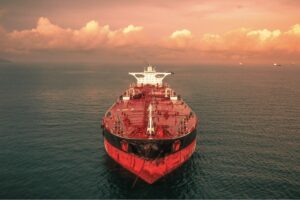
On March 12, 2026, in the industrial port city of Ulsan, South Korea, a ceremony took place that symbolized a significant shift in the architecture of West African energy. With the formal commissioning of the MT Asharami Ghana, a 40,000 cubic metre Liquefied Petroleum Gas carrier, President John Dramani Mahama oversaw the addition of a massive asset to Ghana’s energy infrastructure.
The vessel, built by the shipbuilding titans at HD Hyundai Heavy Industries, is a great of maritime engineering feat and a statement. Flying the Ghanaian flag, this dual-fuel, fully refrigerated carrier represents a convergence of private capital, national ambition, and the pressing need for a sustainable energy transition.
However, as with any venture that charts new waters, it demands a sober examination of whether this vessel is a beacon of progress or a costly divergence from a coherent long-term energy strategy.
Sahara Group growth
At first glance, the MT Asharami Ghana is a cause for unbridled optimism. The vessel is a state-of-the-art asset, designed for efficiency, safety, and lower emissions—a far cry from the aging, often unreliable vessels that have historically serviced the region’s energy needs.
For the Sahara Group, the global energy conglomerate celebrating its thirtieth anniversary, the vessel is the crown jewel of a fleet expansion that now totals six vessels with a combined capacity of 202,000 cubic metres. It is a private-sector investment, a point that has been emphasized heavily in public discourse to assuage concerns about fiscal responsibility.
No taxpayer money was used to procure this asset. Instead, it is the product of a corporate vision aimed at capturing growing demand in the West African LPG market. President Mahama’s characterization of the event as a “significant milestone” for Ghana’s energy security and the broader continent’s supply chain captures the immediate, tangible benefits of such a logistical upgrade.
The operational logic behind the vessel is sound. Ghana, like much of Sub-Saharan Africa, is at a critical juncture in its energy evolution. The country has long struggled with the dual challenges of energy security and environmental sustainability. For decades, the average Ghanaian household has relied on biomass—charcoal and firewood—for cooking, a practice that contributes to deforestation and exposes families, particularly women and children, to the dangers of indoor air pollution.
Stabilizing energy sector
The push for LPG as a clean cooking fuel has been a cornerstone of energy policy for years. However, the supply chain for LPG has historically been a weak link. Bottlenecks in importation, storage, and distribution have led to erratic pricing, periodic shortages, and a stifling of the very consumption growth that policymakers seek to encourage.
By injecting a dedicated, high-capacity carrier into this supply chain, the MT Asharami Ghana offers a solution to the logistical fragility that has long plagued the sector. Its primary dedication to supplying Ghana, with the capacity to support distribution across West Africa, promises a level of supply reliability that has been elusive.
When a country can control the means by which its fuel arrives at its shores, it gains a measure of insulation against global shipping volatility and regional supply shocks. Theoretically, this should stabilize prices, allowing for the kind of predictable market conditions necessary to encourage private investment in downstream infrastructure, such as cylinder recirculation models and retail networks. In this light, the vessel is not just a ship; it is a floating piece of infrastructure that enables a cleaner energy future.
However, the celebration of this private-sector achievement should not foreclose a necessary debate about the strategic direction of Ghana’s energy policy. The commissioning of the MT Asharami Ghana has sparked discussion in policy circles, most notably from think tanks like IMANI Africa.
Creating LPG hub
Vice President Bright Simons has raised pertinent questions regarding the alignment of such a significant investment with Ghana’s long-term energy strategy. The crux of the concern lies in the fundamental question: what is the endgame? Is Ghana’s strategy to build a self-sufficient, nationally-oriented energy market, or is it positioning itself as a regional hub for LPG distribution, leveraging its infrastructure to serve neighboring markets?
These are not mutually exclusive goals, but they require different policy frameworks, regulatory oversight, and infrastructure planning. A vessel of this size is an expensive asset to operate and maintain. To be commercially viable, it must be utilized to a high capacity. If Ghana’s domestic demand does not grow at the projected rate—or if policy shifts toward other energy sources like natural gas from domestic fields or accelerated electrification—the vessel’s economics would necessitate a constant focus on regional exports.
This is not inherently negative; becoming a regional energy hub could bring economic benefits, including foreign exchange earnings and geopolitical influence. However, it also raises questions about market dynamics. Will the presence of a dominant, private fleet operator create a level playing field for smaller competitors? Will the government’s enthusiasm for this private investment translate into regulatory favoritism that could stifle competition?
A robust energy sector requires diversity of players and assets; relying too heavily on a single corporate structure for a critical portion of the supply chain, even one as reputable as Sahara Group, introduces a concentration risk that demands vigilant regulation.
Furthermore, the timing of this investment invites reflection on the broader global energy transition. The MT Asharami Ghana is a dual-fuel carrier, a nod toward lower emissions in the shipping sector. It is a cleaner vessel than its predecessors. Yet, it is still an asset dedicated to the transport of fossil fuels.
Fossil fuel challenge
As the world accelerates toward decarbonization goals, there is a growing tension between the immediate need for clean cooking fuels in developing nations and the long-term imperative to leapfrog fossil fuel dependency. For Ghana, LPG is considered a transition fuel—a cleaner alternative to charcoal and kerosene. But the transition period is often undefined.
The danger lies in creating a fossil fuel lock-in, where vast investments in LPG infrastructure create a path dependency that makes it politically and economically difficult to pivot to truly renewable alternatives like green hydrogen, advanced biofuels, or the scaling of renewable energy grids for electric cooking.
President Mahama’s framing of the vessel as a step toward energy security and a cleaner environment is accurate in the short to medium term. The health and environmental benefits of moving millions of households from biomass to LPG are immediate and measurable. It saves forests, reduces carbon emissions from deforestation, and saves lives lost to smoke inhalation.
The vessel facilitates that transition with greater reliability. But the conversation cannot stop at the dock. Ghana must concurrently develop a timeline and a strategy for what comes after LPG. The energy security that this vessel provides should be leveraged as a bridge to a more diversified future, not viewed as the final destination.
Regional trade
There is also the matter of regional collaboration, a theme that President Mahama emphasized during his visit to South Korea. West Africa has long suffered from a lack of integrated energy infrastructure, leading to inefficiencies and price disparities across borders. The MT Asharami Ghana, with its capacity to service the broader region, could serve as a catalyst for greater cooperation.
If managed transparently, it could help harmonize LPG standards, streamline cross-border logistics, and create a more resilient regional market. This would be a significant achievement. However, regional energy trade is often fraught with political and regulatory complexities. Neighboring countries may view the vessel as a tool for Ghanaian or corporate dominance rather than a vehicle for mutual benefit. For this asset to fulfill its regional promise, it must be accompanied by diplomatic engagement and regional trade agreements that ensure equitable access and prevent the weaponization of energy supply.
The narrative surrounding the MT Asharami Ghana has been carefully crafted to highlight the positive: a private-sector investment, a job creator, an enabler of clean energy, and a symbol of Ghana’s growing stature in the global energy landscape. The fact that it coincides with Sahara Group’s “Sahara Beyond XXX” milestone, emphasizing responsible growth, further burnishes the image. It is a compelling story of African enterprise and global partnership. But a mature OpEd must acknowledge that the seam between private ambition and public good requires constant vigilance.
The government’s role in this narrative is ostensibly that of a facilitator and celebrant. Yet, the true test of leadership will come in the days following the fanfare. Will the government leverage this private asset to enforce strict safety standards, ensure affordable pricing for the average Ghanaian, and maintain a diverse energy portfolio that does not become over-reliant on a single fuel source or a single corporate partner?
Imports Vs local drilling
Moreover, the vessel’s commissioning raises questions about the utilization of Ghana’s own natural resources. Ghana is a significant oil and gas producer. While the country has gas resources, much of the LPG consumed has historically been imported due to infrastructural limitations in processing and transporting associated gas from the Western Region to the rest of the country.
Instead of merely facilitating imports more efficiently, the government should be asking whether the presence of such a sophisticated vessel could be integrated into a strategy to boost local refining and processing capacity. The ship could theoretically play a role in a more circular energy economy, but that requires policy alignment that goes beyond celebrating a corporate milestone.
In the final analysis, the MT Asharami Ghana is undeniably a world-class asset. Its commissioning is a testament to the capabilities of the private sector in Africa and the potential for international partnerships to upgrade critical infrastructure. For the households currently relying on charcoal, the promise of more reliable LPG supply is a tangible step toward better health and a cleaner environment. For the energy sector, it adds a sophisticated logistical tool that can help stabilize a historically volatile market. These are not small achievements.
Energy policy
Yet, the measure of this vessel’s success will not be found in the grandeur of its commissioning ceremony in Ulsan or the accolades shared at corporate anniversaries. It will be found in the price of a cylinder of gas in Accra five years from now. It will be measured by the resilience of the supply chain during global market disruptions. It will be defined by whether Ghana uses this new capability to accelerate its transition to sustainable energy or merely to consolidate its reliance on fossil fuels. And it will be determined by whether the partnership between the state and this private entity results in a fair, competitive market that serves the public interest.
As Ghana celebrates this addition to its maritime and energy infrastructure, it must also navigate the strategic currents with caution. The MT Asharami Ghana is a powerful vessel, but a nation’s energy destiny is charted by policy, not by ships alone.
To ensure that this milestone does not become a mere footnote—or worse, a strategic misstep—Ghana must now focus on the harder work of regulatory oversight, regional diplomacy, and a coherent long-term energy plan that balances the immediate benefits of clean cooking fuels with the imperative of a sustainable, diversified energy future. The flag has been raised. The next step is to ensure the course is true.