


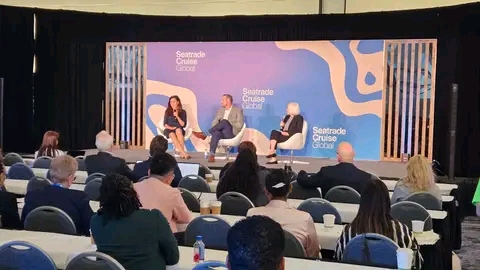
As the global cruise and maritime community gathers at the Seatrade Cruise Global Conference and Exhibition in Miami, the prevailing tone is unmistakably forward-looking.
The industry is no longer simply celebrating its post-pandemic rebound—it is actively reinventing its future. Conversations are anchored in innovation, sustainability, and strategic expansion into new destinations, an agenda with profound implications for emerging cruise markets like Kenya.
For decades, the cruise industry has followed a predictable circuit of well-established ports across Europe, North America, and parts of Asia. Today, however, the tide is shifting. Driven by travelers’ demand for unique experiences and the need to decongest traditional routes, industry leaders are turning toward untapped regions. Africa—and particularly the East African coastline—is steadily emerging as one of the most promising frontiers in this transformation.
Central to this global dialogue is the growing recognition that cruising’s future cannot be divorced from sustainability. Pierfrancesco Vago, Executive Chairman of the Cruise Division at MSC Group, captured this reality succinctly: the next phase of cruising will be defined by how effectively the industry balances growth with environmental stewardship.
Much so because cruise operators face mounting pressure from regulators, environmental groups, and increasingly conscious travelers to reduce emissions, invest in cleaner fuels, and adopt greener port operations.
This evolving ethos presents both a challenge and an opportunity for Kenya. On one hand, meeting global sustainability standards requires substantial investment in port infrastructure, regulatory frameworks, and operational efficiency. On the other, it positions the country to leapfrog into a new era of responsible maritime tourism, attracting premium cruise lines that prioritize environmentally compliant destinations.
Encouragingly, Kenya is already reaping dividends from its growing relevance in the cruise ecosystem. The steady increase in cruise ship calls at the Port of Mombasa and the Port of Lamu signals rising international appetite for East African itineraries. Once peripheral to global cruise maps, these ports are now being woven into routes that promise travelers a blend of cultural richness, wildlife experiences, and historical intrigue.
This momentum is reinforced by the Kenya Tourism Board’s assessment that cruise tourism is the fastest-growing segment within the country’s broader tourism portfolio. This trend reflects deliberate efforts to reposition Kenya as more than a safari destination. Integrating maritime tourism into the national strategy marks a critical diversification that could cushion the sector against seasonal fluctuations and external shocks.
The presence of a high-level delegation from the Kenya Ports Authority at the Miami conference underscores the seriousness with which Kenya is pursuing this opportunity. Led by senior officials, the delegation’s mission goes beyond mere participation: it is about forging partnerships, understanding emerging industry standards, and positioning Kenya as a competitive and reliable cruise destination.
Such engagement is essential. The cruise industry operates on long planning cycles, with itineraries often mapped out years in advance. Securing a place on these routes requires more than scenic appeal—it demands consistency, efficiency, and a compelling value proposition. Kenya must demonstrate that its ports can deliver seamless passenger experiences, from docking and customs clearance to onshore excursions and security.
Yet the real test lies in translating growing interest into sustainable economic value. Cruise tourism, while lucrative, can be a double-edged sword if not properly managed. The influx of passengers, often for short stays, requires a well-coordinated ecosystem that ensures local communities benefit meaningfully. This means strengthening linkages with local businesses, promoting cultural tourism, and ensuring revenue extends beyond port fees to the wider economy.
Infrastructure development must also keep pace with ambition. Modern cruise vessels are larger, more technologically advanced, and increasingly dependent on specialized port facilities. Investments in passenger terminals, dredging, and digital systems are not optional—they are prerequisites for competitiveness. Equally important is developing complementary infrastructure, including transport networks, hospitality services, and urban planning around port cities.
Sustainability, however, must remain at the core of this expansion. Kenya’s coastal ecosystems are among its most valuable assets, and their preservation is non-negotiable. As the country courts more cruise traffic, it must enforce stringent environmental standards, from waste management to emissions control. This is not only a matter of ecological responsibility but also a strategic differentiator in an industry rapidly embracing green practices.
Collaboration emerges as a recurring theme—both globally and locally. The interconnected nature of the cruise industry means no single player can succeed in isolation. Governments, port authorities, cruise lines, tourism agencies, and local communities must work in concert to create a cohesive and attractive offering. The dialogue in Miami testifies to this reality, emphasizing partnerships as the cornerstone of future growth.
For Kenya, this collaborative approach must extend beyond its borders. Regional integration within East Africa could unlock even greater potential, enabling multi-destination cruise packages that enhance the region’s overall appeal. By working with neighboring countries, Kenya can help create a robust cruise circuit that rivals established global routes.
Ultimately, the narrative emerging from the Seatrade Cruise Global Conference is one of transformation. The industry is not merely recovering—it is reinventing itself in response to new realities. For Kenya, the message is clear: the window of opportunity is open, but it will not remain so indefinitely. The country must act decisively, aligning its policies, investments, and partnerships with the evolving dynamics of global cruising.
The rise in cruise ship arrivals at Mombasa and Lamu is more than a statistical uptick—it is a signal of shifting currents in global tourism. If harnessed effectively, this trend could redefine Kenya’s position in the maritime world, transforming its coastline into a vibrant hub of sustainable cruise tourism.
In this unfolding story, Kenya stands at a crossroads. It can choose to be a passive beneficiary of global trends or an active architect of its maritime destiny. The conversations in Miami provide a blueprint, but the real work lies at home—in policy rooms, port terminals, and coastal communities. The future of Kenya’s cruise industry will ultimately be determined not by global declarations, but by local action.