


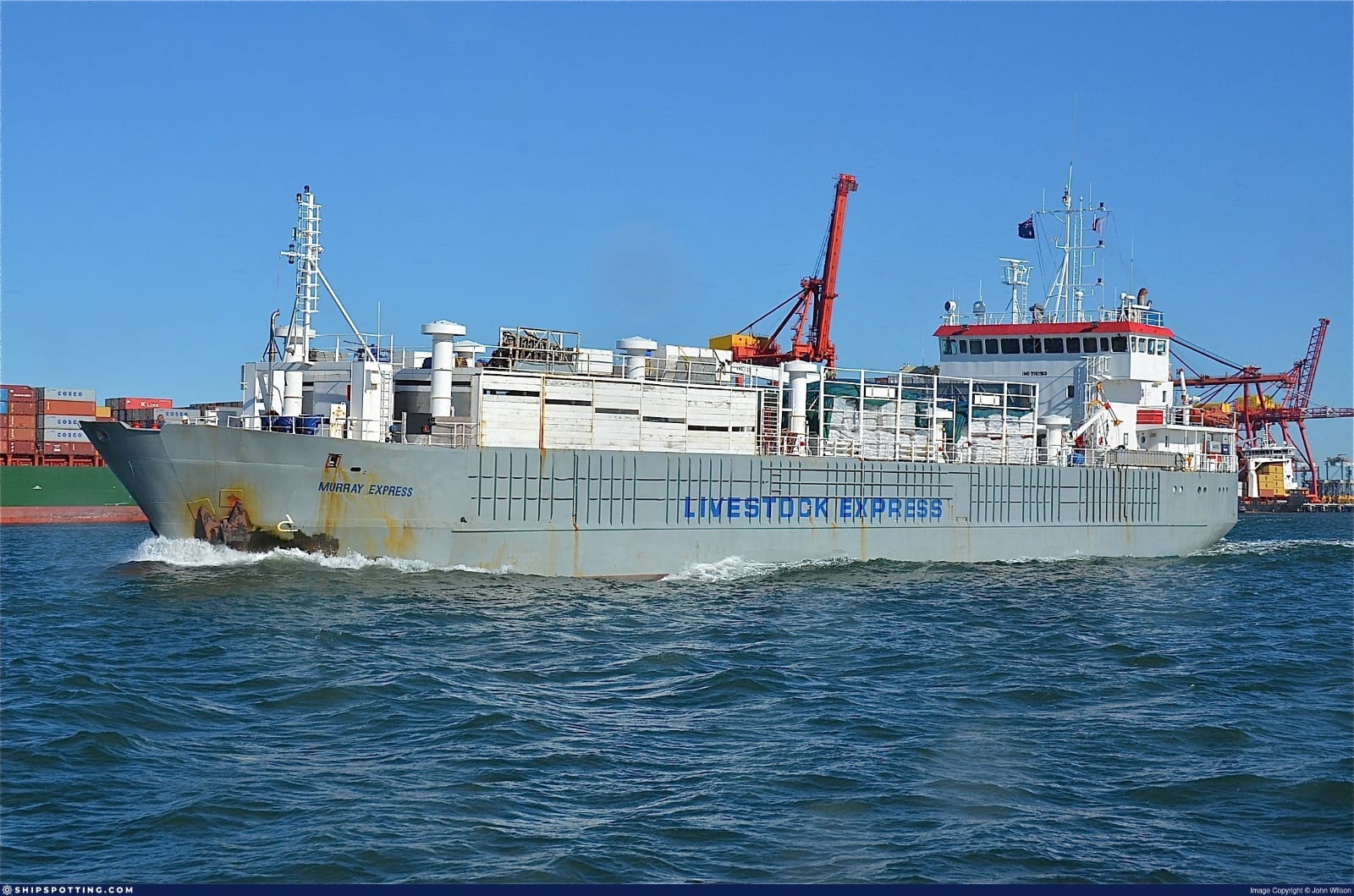
The quiet arrival of the livestock carrier MV Murray Express at the Port of Mombasa appears, on the surface, as a routine entry in a crowded port schedule. Yet beneath that single logline lies a revealing snapshot of Kenya’s maritime economy—its evolving trade patterns, logistical pressures, and untapped strategic potential. Over the next fourteen days, nearly fifty vessels will call at the ports of Mombasa and Lamu, carrying everything from containers and clinker to petroleum and palm oil. But it is the image of 800 head of cattle being loaded for export to the Gulf that best captures a nation at a crossroads between traditional exports and modern maritime ambition.
Livestock export is hardly new to Kenya. For decades, pastoralist communities have depended on Gulf markets, where demand for live animals remains strong, especially during religious seasons. What is different now is the scale, the organization, and the maritime framing of this trade. The MV Murray Express does not simply represent commerce; it represents a system—one linking northern Kenya’s arid lands to global markets through port infrastructure, veterinary compliance, and shipping logistics. It is a reminder that ports are not just gateways for containers; they are lifelines for entire value chains that begin far inland.
Yet even as livestock finds its place in the export ledger, it is dwarfed by the dominance of containerized trade. Of the vessels expected, twenty-two are container ships, underscoring the centrality of standardized cargo in global commerce. Containerization has transformed Mombasa into a regional hub serving not only Kenya but the broader East and Central African hinterland—from Kampala to Kigali, and as far as Juba and eastern DRC. The port’s efficiency, or lack thereof, ripples across these economies.
But efficiency remains a persistent concern. A surge of nearly fifty vessels in two weeks places enormous pressure on berthing space, cargo handling equipment, and hinterland evacuation systems. The presence of twenty-one conventional cargo vessels alongside tankers and specialized carriers further complicates scheduling and turnaround times. Unlike container ships, which benefit from streamlined handling, conventional vessels often require more labor-intensive operations, raising the risk of congestion.
The five oil tankers expected to discharge both vegetable oils and petroleum products add another layer of complexity. Energy imports remain the backbone of Kenya’s industrial and transport sectors, and any delay in tanker discharge has immediate downstream consequences—from fuel shortages to price volatility. At the same time, vegetable oil imports highlight Kenya’s continued reliance on external sources for key food processing inputs, a dependency that sits uneasily alongside ambitions for agricultural self-sufficiency.
Meanwhile, the Port of Lamu continues to carve out its role, albeit modestly, in this maritime tableau. With a handful of container vessels and specialized cargo calls, Lamu is still far from realizing its full potential under the LAPSSET corridor. Yet its inclusion in the schedule signals gradual traction. The challenge for Lamu is not just attracting ships but integrating seamlessly into the national and regional logistics network. Without efficient road and rail connectivity, even the most modern port risks becoming an underutilized asset.
Against this backdrop, the MV Murray Express becomes more than a vessel; it becomes a metaphor. It represents the diversity of Kenya’s trade—where livestock shares the quay with steel coils, fertilizer, and gasoline. It also represents the balancing act between old and new economic models. While containerization and industrial cargo dominate global shipping narratives, there remains space—and necessity—for trades that are less standardized but equally vital.
However, this diversity also exposes structural vulnerabilities. Handling livestock exports requires strict adherence to animal welfare standards, quarantine protocols, and international health regulations. Any lapse can result in rejected shipments, reputational damage, and financial losses. Similarly, the coexistence of bulk cargo, containers, and tankers within the same operational window increases bottleneck risks unless carefully managed through advanced port planning systems.
The broader question is whether Kenya’s port infrastructure and governance frameworks are keeping pace with the complexity of its maritime trade. Investments in new berths, dredging, and equipment have certainly improved capacity over the years. But capacity alone is not enough. What is required is coordination—between port authorities, shipping lines, clearing agents, and inland transport operators. Digitalization, too, must move from policy buzzword to operational reality, enabling real-time tracking, predictive scheduling, and data-driven decisions.
There is also a strategic dimension that cannot be ignored. The Gulf market for livestock, the steady inflow of petroleum, and the constant churn of containerized goods all point to Kenya’s deep integration into global supply chains. Yet integration without leverage can be a double-edged sword. Kenya must ask how it can move up the value chain—by processing more agricultural exports locally, refining petroleum products domestically, or positioning itself as a regional logistics and distribution hub.
In this regard, the interplay between Mombasa and Lamu becomes crucial. Rather than competing, the two ports should be seen as complementary nodes within a broader maritime strategy. Mombasa, with its established infrastructure and hinterland connections, will remain the workhorse. Lamu, with its deep-water advantages and proximity to new corridors, can serve as a gateway for future growth—if supported by the right policy and investment decisions.
Ultimately, the story of the next fourteen days at Kenya’s ports is not just about ships arriving and departing. It is about a nation navigating the currents of global trade while anchoring its own economic priorities. The MV Murray Express, with its cargo of 800 livestock bound for the Gulf, is a vivid reminder that even in an age of mega-ships and automated terminals, the fundamentals of trade remain deeply human—rooted in livelihoods, markets, and the enduring quest for opportunity.
If Kenya can harness the lessons embedded in this moment—improving efficiency, diversifying exports, and strengthening strategic coordination—then each vessel call will be more than a transaction. It will be a step toward a more resilient and dynamic maritime economy.