


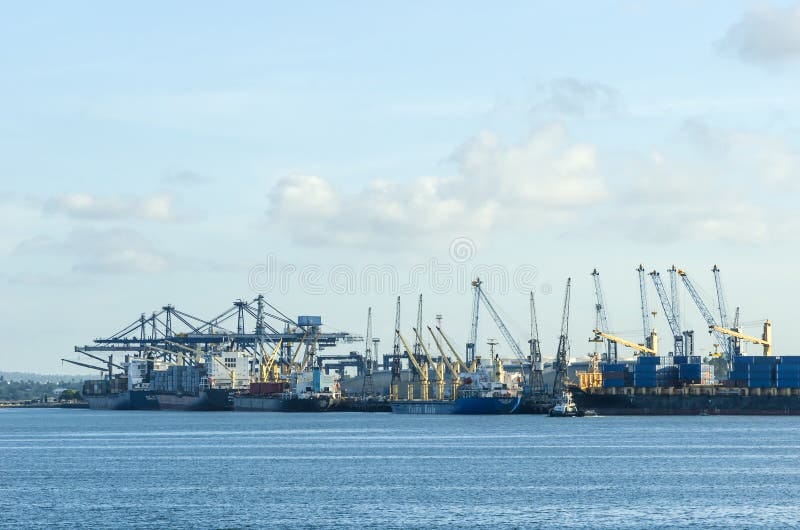
For decades, the Port of Dar es Salaam was defined more by its limitations than its potential. Shallow berths, outdated equipment, chronic congestion, and vessel turnaround times exceeding ten days made it a source of friction—not competitive advantage—for Tanzania and its landlocked neighbours.
That era is now ending. Through sustained investment, deliberate policy reform, and the disciplined introduction of private terminal management, the port has undergone a structural transformation. It is no longer just Tanzania’s principal maritime entry point; it has become one of the most operationally competitive gateways in East and Central Africa.
The numbers are striking. In the 2024/25 financial year, Dar es Salaam recorded its highest-ever cargo throughput: 27.7 million tonnes—a 15 per cent increase over the previous year. This is not the result of a single intervention but of compounding improvements across physical infrastructure, operational systems, and logistics reach.
Central to the physical overhaul is the $421 million Dar es Salaam Maritime Gateway Project, largely financed by the African Development Bank. The project has fundamentally upgraded the port’s technical capacity, most notably by deepening the harbour channel to 14.5 metres, allowing it to accommodate the larger vessel classes that modern shipping demands.
Alongside this, modern gantry cranes have more than doubled container handling rates—from 18 to 30 containers per hour. The cumulative effect on vessel turnaround has been dramatic: what once took ten days now takes roughly three. That compression of time directly reduces costs for every shipping line and cargo owner.
These physical improvements have been reinforced by structural changes in governance and operations. The introduction of private terminal operators stands as one of the most consequential reforms. DP World now manages Berths 0 to 7, while Tanzania East Africa Gateway Terminal Limited oversees Berths 8 to 11.
Performance-based contracts and fixed berthing windows have brought a discipline to scheduling that was difficult to sustain under purely public management. For shipping lines and cargo owners, the practical benefit is predictability—the ability to plan vessel calls and cargo movements with confidence that the port will perform to an agreed standard. In a competitive maritime environment, that reliability is the difference between retaining or losing traffic to rival corridors.
The transformation has been deliberately extended inland. A port, however well-equipped, is only as effective as the logistics chain connecting it to its hinterland. Tanzania has invested accordingly. The Kwala Inland Container Depot in Kibaha, linked by rail to the port, is designed to handle over 300,000 containers annually—roughly 30 per cent of the port’s total container throughput.
The facility accelerates cargo evacuation, reduces dwell times, and cuts demurrage costs that have long imposed a quiet tax on import-dependent economies across the region. The planned rehabilitation of the Tanzania-Zambia Railway Authority network, scheduled to begin in June 2026, extends this logic further, promising to shift larger volumes of transit cargo onto rail and ease pressure on the Central Corridor’s road infrastructure.
That corridor is central to the port’s regional significance. Dar es Salaam serves as the principal maritime gateway for transit cargo moving to Zambia, Rwanda, Burundi, Malawi, Uganda, and the Democratic Republic of Congo—countries whose trade flows depend structurally on the efficiency of East African port infrastructure.
The improvements now visible at Dar es Salaam carry consequences far beyond Tanzania’s borders. Rising throughput, faster turnaround, and greater logistics predictability collectively strengthen the Central Corridor’s competitive position against rival routes through Mombasa and Beira. A well-functioning Dar es Salaam port is not simply a Tanzanian asset—it is a regional public good.
It would be premature to claim that every challenge has been resolved. Revised port tariffs introduced in January 2026 under Government Notice No. 03 of 2026 have adjusted pricing across vessel dues, container handling, storage, and transit rates. The review involved consultation with the Tanzania Shipping Agencies Corporation and the Tanzania Freight Forwarders Association, and the new structure aims to align pricing with upgraded facilities and services.
The port authority’s enduring challenge will be to ensure that tariff levels attract rather than divert traffic—especially transit cargo, which always has alternative routing options. As a spokesperson from Wilmaar Logistics Ltd observed, much of the port’s recent growth is directly linked to infrastructure improvements, from deeper berths to faster handling equipment. The task ahead is to sustain those gains and manage the competitive and regulatory environment in ways that consolidate rather than erode them.
The transformation of the Port of Dar es Salaam is, at its core, a story of what becomes possible when infrastructure investment is matched by operational reform and regional strategic vision. The port has repositioned itself as a credible, competitive, and increasingly indispensable gateway for a region whose trade needs are growing. That repositioning deserves recognition—and the lessons it offers merit close attention from maritime stakeholders across the continent.