


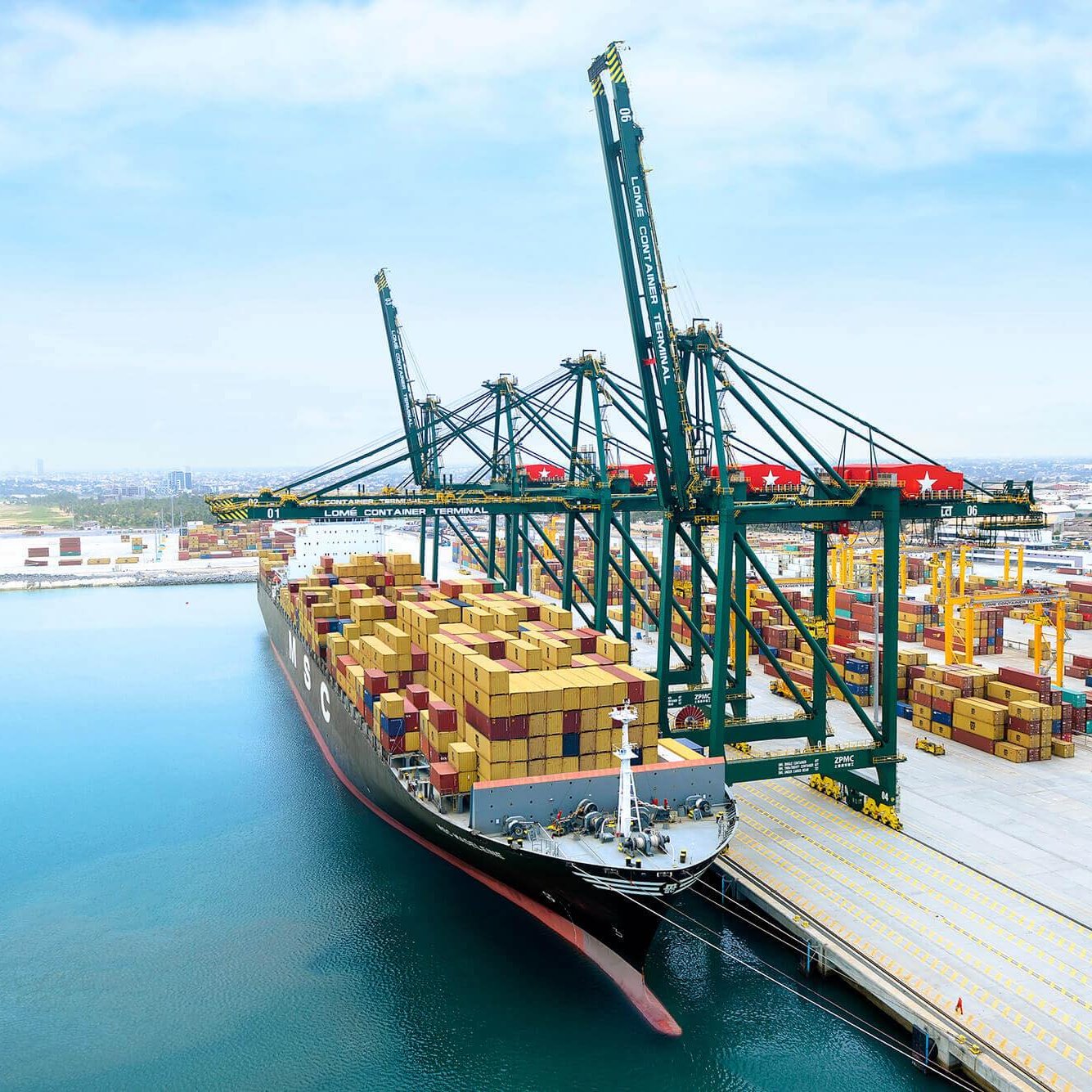
There is a seductive simplicity in the narrative that China’s expanding footprint in African ports is merely about infrastructure, efficiency, and trade facilitation. New berths, deeper drafts, modern cranes, and digitized logistics chains all point to a continent finally correcting its historical deficit in maritime capacity.
However, beneath this visible layer lies a more consequential reality, whereby ports are no longer passive gateways of commerce; rather, they are instruments of power, influence, and long-term strategic positioning.
The emerging pattern across Africa is unmistakable. Chinese entities are not only financing port infrastructure but also building, operating, and integrating these assets into global supply chains that connect Asia, Europe, and the Americas. This is not a fragmented or opportunistic investment approach; it is structured and sequential.
Finance leads to construction, construction to operational control, and operational control to integration within a broader logistical ecosystem. The result is a network that enhances trade efficiency while simultaneously embedding geopolitical optionality.
This duality is what makes the current moment so critical for Africa.
On one hand, the benefits are tangible and immediate. China’s investments—estimated at tens of billions of dollars over the past decade—have expanded Africa’s export capacity, reduced transport costs, and improved connectivity to global markets.
Ports that once suffered from congestion, shallow drafts, and inefficiency are now capable of handling larger vessels, faster turnaround times, and more complex cargo flows. The outcome is a measurable boost in competitiveness, particularly for commodity exports such as oil, minerals, and agricultural products.
On the other hand, these same ports are becoming nodes of concentrated influence. Control over port infrastructure increasingly translates into influence over trade flows, freight pricing dynamics, and access to strategic resources.
The ability to monitor, prioritize, or even disrupt cargo movements—whether for commercial or strategic reasons—introduces a new dimension to global trade, one where infrastructure ownership shapes market power.
This is why the phrase “control the ports, control the flows” is more than rhetoric. It is a reflection of how modern trade operates.
Historically, ports were seen as neutral public utilities—essential but politically benign. That assumption no longer holds. Today, ports are deeply embedded in the geopolitics of supply chains. They determine not only how goods move, but who benefits from those movements and under what conditions.
In an era of fragmented globalization, where supply chains are increasingly shaped by strategic considerations, the ownership and governance of ports matter as much as their physical capacity.
Africa’s geography amplifies this reality. The continent sits astride some of the world’s most critical maritime corridors—from the Red Sea and Suez route to the Cape of Good Hope and the Atlantic trade lanes.
Ports in East Africa connect Asia to Europe; those in West Africa serve as gateways for energy and mineral exports; North African ports bridge Africa to Mediterranean and European markets. Control or influence over these nodes is not merely about regional trade—it is about positioning within the architecture of global commerce.
For commodity markets, the implications are profound. Ports shape bottlenecks, determine optionality, and influence pricing. A port that operates efficiently and predictably can lower costs and attract trade flows; one that is constrained or strategically leveraged can create volatility and shift bargaining power.
As Chinese-operated or financed ports become more integrated into global logistics systems, they introduce new dynamics into how commodities are priced, traded, and transported.
Yet it would be a mistake to frame this entirely as a story of external dominance. Africa is not a passive participant in this transformation. The continent’s governments have actively sought investment to bridge infrastructure gaps that have long constrained economic growth. In many cases, Chinese financing has succeeded where traditional lenders hesitated, delivering projects at speed and scale.
The real question, therefore, is not whether China should be investing in African ports. It is how Africa positions itself within this evolving landscape.
The risk lies not in partnership, but in asymmetry. When financing, construction, operation, and integration are all controlled by external entities, the host nation’s leverage diminishes over time. Revenue streams, employment opportunities, technology transfer, and strategic decision-making can become skewed in ways that limit long-term national benefit. Moreover, the potential for “dual-use” capabilities—where commercial infrastructure can also support strategic or military functions—raises legitimate concerns about sovereignty and neutrality.
At the same time, rejecting or resisting such investments outright is neither practical nor desirable. Africa’s development trajectory depends on modern infrastructure, and ports are central to that vision. The challenge is to move from dependency to agency.
This requires a recalibration of policy and strategy.
First, African states must prioritize governance frameworks that ensure transparency, accountability, and balanced partnerships. Port concessions, leases, and operational agreements should be structured to safeguard national interests, with clear provisions on revenue sharing, local participation, and technology transfer.
Second, there must be a deliberate effort to build domestic capacity. Operating a modern port is not simply about infrastructure; it is about skills, systems, and institutional competence. Without local expertise, control inevitably shifts to external operators, regardless of ownership structures.
Third, Africa must think regionally. Ports do not operate in isolation; they are part of broader corridors that include railways, roads, and inland logistics hubs. A fragmented approach, where each country negotiates independently, weakens bargaining power.
A coordinated continental strategy—aligned with frameworks such as the African Continental Free Trade Area—can strengthen Africa’s position in negotiations and ensure that ports serve regional, not just national or external interests.
Finally, there is a need to reimagine the role of ports beyond raw commodity exports. Too often, African ports function as extraction points, facilitating the export of unprocessed resources. The real value lies in transforming these ports into industrial and logistics hubs that support manufacturing, value addition, and intra-African trade. Infrastructure alone does not create prosperity; it is what flows through that infrastructure—and how it is transformed—that determines economic outcomes.
China’s port expansion in Africa is, without question, one of the most significant developments in global trade today. It is accelerating connectivity, unlocking markets, and reshaping supply chains. But it is also redefining the relationship between infrastructure and power.
For Africa, the stakes could not be higher. Ports are not just gateways to the world; they are levers of sovereignty, instruments of economic strategy, and, increasingly, arenas of geopolitical contestation.
The continent stands at a crossroads. It can either remain a terrain where global powers project influence through infrastructure, or it can assert itself as a strategic actor that leverages that infrastructure for its own development and integration.
The difference will not be determined by who builds the ports, but by who ultimately controls their purpose.