


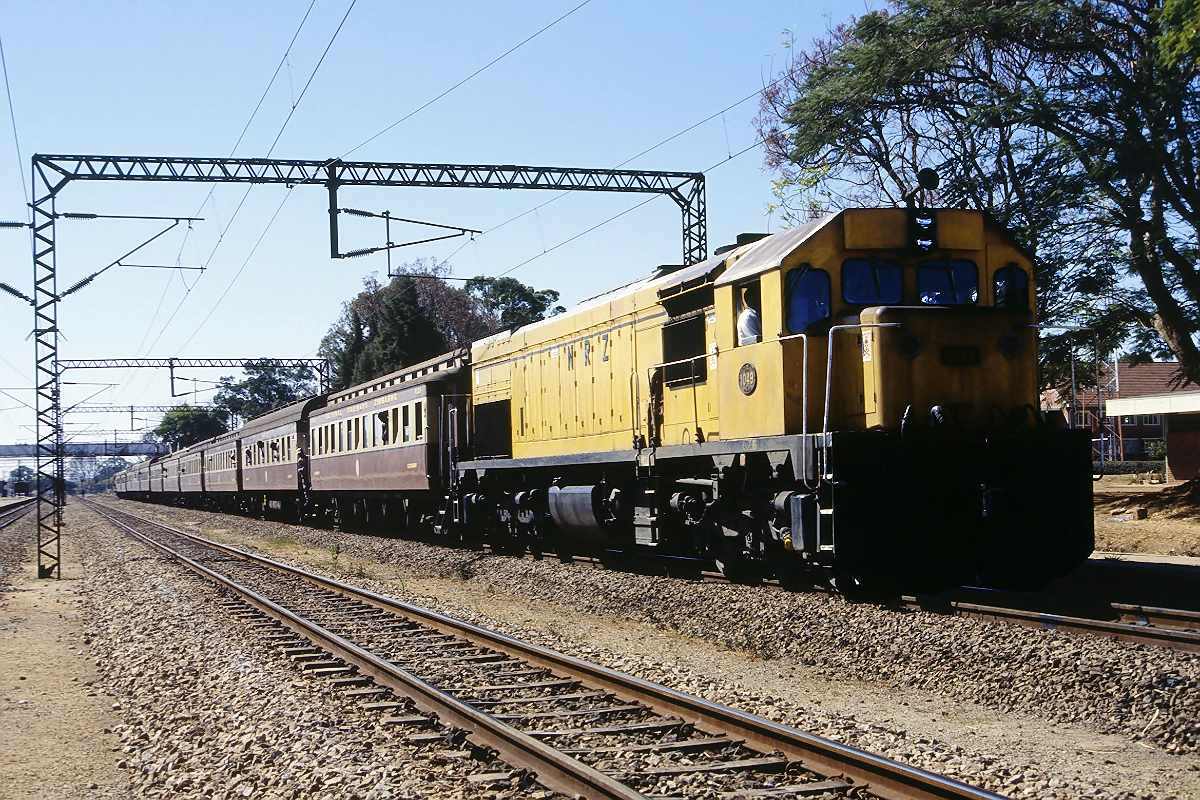
In a region where distance has long been a stubborn barrier to trade, the newly signed agreement between Zambia and Zimbabwe to develop the Lion’s Den–Kafue railway is an infrastructure project that will literally rewrite of geography of the southern African region.
Valued at over US$2 billion, the initiative combines the construction of a 311-kilometre new rail line with the rehabilitation of roughly 445 kilometres of existing track. Its ambition is clear, and that is to compress space, slash costs, and reconnect Southern Africa to its most efficient maritime gateways.
For decades, cargo from Zambia’s Copperbelt or Zimbabwe’s industrial heartlands has often travelled circuitous routes to reach ports, burdened by aging infrastructure, border delays, and logistical fragmentation. The Lion’s Den–Kafue line promises to change that.
It will shorten freight distances by approximately 800 kilometres to Beira, up to 1,000 kilometres to South African ports, and about 500 kilometres to Dar es Salaam. This project effectively redraws the cost-distance equation that underpins regional trade.
Besides saving users the distance, the project will restore rail as the backbone of bulk logistics in a region where roads have been overburdened and under-maintained. Railways offer economies of scale, lower emissions, and greater reliability for heavy cargo such as minerals, fuel, and agricultural produce.
For Zambia and Zimbabwe—both land-linked economies heavily reliant on export corridors—the implications are profound. Reduced transit times translate directly into lower freight costs, improved competitiveness, and enhanced attractiveness for foreign investment.
The true significance of the Lion’s Den–Kafue railway lies in its regional multiplier effect. Southern Africa’s transport corridors have long operated as parallel systems rather than an integrated network. This project has the potential to become a unifying spine, linking inland production zones to multiple seaports and creating optionality—a critical but often overlooked ingredient in resilient logistics.
When exporters can choose between Beira, Durban, or Dar es Salaam based on cost, congestion, or geopolitical risk, the entire system becomes more efficient and less vulnerable to disruption.
There is also a strategic dimension that extends beyond Zambia and Zimbabwe. The corridor aligns closely with the broader ambitions of the African Continental Free Trade Area (AfCFTA), which seeks to dismantle structural barriers to intra-African trade. Infrastructure—particularly transport infrastructure—remains the missing link in this grand vision.
Tariffs can be reduced and policies harmonised, but without efficient corridors to move goods, integration remains theoretical. The Lion’s Den–Kafue railway offers a tangible step toward operationalising AfCFTA by enabling faster, cheaper, and more predictable movement of goods across borders.
History, however, offers a cautionary note. Africa is no stranger to ambitious rail projects that faltered under poor governance, unsustainable financing, or inadequate maintenance. The success of this corridor will depend not only on its construction but on how it is managed, financed, and integrated into the wider logistics ecosystem. Transparent procurement processes, robust public-private partnerships, and clear regulatory frameworks will be essential to avoid the pitfalls that have plagued similar initiatives.
Equally important is interoperability. Railways do not operate in isolation; they are part of a broader supply chain that includes ports, dry ports, road networks, and border facilities. If the Lion’s Den–Kafue line is to deliver on its promise, it must be seamlessly connected to efficient port operations in Beira, Durban, and Dar es Salaam.
That requires coordinated investments and policy alignment across multiple jurisdictions—a challenge historically difficult to achieve in the region. Without such coordination, the railway’s benefits could be diluted by bottlenecks elsewhere in the system.
Financially, the project’s US$2 billion price tag is both a commitment and a risk. Large-scale infrastructure projects often face cost overruns and revenue shortfalls, especially in markets with volatile demand forecasts. Ensuring bankability will require realistic traffic projections, diversified revenue streams, and risk-sharing mechanisms that protect both public and private stakeholders. Experienced operators and financiers will be crucial here, as will the political will to sustain the project through economic cycles.
There is also an environmental argument that strengthens the case for rail. As global supply chains face mounting pressure to decarbonise, rail offers a more sustainable alternative to road haulage.
Shifting a significant portion of freight from trucks to trains could reduce emissions, ease congestion, and lower the environmental footprint of regional trade. This aligns well with global climate commitments and with the practical need to preserve road infrastructure strained by heavy truck traffic.
Beyond economics and the environment, the project carries symbolic weight. It signals renewed confidence in regional cooperation at a time when global trade is becoming increasingly fragmented. By jointly investing in a shared corridor, Zambia and Zimbabwe are demonstrating that collective action can yield tangible benefits. That is a powerful message for a continent where national interests have often overshadowed regional priorities.
The ripple effects could extend to employment and industrial development. Construction alone will generate jobs and stimulate local economies, but the longer-term impact lies in the potential for industrial clusters to emerge along the corridor. Improved connectivity can attract manufacturing, logistics, and value-added industries, transforming transit zones into centres of economic activity. That is how infrastructure moves from being a cost centre to a catalyst for development.
Still, optimism must be tempered with realism. Projects of this scale are inherently complex, and success is never guaranteed. Political stability, policy continuity, and institutional capacity will all play decisive roles. The corridor must also compete with established routes and adapt to evolving trade patterns, including shifts in global commodity demand and the growing importance of digital logistics systems.
In the final analysis, the Lion’s Den–Kafue railway is not just a transport project—it is a strategic intervention in the economic architecture of Southern Africa. It challenges the status quo, offers a pathway to greater integration, and underscores the centrality of infrastructure in unlocking the continent’s trade potential. If executed with discipline and foresight, it could become a model for future corridor development across Africa.
If mismanaged, it risks becoming another cautionary tale of ambition outpacing execution. The stakes could not be higher. For Zambia, Zimbabwe, and the broader region, this is an opportunity to demonstrate that Africa can not only dream big but also deliver.