


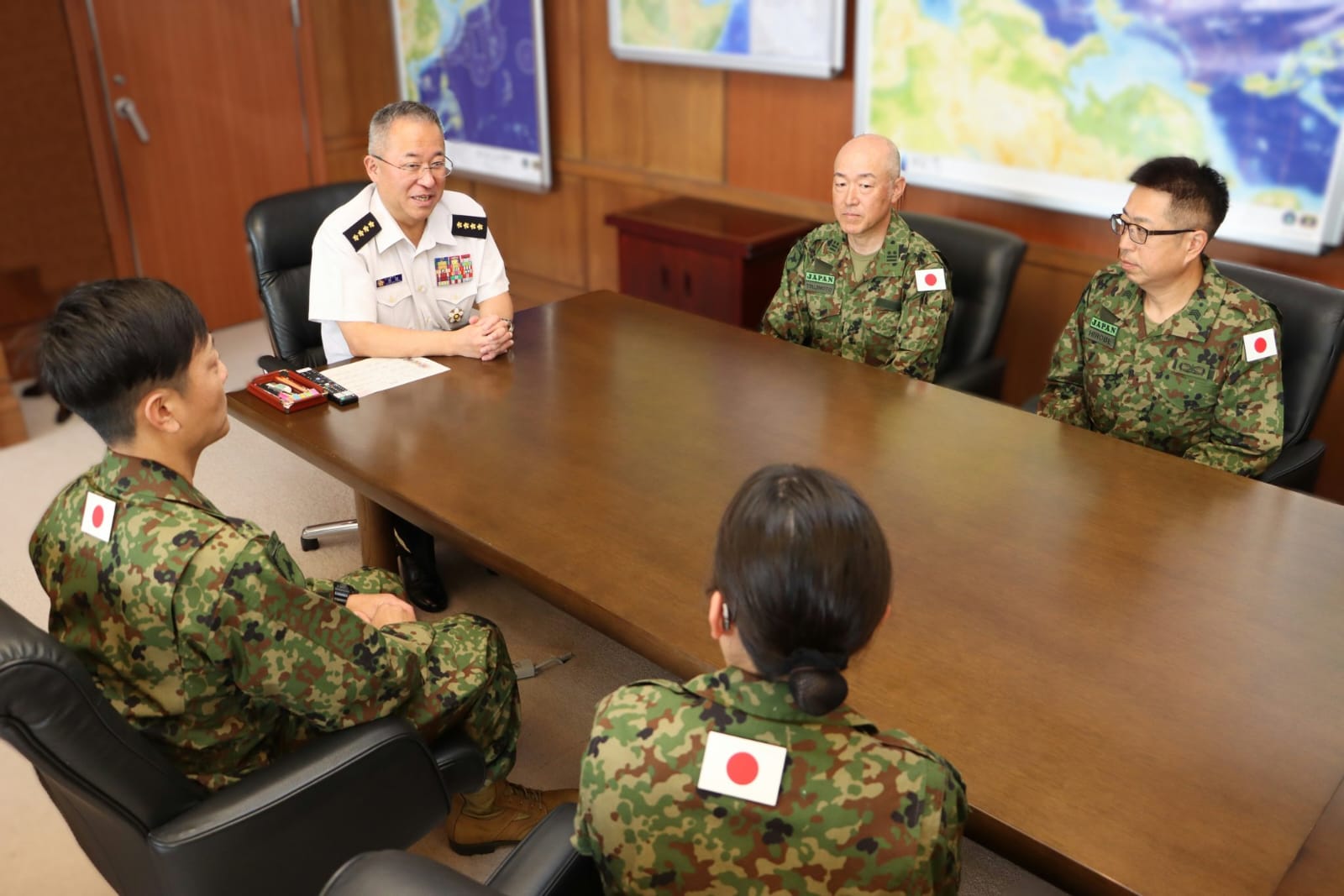
Major Hiroya Takemori and three other personnel from the Japan Ground Self-Defense Force (JGSDF) are headed to Kenya under the United Nations Triangular Partnership Program (UNTPP) as part of military deployment.
This is a powerful testament to how modern peacekeeping is increasingly driven not just by soldiers and security operations, but by technical expertise, capacity building, and genuine international cooperation.
As this four-member training team embarks on its mission to conduct a Heavy Engineering Equipment Operators’ Basic Course for future peacekeepers, their assignment underscores an often-overlooked reality: effective peacekeeping depends critically on engineering capabilities.
Roads must be built, bridges repaired, airstrips maintained, camps established, and critical infrastructure restored in conflict and post-conflict environments. Without these skills, humanitarian aid, troop mobility, and civilian protection become significantly more difficult.
Engineering and peacekeeping
When attention turns to UN peacekeeping operations, the public focus typically falls on troops patrolling volatile regions or mediating conflicts. Yet behind every successful mission stands a robust engineering component.
Heavy equipment operators open supply routes, construct protective infrastructure, clear debris after disasters, and ensure that peacekeeping missions remain functional in the world’s most challenging environments. Their work enables humanitarian agencies to reach vulnerable populations and allows peacekeepers to fulfill their mandates effectively.
The UNTPP was created precisely to address persistent capability gaps—connecting donor countries with advanced expertise to troop-contributing nations that need specialized training. Japan has emerged as one of the program’s most valuable contributors, sharing its world-renowned engineering knowledge and technical professionalism. Major Takemori’s deployment is therefore an investment in global peace infrastructure, not a traditional military exercise.
Kenya in peacekeeping
Hosting this training in Kenya is equally significant. For decades, Kenya has been one of Africa’s most dependable contributors to regional and international peace and security. Kenyan personnel have served with distinction in numerous UN and African Union missions across the continent.
Kenya’s strategic location, political stability, and growing reputation as a regional diplomatic hub make it an ideal venue for advanced peacekeeping training. The country has increasingly positioned itself as a centre for security cooperation, maritime security initiatives, counter-terrorism coordination, and peace support operations.
By hosting this engineering course, Kenya strengthens its role as a regional training hub while helping prepare peacekeepers from across Africa and beyond for future deployments. This partnership also aligns with Kenya’s broader aspirations to deepen international cooperation and expand its contribution to global peace and security.
Japan in global security
Japan’s participation in the UNTPP reflects a notable evolution in its international engagement. While Japan’s post-war security posture has traditionally emphasized defensive capabilities, the country has increasingly embraced a proactive role in promoting peace through development assistance, humanitarian support, disaster response, and peacekeeping capacity building.
The JGSDF’s engineering expertise is particularly respected worldwide. Japanese engineers have earned a reputation for precision, discipline, innovation, and efficiency in both military and civilian projects. Sharing these skills with future peacekeepers multiplies their impact far beyond Japan’s borders.
Rather than deploying large military formations, Japan is contributing knowledge, technical competence, and training excellence—resources that continue generating benefits long after the instructors return home. This is a modern model of security cooperation, where the transfer of expertise becomes a true force multiplier for peace.
The UN Triangular Partnership Program
The UNTPP has emerged as one of the most practical and cost-effective initiatives in UN peacekeeping. Its strength lies in collaboration: donor nations contribute equipment, expertise, and funding; host countries provide facilities and regional access; and troop-contributing nations gain the skills to meet increasingly complex demands. The result is a sustainable model that builds local and regional capacity rather than creating dependency.
As peacekeeping missions confront new challenges—climate-related disasters, infrastructure destruction, urban conflict, and humanitarian emergencies—the demand for skilled engineering personnel continues to grow. Program like the one in Kenya directly address these evolving needs. The training also promotes interoperability among peacekeepers from different nations, ensuring that multinational contingents can work together effectively in the field.
Strengthening Japan–Kenya relations
This deployment carries significant diplomatic weight. Japan and Kenya have cultivated steadily expanding relations in infrastructure development, trade, maritime security, and technological cooperation. The presence of JGSDF trainers in Kenya further strengthens these ties while creating new opportunities for professional exchange and mutual learning.
Such engagements foster trust, understanding, and long-term partnerships that extend beyond the military sphere. They demonstrate how security cooperation can serve as a foundation for broader diplomatic and economic collaboration. For Kenya, hosting international training missions enhances its standing as a reliable partner in global peace initiatives. For Japan, the mission reinforces its commitment to supporting stability and development in Africa.
Major Takemori team
Major Takemori and his fellow instructors departed on 1 June 2026. Only four individuals are involved, but the significance of their mission extends far beyond their numbers.
Every peacekeeper trained to operate heavy engineering equipment becomes a force for stability in regions affected by conflict, disaster, and humanitarian crises. Every bridge constructed, road repaired, and camp established by those future peacekeepers contributes to safer environments for vulnerable communities.
In an era marked by geopolitical tensions and complex security challenges, Japan’s contribution through the UNTPP is a reminder that peace is built not only through diplomacy and security operations, but also through practical skills, technical excellence, and international solidarity.
Kenya’s role as host and Japan’s role as trainer exemplify the spirit of collective responsibility that underpins modern peacekeeping. Together, they are helping to ensure that the next generation of UN peacekeepers is better prepared to build the foundations upon which lasting peace can stand.
Major Takemori’s mission is therefore not merely a training assignment—it is a tangible investment in global peace, regional stability, and the enduring belief that cooperation among nations remains one of the most powerful tools for creating a safer world.