


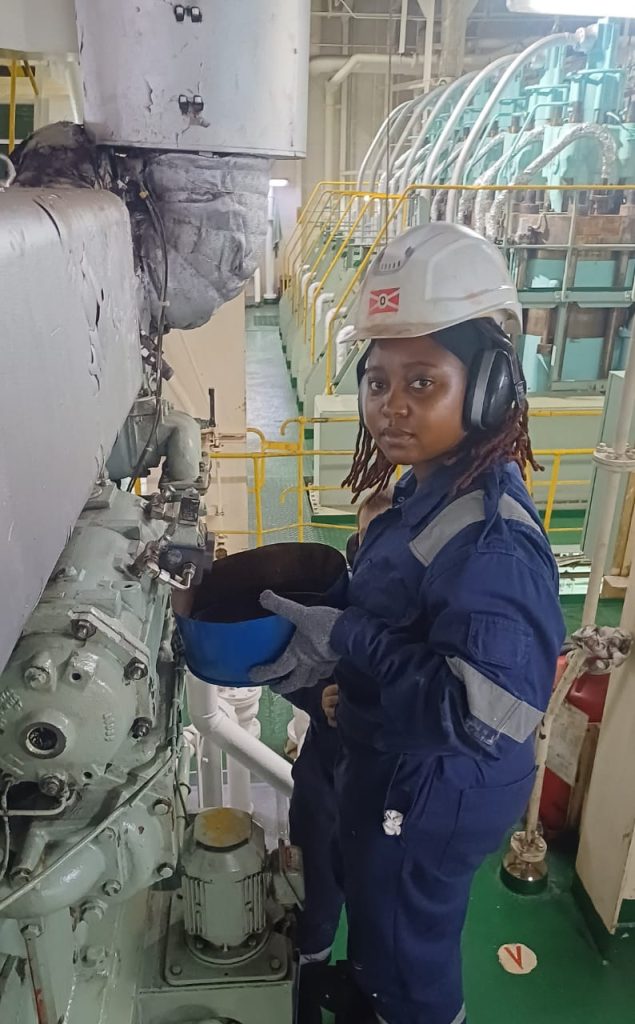
According to data from Marine Insight, women represent just 1% of the world’s seafarers. For African ports, coastal communities, and emerging economies, this statistic hits especially close to home. As the continent positions itself to harness the “Blue Economy” and ramp up intra-African trade under the African Continental Free Trade Area (AfCFTA), we cannot afford to leave half our population on the dock.
The maritime sector is the lifeblood of global trade, yet Africa’s engagement with it remains paradoxically peripheral. Despite possessing vast coastlines—from the Gulf of Guinea to the Indian Ocean—and critical chokepoints like the Suez Canal and the Cape of Good Hope, African nations collectively own less than 2% of the global fleet. If we are to change this narrative, we must start by fixing who we put on the ships. With women making up just 1% of seafarers globally, the number for African women is almost certainly a fraction of that. This is not merely a global equity issue; it is an African development emergency.
The Double Burden of Culture and Insecurity
In much of Africa, deep-seated patriarchal traditions compound the industry’s inherent conservatism. Seafaring is not only viewed as dangerous and isolating but also as a profession that conflicts with a woman’s expected domestic and child-rearing duties. Families are often reluctant to let daughters spend months at sea, a reluctance reinforced by the very real security threats off our coasts.
From piracy in the Gulf of Guinea to the lingering instability in the Horn of Africa, the perceived physical dangers are amplified for women. However, these security challenges are not a reason for exclusion; they are an argument for a more rigorous, professional, and diverse workforce. If African shipping is to compete globally, it cannot rely on outdated cultural norms that discourage recruitment from the entire talent pool.
The Demographic Dividend and the Youth Bulge
Critics will argue that the physical demands of the job are prohibitive. While physical standards are non-negotiable, the reality is that modern maritime roles—navigation, engineering, automation, and logistics—increasingly rely on technical acumen rather than brute strength. Africa is home to the world’s youngest population; we have a massive, tech-savvy youth bulge eager for employment. The shipping industry faces acute seafarer shortages, aging crews, and high turnover. Waiting to recruit young African women into this sector is not just a social justice issue; it is a strategic imperative to fill labor gaps and drive economic growth.
Onboard, women often bring the communication skills, attention to detail, and team cohesion that are vital for long voyages. For a continent building its maritime capacity from the ground up, integrating women from the start would be a competitive advantage, ensuring our fleets are more innovative and operationally resilient.
Progress on the Horizon, but Sails Lagging
There are encouraging glimmers. The Nigerian Maritime Administration and Safety Agency (NIMASA) has initiated female cadet training programs, South Africa’s SAMSA has supported women-in-maritime initiatives, and regional bodies like the Maritime Organization of West and Central Africa (MOWCA) are working to develop gender-inclusive policies. The African Union’s Agenda 2063 explicitly calls for the empowerment of women, and the Blue Economy strategy offers a pathway to economic freedom. Yet, these efforts remain scattered and underfunded. The needle has barely moved beyond that symbolic 1%.
Seizing the AfCFTA Opportunity
The AfCFTA is set to revolutionize the movement of goods across the continent. This will require a massive expansion of African shipping lines, port infrastructure, and logistical expertise. As we build this new maritime infrastructure, we must design it with inclusivity at the forefront.
This means ship designers incorporating gender-neutral facilities. Training academies must actively recruit young women from coastal and inland communities, offering scholarships and mentorship. Companies must enforce zero-tolerance harassment policies and provide clear career ladders. Most importantly, African male leaders—who still dominate port authorities and maritime ministries—must champion inclusion as a core pillar of our industrial strategy, not a peripheral HR checkbox.
A Call to Hoist the Sails
The maritime industry prides itself on resilience and adaptability. For Africa to truly own its trade routes, it must apply those qualities to dismantling outdated mindsets. A workforce that reflects the diversity of the continent will be stronger, more innovative, and better prepared to navigate the challenges ahead—from green shipping regulations to maritime security.
The young African women who dream of becoming captains and engineers should not face a solitary struggle against the tide. They should represent the vanguard of a new maritime reality—one where talent, not gender, determines who navigates our waters.
The Atlantic and Indian Oceans are vast enough for everyone. Africa’s economic future depends on having the courage to lower the gangway and invite its daughters aboard. Until then, the 1% statistic, as highlighted by Marine Insight, remains not just an embarrassing global figure, but a profound failure of African imagination and leadership. It is time to chart a new course—before the tide of opportunity recedes.