


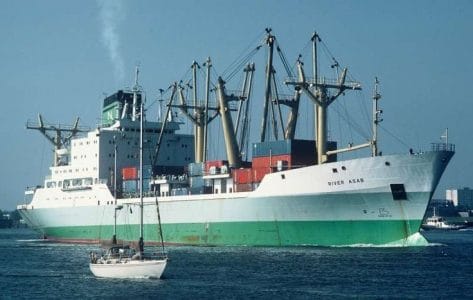
A ship’s flag is meant to answer a simple question: which state is responsible for this vessel? In practice, the answer is often incomplete, misleading, or deliberately obscured. Behind many African flags operating in the continent’s waters—and beyond—lie layered corporate structures, nominee arrangements, expired or forged certificates, and, in a growing number of cases, vessels with no legitimate connection to the country whose colours they fly. The result is a governance gap that undermines maritime security, regulatory credibility, and Africa’s ability to capture real value from its blue economy.
In April 2026, the International Maritime Organization’s Legal Committee approved the first dedicated international guidelines on ship registration. The move responded to a sharp rise in false-flag cases: 529 vessels had falsely flown a national flag in the preceding year, affecting nearly 40 member states. The guidelines address governance of who may register ships, quality assurance, due diligence on ownership and identity, eligibility checks, and information sharing. They are non-binding, yet they fill a long-standing regulatory vacuum. Never before has there been a comprehensive international framework governing ship registration itself.
The Ownership Problem
The problem is not abstract. A registered owner is the name on the papers. The beneficial owner is the natural person or interest that ultimately controls the vessel and enjoys its economic benefits. When those two diverge—through shell companies, complex joint ventures, or opaque offshore structures—accountability evaporates. Fraudulent registration compounds the difficulty: continued use of expired flags, falsified documents, AIS manipulation, and outright impersonation of registries that never authorised the vessel. These practices conceal identity, frustrate enforcement, and expose legitimate flag states to reputational damage, heightened port-state scrutiny, and insurance complications.
Africa has become a particular focus. Analyses from the Institute for Security Studies and others document rapid growth in registered tonnage under flags such as Benin, The Gambia, Comoros, Guinea, Sierra Leone, and Cameroon—growth that in some cases tracks the movement of high-risk tankers linked to sanctions-evasion networks. One documented example is the tanker Range Vale, identified by German authorities as part of Russia’s shadow fleet after it falsely claimed Zimbabwean registration; Zimbabwe notified the IMO that a fraudulent entity had issued the certificates. The vessel later appeared under a Sierra Leonean flag. More than half of reported false-flag cases in recent periods have involved African jurisdictions. This does not mean African registries are inherently illegitimate. It does mean that weak verification systems, limited resources, and insufficient oversight of third-party operators create openings that sophisticated actors exploit.
Nigeria’s Mixed Record
Nigeria illustrates both the strengths and the remaining gaps. The Merchant Shipping Act 2007, the NIMASA Act 2007, and the Cabotage Act 2003 establish clear legal pathways for registration of merchant ships, fishing vessels, bareboat-chartered vessels, and cabotage vessels. Ownership is generally restricted to Nigerian citizens, qualifying companies, and prescribed persons, with limited openings for foreign interests under bareboat arrangements. NIMASA’s Ship Registration Office administers the system.
Yet establishing the corporate applicant is not the same as establishing the ultimate beneficial owner. Multi-layered ownership, joint ventures, and nominee structures can still obscure control. Registry information is not publicly searchable; third parties must apply formally for status or mortgage searches. Legitimate confidentiality has its place, but commercial parties—charterers, financiers, insurers, port authorities—need reliable, timely verification channels if due diligence is to function.
Registration alone does not create an indigenous shipping industry. Nigeria has long sought to grow local vessel ownership and capture more of the freight earnings generated by its own cargo. Access to capital, cargo preference, technical competence, and competitive operating costs matter as much as the flag on the stern. A credible registry supports that ambition by giving investors, lenders, and counterparties confidence that ownership and control can be established and that the flag state exercises real jurisdiction. An opaque or porous registry does the opposite: it invites heightened scrutiny, raises the cost of capital, and risks associating the national flag with vessels engaged in sanctions evasion or other illicit activity.
A Practical Agenda
The practical agenda for African maritime administrations is therefore clear:
First, implement rigorous beneficial-ownership verification at the point of registration—company documents, registers of directors and shareholders, identification of natural persons, IMO company and owner numbers, and ongoing monitoring of changes in control.
Second, authenticate documents and cross-check against the IMO’s Global Integrated Shipping Information System, sanctions lists, and other official sources before issuing certificates.
Third, retain effective governmental oversight of any private or third-party operators involved in registration; a national flag cannot be outsourced without accountability.
Fourth, create controlled but functional channels for legitimate commercial and official enquiries so that due diligence can occur without compromising necessary confidentiality.
Fifth, strengthen regional and international information-sharing so that flag-hopping and false claims are detected early.
These steps align directly with the 2026 IMO guidelines. They also serve national economic interests. A flag that cannot be trusted becomes a liability rather than an asset. Ports, insurers, and trading partners respond by intensifying inspections and raising risk premiums. Legitimate shipowners and operators bear the cost. Conversely, a registry that can demonstrate traceable ownership, authentic documentation, and active oversight becomes a competitive advantage—supporting investment, improving market access, and reinforcing the state’s claim to exercise genuine flag-state responsibility under UNCLOS Articles 91 and 94.
Sovereignty, Not Convenience
The deeper question is therefore not merely administrative. It is whether African states will treat their flags as expressions of sovereign authority that require continuous verification and accountability, or as administrative conveniences that can be gamed. The ships operating in African waters—and the economic and security consequences that flow from them—will reflect the answer.
Ownership on paper is not enough. Control, benefit, and responsibility must be identifiable. Only then does a flag mean what international law intends it to mean.
Andrew Mwangura is a maritime security analyst and shipping editor based in Mombasa, Kenya.
References
International Maritime Organization, Legal Committee, Guidelines on Ship Registration (2026). Institute for Security Studies, analyses of African ship registries and sanctions-evasion networks. UNCLOS Articles 91 and 94. Nigerian Maritime Administration and Safety Agency (NIMASA), Ship Registration Office. German Federal Police and customs reports on the Range Vale. IMO Global Integrated Shipping Information System (GISIS).