


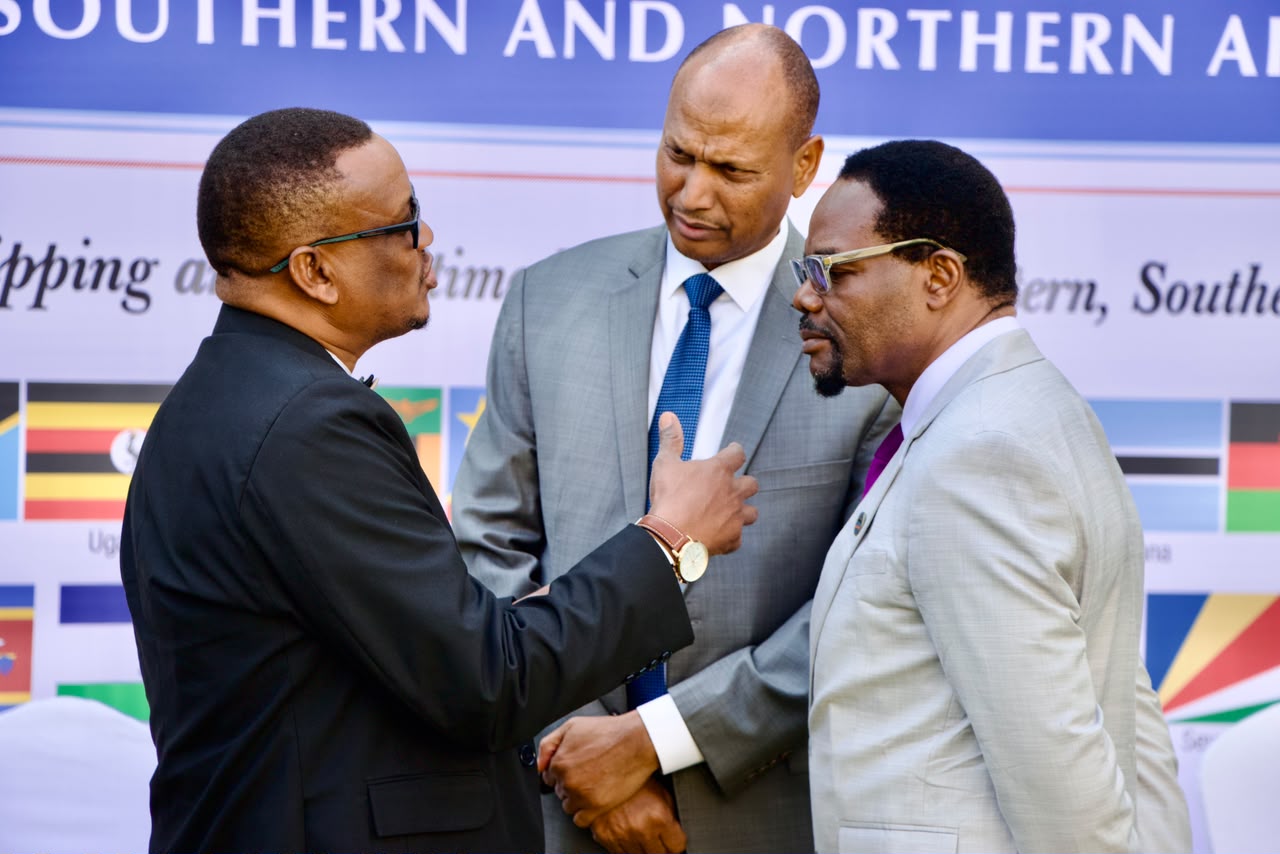
That is why Principal Secretary Aden Abdi Millah’s call for collective commitment toward establishing the Regional Maritime University deserves recognition not as another bureaucratic announcement, but as one of the most consequential maritime policy initiatives of this generation.
His message at the MOESNA validation meeting was timely and strategically vital. The planning stage is largely complete. The framework is ready. What remains is political courage, sustained financial commitment, and regional ownership.
The question is no longer whether Eastern, Southern, and Northern Africa need a Regional Maritime University. The question is whether the region can afford to delay it any longer.
Around the world, great maritime nations are built on great maritime institutions. The United Kingdom has its maritime academies. Norway possesses world-renowned maritime universities. Singapore transformed itself into a global maritime powerhouse by investing heavily in education, research, technology, and human capital. Ghana’s Regional Maritime University has, for decades, produced thousands of professionals serving across West and Central Africa.
Eastern, Southern, and Northern Africa should no longer remain the only major African maritime region without a comparable centre of excellence.
This is not merely about producing graduates. It is about producing ship captains, marine engineers, naval architects, maritime lawyers, port planners, logistics specialists, hydrographers, marine environmental scientists, maritime economists, cybersecurity experts, marine surveyors, and future policymakers capable of navigating an increasingly complex maritime world.
Without highly skilled professionals, ports become expensive infrastructure without competitive advantage. Ships become dependent on foreign expertise. Marine resources remain underutilized. The blue economy becomes an unrealized dream.
Africa’s Blue Economy Demands African Expertise
The Western Indian Ocean is rapidly becoming one of the world’s most strategically important maritime regions. It carries enormous volumes of global trade connecting Asia, Europe, and Africa. It hosts expanding offshore energy projects. It supports fisheries that sustain millions of livelihoods. It contains vast opportunities in marine biotechnology, renewable ocean energy, cruise tourism, ship repair, logistics, and maritime services.
Yet many countries continue to depend heavily on foreign consultants, foreign officers, foreign marine engineers, and foreign maritime institutions for technical expertise. This dependency is neither sustainable nor economically sensible.
Every scholarship sent overseas represents valuable foreign exchange leaving the continent. Every foreign consultant hired reflects capacity that could have been developed locally. A Regional Maritime University offers the opportunity to reverse this trend.
A University That Goes Beyond Classrooms
The proposed institution must never become simply another degree-awarding university. Its ambition must be far greater. It should become the intellectual engine of Africa’s maritime transformation.
The university should integrate education with applied research, innovation, policy development, industry partnerships, and practical training. It should host internationally accredited simulation centres. Develop regional centres for maritime cybersecurity. Lead research on climate resilience and decarbonization. Support sustainable fisheries management. Advance autonomous shipping technologies. Provide specialized training in maritime law and dispute resolution. Strengthen port management and logistics systems. Promote marine environmental protection. Offer executive education for government officials, regulators, naval officers, and private-sector leaders.
Above all, it should become the region’s primary source of evidence-based maritime policy research.
Africa does not simply need more maritime graduates. It needs maritime thinkers.
Solving the Region’s Greatest Maritime Bottleneck
Perhaps no challenge has frustrated aspiring African seafarers more than the chronic shortage of structured maritime training pathways. Across the region, thousands of cadets graduate from maritime academies every year but remain unable to complete mandatory sea-time requirements needed for professional certification.
The result is heartbreaking. Qualified graduates become unemployed. Families lose hope. Training institutions lose credibility. Shipping companies continue recruiting from traditional labour-supplying countries.
The Regional Maritime University cannot solve this challenge alone. However, it can coordinate regional partnerships with shipping companies, establish structured cadet placement programmes, negotiate international training agreements, standardize competency development, and create stronger links between maritime education and industry demand.
Education must no longer end at graduation. It must culminate in employability.
Regional Integration Through Shared Knowledge
Perhaps the most significant contribution of the proposed university lies beyond education itself. It represents regional integration in its most practical form.
Shipping ignores political borders. Marine pollution ignores national jurisdictions. Piracy threatens multiple countries simultaneously. Climate change affects every coastline. Maritime safety depends upon cooperation.
A shared institution creates shared standards. Shared research. Shared expertise. Shared professional networks. Shared innovation. In an increasingly interconnected maritime economy, regional collaboration is no longer optional—it is indispensable.
Kenya’s Opportunity to Lead
Kenya has every reason to champion this initiative. The country possesses one of Africa’s most developed port systems. The Port of Mombasa continues to serve as the principal gateway for several landlocked countries. Bandari Maritime Academy has steadily expanded its training capacity. The Kenya Maritime Authority continues strengthening regulatory oversight. Public and private investment in blue economy infrastructure continues to grow.
Hosting—or helping lead—the Regional Maritime University would complement these achievements while reinforcing Kenya’s position as East Africa’s maritime knowledge hub.
Leadership, however, carries responsibilities. Kenya must invest not only politically but financially. It must support faculty development, research funding, digital infrastructure, international accreditation, industry partnerships, and scholarship programs that ensure access for students across the region.
The Implementation Challenge Begins Now
Principal Secretary Aden Millah was correct to emphasize that the validation framework must now move toward endorsement by MOESNA’s Policy Organs.
But approval is only the beginning. Many excellent African policy frameworks have failed during implementation. This initiative must avoid that fate.
Clear governance structures must be established. Sustainable financing mechanisms identified. Industry participation institutionalized. International accreditation secured. Academic excellence protected from political interference. Private-sector partnerships expanded. Research funding guaranteed. Performance benchmarks regularly monitored.
The university’s success will ultimately be measured not by the elegance of its founding documents but by the calibre of graduates it produces, the research it generates, and the impact it delivers across the maritime sector.
A Defining Moment for Africa’s Maritime Future
History rarely announces itself. Often, transformative change begins quietly—in conference rooms, policy meetings, and technical validation workshops that receive little public attention.
The MOESNA meeting may prove to be one such moment. If member states seize this opportunity, future generations may look back on these deliberations as the point at which Eastern, Southern, and Northern Africa decided to stop exporting talent and importing expertise. Instead, the region chose to educate its own maritime leaders, innovate its own solutions, and shape its own destiny.
The Regional Maritime University is not simply an educational institution waiting to be established. It is a strategic investment in Africa’s maritime sovereignty, economic competitiveness, and regional integration.
The framework has been drafted. The vision has been articulated. The political support is growing. Now comes the most important task of all: turning ambition into action.
Because the future of Africa’s blue economy will not be determined by the size of its coastline, but by the quality of the people entrusted to lead it.
Andrew Mwangura is a Mombasa based Public Intellectual and Maritime Affairs Analyst.