


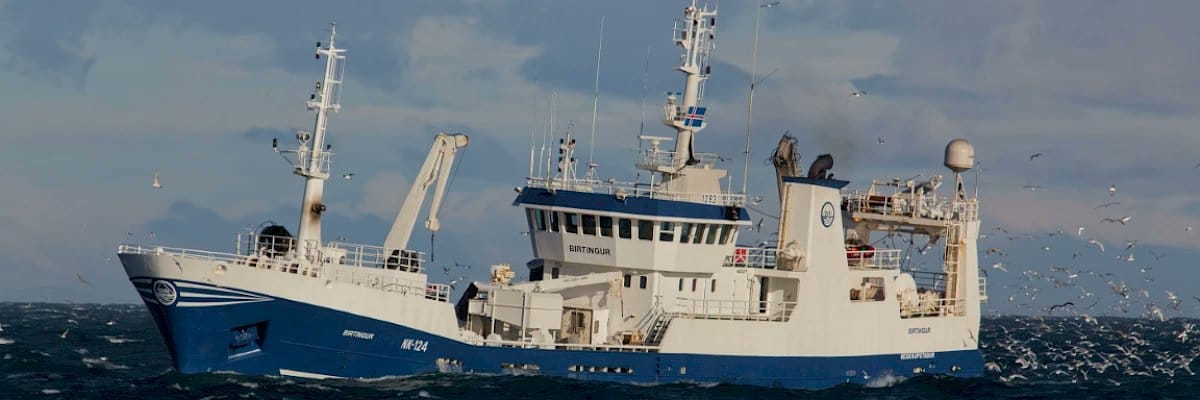
For decades, Kenya has possessed an extraordinary maritime advantage without fully converting it into economic value. We have a long coastline, productive fishing grounds, strategically located ports, a growing maritime workforce, and access to regional and international seafood markets. Yet much of this potential remains untapped, while coastal communities continue to struggle with unemployment, inadequate infrastructure, limited market access, and low incomes.
Shimoni could help change that equation.
The modern facility—designed around fishing, fish handling, processing, and value addition—represents an important departure from the traditional conception of a port as simply a place where ships load and discharge cargo. It points toward a more sophisticated model: the port as an industrial ecosystem that connects vessels, fishermen, processors, cold-chain operators, exporters, logistics companies, financial institutions, research organisations, and local communities.
This is precisely how Kenya should approach the Blue Economy.
The Kenya Ports Authority notes that the Shimoni facility includes a 75-metre by 30-metre jetty and a 135-metre causeway capable of accommodating two fishing vessels simultaneously. It also features fish-processing facilities, cold storage, reefer stations, an ice-making plant, power infrastructure, a biodigester, and wastewater-management systems.
These are not peripheral amenities—they are the backbone of a modern commercial fisheries industry.
The real prize is the value chain, not the port
The most important question facing Kenya now is not whether Shimoni has been completed, but whether the country can build a commercially viable fisheries value chain around it.
For too long, the coastal fishing economy has been characterised by small-scale operations, inadequate landing facilities, weak cold chains, post-harvest losses, and limited access to high-value markets. A fisherman who catches high-quality fish but lacks ice, cold storage, reliable transport, or access to processors can be forced to sell cheaply, with the economic value of the catch captured elsewhere.
Shimoni provides an opportunity to reverse that pattern.
The objective should be to ensure that fish landed at Shimoni does not simply leave the coast as raw or minimally processed product. Instead, it should move through a chain of activities that creates progressively higher value: sorting, grading, chilling, freezing, filleting, smoking, drying, packaging, branding, certification, logistics, and export.
That is where the real economic transformation lies.
A fish-processing plant can create more value than a fish landing site. A cold-chain network can preserve more income than an improvised market. An internationally certified processing operation can open markets that are inaccessible to informal traders.
The port must therefore become the nucleus of a Shimoni Fisheries Industrial Cluster—bringing together fishermen, cooperatives, processors, exporters, cold-chain companies, boat builders, marine-engine technicians, packaging manufacturers, transporters, financial institutions, insurance providers, training institutions, and fisheries researchers.
If that ecosystem develops, the economic impact could extend far beyond the physical boundaries of the port.
The promise of Shimoni must also be measured by what happens to ordinary fishing communities. The State Department has projected that the project could create up to 1,000 direct and indirect jobs—but employment numbers alone should not be the benchmark.
The bigger ambition should be to create maritime entrepreneurs.
Artisanal fishermen should not become merely suppliers of cheap raw material to large processors. They should have opportunities to participate in cooperatives, supply contracts, processing enterprises, cold-chain businesses, and export-oriented ventures. This requires deliberate policy intervention.
Fisher cooperatives should have access to affordable finance, modern fishing equipment, safety training, insurance, market information, and digital payment systems. Young people from Kwale should be trained not only as fishermen, but also as refrigeration technicians, marine engineers, seafood processors, quality-control specialists, logistics professionals, boat builders, and port-service providers.
Women, who occupy important positions in fish trading, processing, and marketing, must be central to this transformation.
A modern port should not simply modernise infrastructure while leaving the social structure of the fishing economy unchanged—it should modernise opportunity.
Kenya must stop exporting raw potential
There is a broader national economic argument here. Kenya has long aspired to become an industrial and export-oriented economy, yet much of the country’s natural-resource wealth still leaves the production chain with limited domestic processing.
The fisheries sector presents an opportunity to do things differently.
Instead of exporting low-value fish products, Kenya should target premium seafood markets where traceability, quality, sustainability, and certification command higher prices. Shimoni can become a platform for producing Kenyan-branded seafood for regional markets in East and Central Africa, as well as international destinations.
But international markets are unforgiving. They demand reliable cold chains, food-safety certification, traceability, sanitary controls, responsible fishing practices, and consistent quality. Infrastructure alone cannot deliver this.
Kenya will need a coordinated regulatory framework involving fisheries authorities, KPA, the Kenya Maritime Authority, county governments, standards agencies, customs and trade authorities, environmental regulators, and private-sector operators. The objective should be a single, predictable seafood export ecosystem.
The capacity question must be resolved
There is, however, an important issue that government and KPA should clarify publicly.
The Shimoni project has historically been described in government planning documents as having a 50,000-metric-ton annual capacity. A Kenya Vision 2030 progress report described the project as an industrial fishing port with that capacity. The current KPA website, however, states that Shimoni has capacity to process up to 24,000 metric tons of fish annually.
That difference is significant.
It may reflect a distinction between the port’s potential overall handling capacity and the installed processing capacity of the completed phase, or a change in project scope. Whatever the explanation, it should be made clear. Investors, fishermen, development partners, and the public need to know precisely what the completed facility can handle today, what capacity can be added later, and what investment is required to reach the ultimate design capacity.
Transparency on this point is not a technicality—it is essential for investment planning and public accountability.
The cold chain could be Shimoni’s biggest economic weapon
Perhaps the most transformative component of the project is not the jetty but the cold-chain infrastructure. Fish is a highly perishable commodity. Without reliable ice-making, cold storage, refrigerated transport, and reefer facilities, fishermen are effectively racing against time from the moment their catch comes ashore.
The presence of ice-making facilities, cold storage, and reefer infrastructure at Shimoni creates the foundation for changing that dynamic. But the cold chain must extend beyond the port.
Kenya needs refrigerated collection centres and transport links connecting fishing communities across the South Coast with Shimoni. Otherwise, the modern facility risks becoming an island of efficiency surrounded by an inefficient supply chain. The same principle applies to electricity, water, roads, telecommunications, and digital connectivity. A fishing port cannot be globally competitive if trucks cannot reliably reach it, electricity is unstable, broadband is inadequate, or fishermen cannot access market information.
Shimoni should become a regional seafood hub
There is another opportunity that Kenya should not overlook.
Shimoni is strategically located close to the Tanzanian border and within the wider Western Indian Ocean fisheries economy. Its future should therefore not be confined to Kwale or even Kenya. With the right strategy, Shimoni could become a regional seafood hub serving markets in Tanzania, Uganda, Rwanda, South Sudan, and the wider Great Lakes region.
This would require Kenya to think beyond the traditional port model. The country should pursue regional seafood trade agreements, harmonised standards, efficient customs procedures, digital certification, and reliable road and maritime logistics. The port could eventually support a network linking fishing grounds, landing sites, processors, and markets throughout the Western Indian Ocean and East African region.
That would turn Shimoni from a local fisheries facility into an important component of East Africa’s food and logistics architecture.
Maritime security is an economic necessity
The reference by Dr Raymond Omollo to maritime security is also important. Blue Economy investment cannot flourish in an insecure maritime environment. Illegal, unreported, and unregulated fishing, maritime crime, territorial disputes, unsafe fishing practices, and environmental degradation threaten the economic foundations of coastal communities.
Security must therefore be understood as part of economic infrastructure. Fishermen need safe waters. Fishing vessels need reliable navigation and communication systems. Investors need confidence that their assets are protected. Exporters need predictable supply chains.
The security agencies, KPA, Kenya Maritime Authority, Kenya Coast Guard Service, and fisheries institutions should consequently operate within an integrated maritime-security framework. Technology can help enormously, including vessel monitoring, digital licensing, fisheries traceability, and improved maritime domain awareness.
But enforcement must be matched by community participation. Local fishing communities are often the first to observe illegal fishing and suspicious maritime activity. They should be treated not simply as beneficiaries of government programmes, but as partners in maritime governance.
Environmental sustainability cannot be an afterthought
There is an even bigger test ahead. Kenya cannot industrialise fisheries by repeating the mistakes of overfishing elsewhere in the world. The ocean is not an infinite resource. If Shimoni succeeds commercially but contributes to depletion of fish stocks, destruction of marine habitats, or pollution, the apparent economic success will eventually undermine itself.
The project’s inclusion of a biodigester and wastewater-management infrastructure is therefore encouraging. But environmental sustainability must extend throughout the fishing value chain. Kenya needs science-based catch limits, effective monitoring, control and surveillance, protection of spawning grounds, responsible fishing gear, enforcement against destructive fishing, and stronger cooperation with neighbouring countries.
Industrial fishing must complement—not destroy—artisanal fishing. The upgraded community jetty is particularly significant because it preserves access for artisanal fishermen and marine-tourism operators. That principle should remain fundamental as the facility becomes commercially operational. The Blue Economy must be inclusive by design.
The port must be connected to research and maritime education
Another missing piece in Kenya’s fisheries transformation is research. Shimoni should be connected to universities, marine research institutions, and fisheries scientists. Kenya needs reliable data on fish stocks, migration patterns, climate impacts, fishing effort, and market demand.
The facility should also become a training ground for the next generation of Kenyan maritime professionals. There is enormous potential for programmes in fisheries technology, marine engineering, refrigeration, seafood processing, port operations, maritime logistics, aquaculture, marine environmental management, and vessel safety.
Bandari Maritime Academy and other maritime and technical institutions should be encouraged to develop programmes linked directly to the emerging fisheries economy. If Kenya is serious about creating jobs for young people, it must train them for industries that are actually being built.
KPA must operate Shimoni with a different philosophy
The handover of Shimoni to KPA marks the beginning—not the end—of the project. KPA’s responsibility will be to ensure that the port does not become an underutilised public asset. The Authority has considerable experience managing maritime infrastructure and is responsible for Kenya’s seaports, including Mombasa, Lamu, Kisumu, and Shimoni.
But Shimoni requires a different operating philosophy from a conventional commercial cargo port. Its success will depend heavily on private-sector participation. KPA should concentrate on providing efficient port infrastructure, marine services, safety, security, and regulation while creating space for private investment in processing, cold storage, logistics, packaging, export, and other value-added activities.
The objective should be to create a competitive ecosystem rather than a heavily bureaucratic state-run fisheries enterprise. A transparent concession or operating framework, where appropriate, could attract specialised fisheries investors while protecting public interests.
The forgotten question: what happens to the small fisher?
Kenya must also guard against a familiar development trap. Large infrastructure projects can unintentionally marginalise the very communities they are supposed to benefit. The success of Shimoni should therefore be judged by measurable indicators beyond cargo volumes and revenue.
Government should publish annual data on:
· The volume of fish landed at Shimoni
· The proportion processed locally
· The value of seafood exports
· The number of Kenyan-owned fisheries enterprises
· Jobs created for local residents
· Women and youth participating in the value chain
· Income changes among artisanal fishermen
· Post-harvest losses
· The number of fishing vessels using the facility
· Private investment attracted
· Compliance with sustainable fisheries standards
· Revenue generated for national and county economies
This would turn the Blue Economy from a political slogan into a measurable economic program.
Shimoni can become a model for Africa
The significance of Shimoni extends beyond Kenya. Across Africa, the ocean offers enormous economic potential, yet many coastal economies remain trapped in low-value fisheries systems. A modern fisheries port linked to processing, cold chains, maritime security, sustainable fishing, skills development, and international markets could provide a template for other African coastal states.
Kenya has an opportunity to demonstrate that African countries can move from exporting raw marine resources to building domestic value chains around them. That is the real promise of the Blue Economy.
From promise delivered to value delivered
The completion of Shimoni Fish Port deserves recognition. But infrastructure is only the beginning.
The real test will come when:
· The first generation of fishermen earns more because of it
· Kenyan processors capture a greater share of seafood value
· Young people in Kwale find skilled employment
· Women fish traders gain access to better markets
· Kenyan seafood begins commanding a stronger international reputation
· Fish stocks remain healthy for future generations
The port must therefore not be judged by the size of its jetty, the sophistication of its buildings, or the ceremony that accompanies its commissioning—it should be judged by the economic transformation that follows.
Kenya has spent years talking about the Blue Economy. Shimoni gives the country an opportunity to demonstrate what those words mean in practice. The next phase requires an integrated national fisheries strategy that connects infrastructure, sustainable fisheries management, maritime security, skills, finance, technology, processing, logistics, and international trade.
If those pieces are brought together, Shimoni could become much more than a fishing port. It could become the industrial heart of Kenya’s coastal fisheries economy, a gateway for African seafood exports, and a practical demonstration that the ocean can generate prosperity without sacrificing sustainability.
The challenge now is simple but profound:
Kenya has built the port. It must now build the industry.
That is where the true Blue Economy journey begins.