


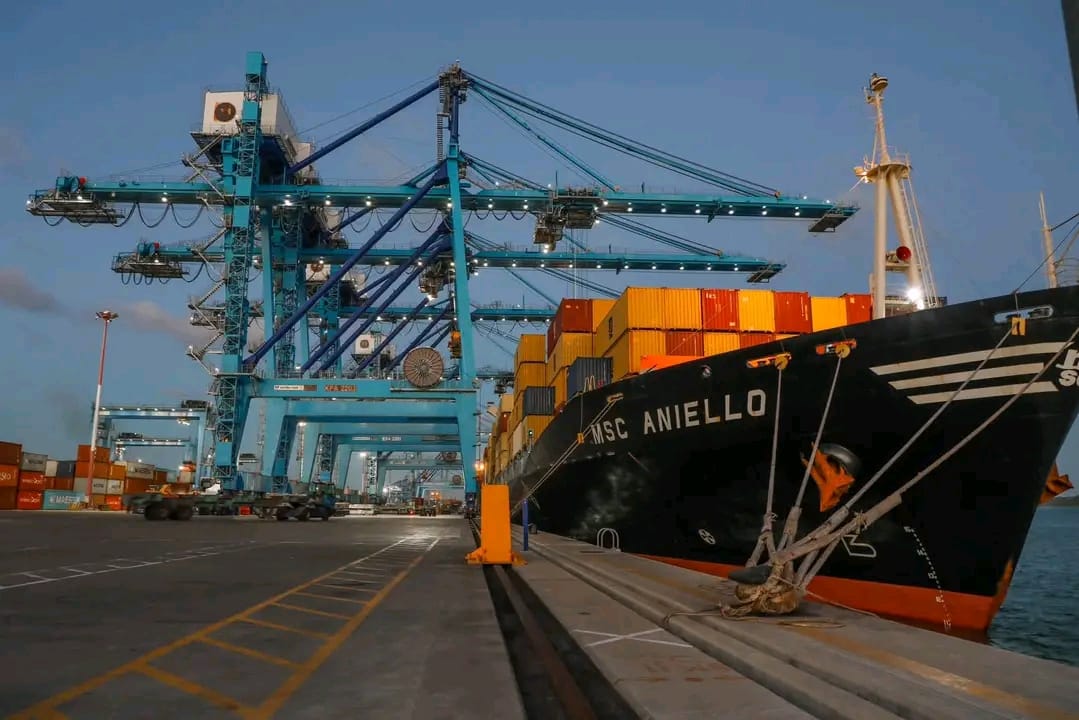
The Kenya Ports Authority’s latest vessel schedule paints a vivid picture of activity along the Kenyan coast. Over the coming two weeks, a combined 51 vessels are due to call at the Ports of Mombasa and Lamu. Mombasa will handle the bulk—42 ships, including 22 container vessels, 12 conventional cargo carriers, four car carriers and four oil tankers—while Lamu is set for nine container and conventional vessels. The announcement is more than a routine operational update. It is a snapshot of sustained regional demand and a reminder that Kenya’s maritime gateways remain indispensable to East and Central African trade.
Yet the numbers also crystallise a deeper tension: growth is real and accelerating, but capacity, efficiency and connectivity still lag the ambition of turning these ports into seamless regional logistics hubs.
Demand Is Robust and Diversifying
Mombasa continues to anchor the Northern Corridor. Cargo throughput reached a record 45.45 million tonnes in 2025, up 10.9 percent from the previous year, with transit volumes rising nearly 20 percent to 15.88 million tonnes. Container traffic climbed to about 2.11 million TEUs. Uganda remains the dominant transit destination, but Rwanda, South Sudan, the Democratic Republic of Congo and others keep the volumes flowing.
Recent operational milestones reinforce the picture. In early September 2026 the port set a new single-shift container discharge record—863 boxes from the MV Aniello—before completing the full 1,005-container load in roughly one and a half shifts. Investments in equipment, process discipline and workforce motivation are yielding measurable gains in productivity. Ship turnaround times have improved modestly in some periods, and the Standard Gauge Railway has posted its first operating profit since launch, helped by higher freight volumes and better port-rail interface.
Lamu, long viewed as underutilised, is showing clearer signs of life. The same week as the vessel schedule, Ethiopia’s first major commercial call—the MV Abbey carrying 60,000 tonnes of fertiliser for southern Ethiopia—docked at the port. Kenyan and Ethiopian officials framed the arrival as proof of concept for the Lamu Port–South Sudan–Ethiopia Transport (LAPSSET) corridor. Lamu handled nearly 800,000 tonnes in 2025, a dramatic jump from the previous year, and has absorbed diverted traffic linked to Middle East disruptions. Its deeper natural draft and longer berths position it for larger vessels that Mombasa still struggles to accommodate routinely.
The 51-vessel pipeline therefore reflects genuine commercial momentum rather than seasonal noise. Container ships, bulk fertiliser and wheat carriers, car carriers and tankers all point to diversified demand serving both Kenya’s domestic economy and its landlocked neighbours.
Structural Constraints Persist
Beneath the positive headlines lie familiar constraints. Mombasa has long operated near or above optimal capacity utilisation at key terminals. Chronic vessel waiting, high yard density and landside bottlenecks—trucks, documentation and inland evacuation—continue to inflate costs and erode schedule reliability. Comparative data show Dar es Salaam reducing waiting incidence while Mombasa has struggled with persistently high rates, even as volumes grow. Exporters of perishable goods, such as mangoes, have reported multi-day delays that threaten product quality and market access.
Lamu’s challenge is different but equally consequential. The first three berths offer design capacity of 1.2 million TEUs, yet inland corridors remain incomplete. Without reliable, competitive road and eventually rail links to Ethiopia, South Sudan and northern Kenya, the port risks remaining a secondary option rather than a true alternative gateway. Security, land issues and the slow pace of supporting infrastructure have historically limited offtake. The Ethiopian fertiliser shipment is encouraging, but sustained traffic will depend on predictable, cost-competitive hinterland logistics.
Broader competition is intensifying. Regional ports are upgrading, and shipping lines are increasingly sensitive to total supply-chain costs and reliability. Kenya’s share of the common transit market is not guaranteed; it must be earned continuously through performance.
The Reform Agenda Is Moving—Slowly
Kenya is not standing still. Phase Two of Mombasa’s Second Container Terminal is complete and due for commissioning, adding significant capacity. Berth 19B, further terminal expansions, dredging, new equipment and Terminal Operating System upgrades are underway. The government has advanced public-private partnership packages covering Mombasa berths 11–14, Container Terminal 1, and an integrated Lamu Container Terminal plus special economic zone. These aim to shift toward a clearer landlord model in which private operators inject capital, technology and operational expertise while the state retains strategic oversight.
Dongo Kundu multipurpose berth works and special economic zone development signal intent to create industrial and logistics clusters rather than pure transit facilities. Lower electricity tariffs and other incentives for SEZ investors could help capture more value-addition on Kenyan soil.
These steps are necessary but not yet sufficient. Execution risk remains high. PPP procurement must be transparent and competitive. Digitalisation of documentation and smart-gate systems needs acceleration. Coordination among KPA, Kenya Revenue Authority, standards agencies and inland transport operators must improve. And LAPSSET’s road, dry-port and eventual rail components require sustained funding and political focus if Lamu is to become more than an occasional overflow facility.
What Success Looks Like
The busy two weeks ahead should be read as both validation and warning. Validation because the ports continue to attract meaningful volumes and are delivering incremental efficiency gains. Warning because the structural gap between demand growth and reliable capacity is still too wide.
A successful trajectory would feature:
Consistently shorter vessel waiting and turnaround times at Mombasa.
Measurable diversion of appropriate cargo to Lamu once hinterland links mature.
Higher utilisation of SGR and inland container depots to decongest the waterfront.
Successful PPP concessions that modernise legacy assets without compromising national strategic interests.
Tangible growth in value-added activities around the ports rather than pure throughput.
Kenya’s geographic advantage is real. Mombasa and Lamu sit astride critical trade routes serving a large and growing hinterland. The vessel calls scheduled for the next fortnight demonstrate that shippers still prefer these gateways when service is competitive. The task now is to convert episodic busy periods into sustained, predictable excellence. That requires accelerated investment, institutional coordination and a willingness to let private expertise operate where it can deliver superior results.
If Kenya gets the next phase of reforms right, the current pipeline of 51 vessels will look modest in hindsight. If it does not, the same numbers will serve as a recurring reminder of opportunity only partially seized. The ports are busy. The harder work of making them reliably world-class remains.