


Ask most people to picture an oil rig, and they’ll picture danger—fire, blowouts, a hard-hat silhouette against a flare stack. What they won’t picture is a career. That’s the gap this piece aims to close.
Offshore energy work—across supply vessels, FPSOs, jack-up rigs, and fixed platforms—remains one of the last industries where someone without a university degree can walk into a genuinely high-paying, structured, and internationally portable career. Yet it barely registers as an option for the people who’d benefit most from it.
The reputation problem is understandable. The work is hard, the hours long, and the industry has a real safety history it hasn’t fully outrun. But that reputation has calcified into something that no longer matches the reality of a modern, heavily regulated offshore sector—and that mismatch is worth correcting.
The Case for Going Offshore
Strip away the mystique, and the appeal is straightforward: offshore pay scales are built around remoteness and rotation, not credentials. A roustabout on a platform or an able seaman on an offshore supply vessel (OSV) can out-earn a shoreside graduate within a few years, without ever setting foot in a lecture hall.
Rotational schedules—commonly two, three, or four weeks on, followed by an equal or longer stretch off—mean the job isn’t just well paid; it’s compressed. A worker on a 28/28 rotation is only “at work” six months of the year. And unlike a cruise contract, that time off is genuinely off: no ship duties, no standby, home entirely.
The four main environments differ enough to matter:
· Offshore supply vessels ferry crew, equipment, and cargo between shore bases and installations—a marine job at heart, run under the same officer-and-rating structure as any merchant ship, and the most accessible entry point for someone starting from zero.
· Fixed platforms are stationary production facilities, often close to shore, with roles split between production operations, maintenance, and marine support.
· Jack-up and semi-submersible rigs are drilling operations—higher-tempo, higher-risk, and generally higher-paid, built around the drill-crew hierarchy from roughneck up to driller and rig manager.
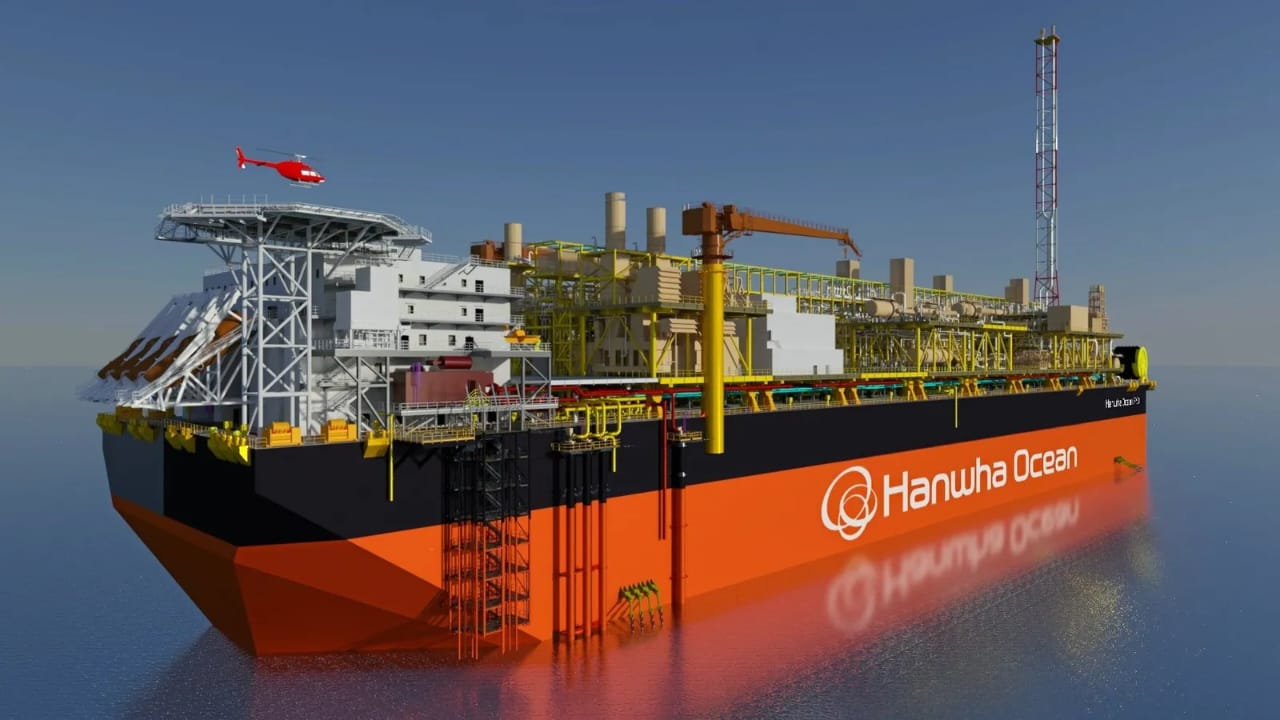
· FPSOs (Floating Production, Storage and Offloading vessels) are the hybrid: part ship, part refinery, moored over a field and processing oil at sea for years or decades at a stretch. This makes them one of the more stable long-term postings in the industry, with production, marine, and process engineering roles all coexisting on the same hull.
Career Pathways
Offshore energy careers generally run along three tracks—and, as with maritime careers more broadly, which one you enter determines both your ceiling and your timeline.
Marine crew operate and maintain the vessel or installation itself: deck ratings, engine ratings, and officers on OSVs and FPSOs, following the same certificate-of-competency ladder used across the merchant marine—able seaman to bosun, cadet to officer, officer to master or chief engineer.
Production and process operations cover the actual business of the installation: roustabout and roughneck on the drilling side; process technician and production operator on platforms and FPSOs. This is the largest track by headcount and the one with the clearest promotion ladder—roustabout to roughneck to derrickman to assistant driller to driller, each step gated by a mix of experience and specific competency sign-offs, not formal education.
Engineering and technical specialists—subsea engineers, electrical and instrumentation technicians, HSE officers, ROV pilots, crane operators—typically enter with a trade qualification or engineering degree already in hand and use offshore postings to fast-track both pay and experience relative to an equivalent onshore role.
Entry-Level
The most common way in is not glamorous, and that’s precisely the point: entry-level roles are built to require no prior offshore experience at all. A roustabout—the deckhand-equivalent on a platform or rig—needs physical fitness, a clean safety record, and the mandatory survival and safety certifications covered below; the job itself is the apprenticeship. On the marine side, the equivalent entry point is ordinary seaman or deck rating aboard an OSV, again requiring certification rather than a degree.
From there, progression is driven almost entirely by logged experience and stackable certifications, not tenure alone. Someone who actively pursues additional tickets can out-promote someone who’s simply been offshore longer. This is a meaningfully different model from most shoreside industries, where years-in-role tends to matter more than what you’ve actively gone and gotten certified for.
The other common entry route is lateral: tradespeople—electricians, mechanics, welders, caterers—who already hold a shoreside trade qualification and move offshore specifically because the same skill pays substantially more once it’s performed a hundred miles from land. For this group, offshore work isn’t a separate career; it’s the same career at a premium, and often the single biggest jump in lifetime earnings a tradesperson will ever make.
Standards of Training
Offshore work sits inside a regulatory net that’s arguably even denser than the cruise industry’s, because the consequences of a mistake—fire, gas release, helicopter transfer, emergency evacuation from a fixed structure with nowhere to go—are categorically higher.
At the marine end, the same STCW framework (Standards of Training, Certification and Watchkeeping) that governs cruise-ship crew applies to OSV and FPSO marine personnel, covering survival, firefighting, and first aid as a baseline, with additional endorsements for tanker familiarization and dynamic positioning where relevant.
Layered on top of that, in most major offshore basins, is BOSIET—Basic Offshore Safety Induction and Emergency Training—the internationally recognized entry credential for anyone, in any role, setting foot on a rig or platform. BOSIET covers helicopter safety and underwater escape (practiced in a dunker simulator), firefighting and self-rescue, sea survival, and first aid. It expires on a four-year renewal cycle enforced by a follow-up course (FOET). No certificate, no helicopter seat. It is, functionally, the ticket that gets you offshore at all, regardless of which career track you’re on.
Specific roles stack further certifications on top of BOSIET: H₂S awareness for anyone near a wellhead, HUET variants for specific installation types, medical and first-aid tickets for supervisory roles, and trade-specific competency sign-offs (rigging, crane operation, confined space entry) tied to national or company-specific schemes.
The cumulative effect is a career where your certifications—not your résumé—are the primary thing an employer checks, and where that same certificate is recognized from the North Sea to West Africa to the Gulf of Mexico. The offshore credential is about as portable a qualification as exists in blue-collar work anywhere in the world.
What This Doesn’t Fix
None of this erases the genuine costs. Rotational work is hard on relationships and family life, even when the time off is real. Helicopter transfer, while statistically safe, is a risk most shoreside jobs simply don’t carry. And the industry’s exposure to commodity price cycles means offshore employment can contract sharply and with little warning when oil prices fall—a volatility that doesn’t show up in the glossy pay figures. Anyone weighing this path should weigh it with that cyclicality in mind, not just the headline day rate.
The Real Argument
The offshore sector has spent decades being talked about as a last resort—the place you end up, not the place you choose. That framing has outlived its accuracy. What’s actually on offer is a credential-based, internationally portable career with a clear ladder, compressed working time, and pay that regularly outstrips degree-track shoreside alternatives—available to people the traditional white-collar pipeline was never built for.
It isn’t a fit for everyone, and it shouldn’t be sold as one. But for the people it does fit, it deserves to be treated as a deliberate career choice—not a fallback, and not a curiosity.