


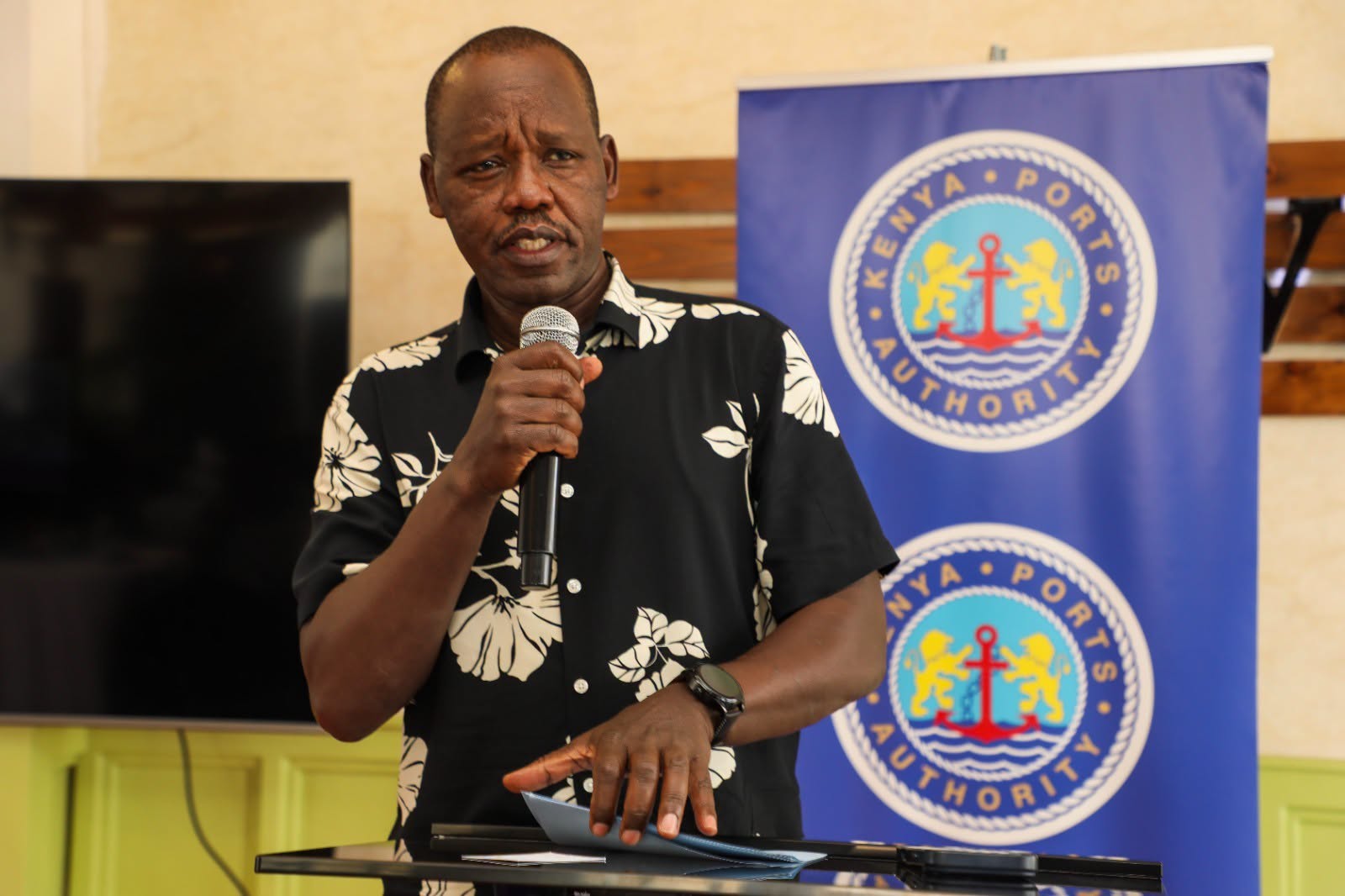
The launch of a Memorandum of Understanding between Kenya Ports Authority PLC and Australia’s Royal Melbourne Institute of Technology (RMIT) is more than another ceremonial agreement in Mombasa’s crowded calendar of stakeholder events. It is an acknowledgment that Kenya’s maritime sector—and the broader Blue Economy it anchors—cannot modernise on infrastructure and political ambition alone. It needs rigorous, applied research, skills transfer, and practical tools that turn operational bottlenecks into competitive advantages.
Signed in May and formally unveiled at a roundtable involving shipping lines, regulators, academia, and development partners, the MOU creates a framework for joint research, publications, staff exchanges, capacity building, and a standing working group. Its priority themes are clear and timely: automation, artificial intelligence, sustainability and greening, e-mobility, shore power, data mining, and the Blue Economy. Critically, local universities—the University of Nairobi, Technical University of Mombasa, and Embu University—are brought into the fold, ensuring the collaboration is not purely extractive or externally driven.
Captain William Ruto, KPA’s Managing Director, struck the right note when he said success will be measured not by the signing ceremony but by “research, training and practical solutions that add value and respond to the needs of the maritime industry.” Professor Victor Gekara of RMIT’s Centre for African Engagement echoed the point: industry connections are central, and the partnership will prioritise impactful joint research, staff exchanges, and regular value-creating engagement. These are the right intentions. The question is whether they will survive the translation from paper to port operations.
Why This Matters Now
Kenya’s maritime economy sits at a critical juncture. The Port of Mombasa remains the dominant gateway for the Northern Corridor, handling record volumes—over 45 million tonnes of cargo and more than 2 million TEUs in recent years—while inland facilities and Lake Victoria ports show growing traffic. Yet efficiency gains remain uneven. Congestion pressures, empty-container backlogs, fragmented digital systems, and rising demands for lower-emission operations continue to raise the cost of doing business. Global shipping is moving rapidly toward automation, alternative fuels, and shore power; ports that lag risk becoming less competitive as liners optimise their networks.
The Blue Economy is no longer a rhetorical flourish in Vision 2030 documents. It is a recognised growth pillar with potential across maritime transport, fisheries, coastal tourism, and marine resource management. Realising that potential requires more than berth expansions and new terminals. It demands data-driven decision-making, skilled human capital, and technologies that reduce both emissions and operational friction. RMIT brings established expertise in maritime logistics research, port management, and industry-engaged learning. Pairing that with KPA’s operational knowledge and the applied capacity of Kenyan universities creates a plausible pathway for solutions tailored to East African realities rather than imported wholesale from Asia or Europe.
The key research areas identified—automation and AI for gate and terminal operations, shore power and e-mobility for greening, data mining for better forecasting and corridor management—align directly with pressing needs. Automation of gates, for instance, is already being piloted; research that quantifies impacts, identifies failure points, and designs scalable systems could accelerate wider rollout. Sustainability work can support KPA’s Green Port Policy ambitions and help the port prepare for vessels running on cleaner fuels. Blue Economy research can link port development more intelligently with coastal livelihoods, mangrove restoration, and fisheries value chains rather than treating them as separate silos.
The Implementation Test
African ports and universities have signed many similar agreements. Too often, they produce workshops, joint statements, and limited outputs before fading. The difference this time will depend on three factors.
First, governance and accountability. The joint working group must have clear deliverables, timelines, and public reporting. Vague commitments to “knowledge exchange” will not suffice. Stakeholders present at the Mombasa roundtable—including Trademark Africa, the Kenya Maritime Authority, and the Kenya Ships Agents Association—should be kept engaged as critical friends who can demand evidence of progress.
Second, resources and incentives. Research requires funding, data access, and protected time for staff. KPA and partner universities must allocate or mobilise resources beyond the MOU itself. Staff exchange programmes will only build capacity if returnees are empowered to apply new knowledge rather than return to unchanged systems. Publications and events matter, but only if they feed into operational change and policy.
Third, local ownership and relevance. Involving Kenyan universities is essential, yet it must go beyond token participation. Joint research agendas should be co-designed around measurable industry problems—turnaround times, emissions intensity, skills gaps, corridor bottlenecks—rather than purely academic interests. RMIT’s strength in applied, industry-connected work is an asset here; it must not become a one-way transfer.
There are risks. Political and leadership transitions at state corporations can disrupt continuity. Data-sharing sensitivities between a commercial port operator and external researchers need careful protocols. Global technology solutions may not fit local infrastructure, labour realities, or regulatory environments without adaptation. And the Blue Economy itself remains contested terrain—balancing commercial port growth with community access, environmental protection, and equitable benefit-sharing is never automatic.
A Wider Opportunity
If executed well, the partnership can do more than improve KPA’s performance. It can strengthen Kenya’s position as a regional knowledge and training hub for maritime affairs, complementing existing efforts with Bandari Maritime Academy, Technical University of Mombasa, and other institutions. It can deepen Australia–Africa ties in a practical, non-extractive domain. And it can demonstrate that public–private–academic collaboration can move beyond rhetoric when the problem definition is sharp and the metrics of success are operational.
Captain Ruto is right: the true measure will be value added and problems solved. The industry does not need another MOU for the scrapbook. It needs research that shortens vessel stays, lowers emissions, upgrades skills, and makes the Northern Corridor more reliable and competitive. The framework exists. The stakeholders are engaged. The operational challenges are well known. What remains is the harder work of turning partnership into performance. Kenya’s ports, and the economies that depend on them, cannot afford for this one to remain ceremonial.