


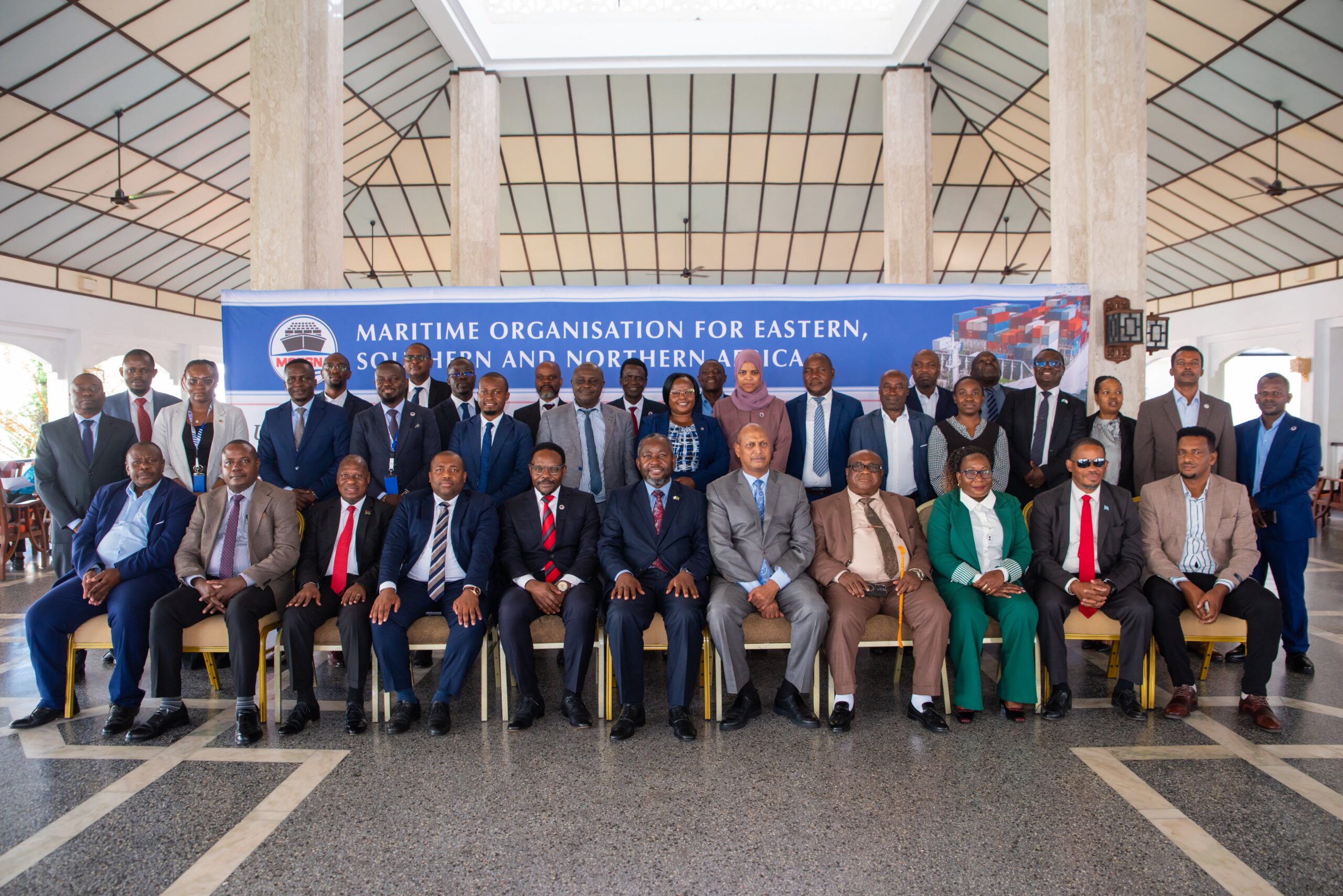
Kenya’s recent hosting of the 12th Extraordinary Meeting of the MOESNA Coordination Committee in Mombasa was presented as another milestone in regional cooperation. Official statements rightly celebrated progress on two flagship initiatives: a proposed Regional Maritime University and a Regional Maritime Cabotage Protocol. Both are important. They are not, however, equal.
A sharp comment under the official post cut through the diplomacy: the university raises human capability; the cabotage protocol raises market access. For many member states, the binding constraint is not a shortage of trained people. It is that a trained person has nowhere in the region to move cargo profitably. Where one dimension sits far below the others, returns behave like a product, not a sum. Lifting the lowest term dominates everything else.
Sequencing is not an administrative detail. It is the whole thing. This is not cynicism; it is hard-earned realism about how maritime industries actually develop.
The Structural Problem
Africa moves the overwhelming majority of its international trade by sea, yet controls almost none of the vessels that carry it. Freight costs remain high and volatile, while intra-regional maritime connectivity is thin. Restrictive or inconsistent national cabotage regimes, combined with the absence of a coherent regional framework, have left the region dependent on foreign-flagged tonnage. The result is a familiar litany of ills: capital flight through freight payments, limited local employment at sea, weak incentives for ship ownership, and poor coastal and short-sea services that could otherwise feed inland corridors and support the African Continental Free Trade Area.
MOESNA, the rebranded and expanded successor to the Intergovernmental Standing Committee on Shipping (ISCOS), was created precisely to confront these problems. Its member states—spanning Eastern, Southern and Northern Africa and the Western Indian Ocean—have identified two priority instruments: a regional maritime university to build skills, and a cabotage protocol to create the market conditions in which those skills can be productively employed.
The university is the more photogenic project. It speaks to youth employment, capacity building, and technical expertise. No serious observer disputes the need for better maritime education across a region whose share of the global seafarer workforce remains negligible relative to its trade volumes. A well-designed regional institution could raise standards, foster cooperation among existing national academies, and produce the officers, engineers, and managers the sector requires.
Yet training without demand is a recipe for brain drain or underemployment. Graduates who cannot find decent jobs on regional vessels will leave—for the Gulf, for Europe, for Asia, or for shore-based work unrelated to their training. The human-capital investment then leaks out of the region that paid for it.
Cabotage as the Binding Constraint
The Regional Maritime Cabotage Protocol is the less glamorous but more decisive instrument. Cabotage—the reservation of domestic or regional coastal and short-sea trades for vessels meeting specified ownership, flag, and crewing requirements—has long been used by maritime nations to nurture national fleets, retain skills, and keep freight revenue circulating locally. Properly designed, a regional protocol can do the same at the scale of the Eastern, Southern and Northern African space.
Recent work under MOESNA and COMESA has moved the idea from aspiration toward operational detail. Stakeholders have validated draft frameworks that envision cargo reservation (in one version, at least 40 percent of eligible intra-regional cargo for vessels flagged, owned, and operated within the region), mutual recognition of licensing, local registration and insurance requirements, and phased implementation running into the early 2030s. The protocol is explicitly linked to the feasibility of regional shipping lines: the commercial model for any joint regional carrier is predicated on a predictable cargo base that cabotage rules would help secure.
This is not pure protectionism. It is industrial policy for a sector in which network effects, capital intensity, and regulatory barriers have historically favoured external players. Without a credible regional cargo preference and harmonised rules, private investors have little reason to put capital into vessels that would compete on unequal terms with established foreign operators. Without vessels, there is limited demand for the officers and ratings a regional university would produce. Without demand, the university becomes an expensive exercise in training for export.
The sequencing logic is therefore inescapable. Market access and cargo security must advance in parallel with, or preferably slightly ahead of, large-scale training investments. Otherwise, the region risks repeating a familiar pattern: building supply-side capacity while the demand-side bottlenecks remain unaddressed.
Risks and Design Challenges
None of this is automatic. Cabotage regimes can become captured, inefficient, or protectionist in the worst sense if they simply shield high-cost, low-quality operators from competition. The protocol will need clear performance standards, time-bound preferences, mechanisms for gradual liberalisation once regional capacity is established, and careful treatment of land-locked and island states whose interests differ from pure coastal economies. Implementation will require national legislation, regulatory capacity, mutual recognition arrangements, and credible enforcement—none of which is trivial across a diverse set of member states.
Political economy obstacles are real. Some governments may prioritise short-term freight cost minimisation over longer-term fleet development. Others may face pressure from entrenched foreign operators or domestic interests that benefit from the status quo. Land-locked members will need assurance that coastal cabotage rules do not raise their logistics costs, while island states will have their own connectivity priorities.
The university project carries its own risks: duplication of existing national institutions, governance challenges in a multi-country entity, a curriculum that drifts from industry needs, and the ever-present danger that political symbolism outruns operational readiness.
A Practical Path Forward
The right approach is parallel but sequenced progress. Accelerate the legal and institutional work on the cabotage protocol and the associated shipping-line feasibility so that a credible market framework exists by the time larger cohorts of graduates emerge. Use the university planning process to map existing training capacity across the region, identify genuine gaps, and design programmes tightly linked to the emerging regional fleet and logistics requirements. Tie both initiatives to measurable outcomes: the share of intra-regional cargo carried on regionally flagged vessels, employment of regional seafarers, reduction in freight cost volatility for key commodities, and retention of trained professionals within the region.
Kenya’s role as host and active participant is constructive. As a major gateway with significant port infrastructure and growing maritime ambitions, it has both interests and leverage. Other members—Zambia as a land-linked economy, coastal states with shipyard or registry potential, Indian Ocean islands—bring complementary priorities. The forthcoming Assembly of Ministers in Dar es Salaam offers the next opportunity to move from progress reports to binding commitments on sequencing and implementation milestones.
Africa’s blue economy rhetoric has long outpaced delivery. The difference this time will not be the elegance of the vision documents or the sincerity of the speeches in Mombasa. It will be whether governments treat market creation as the prerequisite for human-capital investment rather than an optional add-on. Capability without opportunity is wasted. Opportunity without capability is limited. But when the lowest constraint is left unaddressed, the product of the two remains stubbornly close to zero.
Sequencing is not an administrative detail. In the maritime sector, it is the strategy.