


Kenya once had a refinery. It was small, aging, state-dominated, and ultimately uncompetitive. The Kenya Petroleum Refineries Limited (KPRL) facility in Mombasa, built in 1963 with a nameplate capacity of about 32,000 barrels per day, ground to a halt in 2013. Marketers preferred cheaper imports. Operating costs were high. Product quality lagged national standards. A proposed $1.2 billion upgrade never materialised after Essar walked away. The plant now largely serves storage functions.
That history is real and instructive. It is not, however, a template for the proposed Lamu refinery.
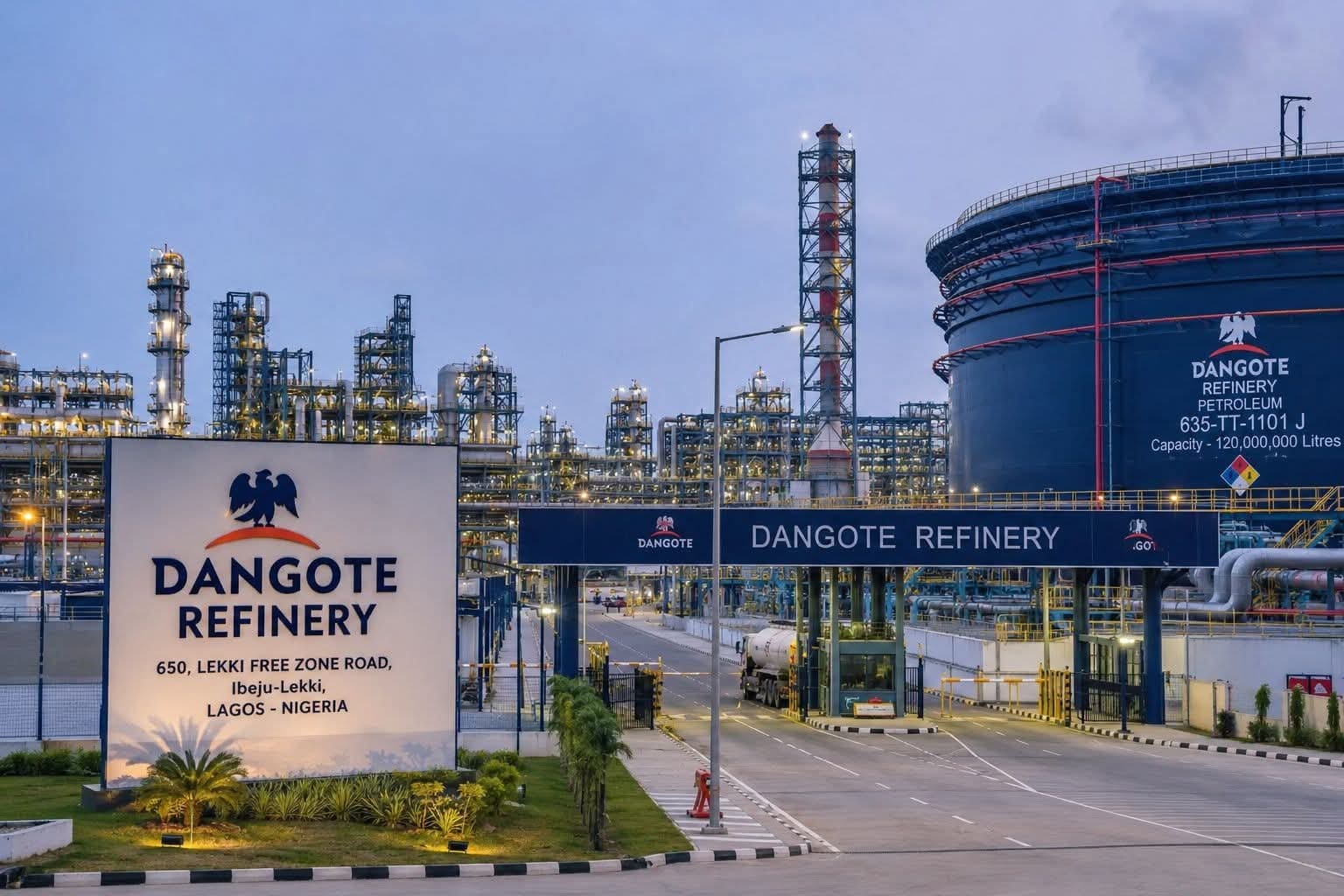
The Lamu project, led by Dangote with a projected 700,000 bpd single-train capacity, private ownership (with Kenya offered a 10% stake), modern design, and a target start around 2030, operates in an entirely different reality. As of late September 2026, groundbreaking is imminent, cost estimates sit in the $15–17 billion range (roughly 70% debt, 30% equity), and the model draws directly from Dangote’s operating Lagos facility. Treating the two as comparable simply because both involve refining crude in Kenya misses the decisive variables: scale, technology, ownership incentives, feedstock logistics, and global market structure.
The Economics of Moving Molecules
Crude travels more cheaply than finished products. A very large crude carrier can move roughly two million barrels at a fraction of the per-barrel freight cost of product tankers carrying gasoline or diesel. Importing crude in bulk, refining at the coast, and distributing locally removes an entire layer of cost—shipping, insurance, trader margins, and port handling—that accumulates when finished fuel is imported from the Gulf.
Distance reinforces the advantage. Gulf crude to Lamu is roughly 2,500–3,000 nautical miles, about three weeks. The same barrels to China or Japan and Korea travel 5,000–6,000 nautical miles. Kenya sits closer to key Middle Eastern supply than the major East Asian refining hubs that currently process much of that crude and re-export products. That is a structural cost edge, not a handicap.
The Lamu concept does not assume Kenya or East Africa will suddenly produce 700,000 bpd of domestic crude. Initial feedstock is expected to come from the global market—the same market that already supplies Singapore, Korea, Japan, and, critically, Dangote’s Lagos plant, which has sourced from the US, Brazil, Angola, Equatorial Guinea, and Algeria. Regional volumes from Uganda, Kenya’s own early production, South Sudan, or LAPSSET infrastructure can supplement later. The global seaborne crude trade moves tens of millions of barrels daily; 700,000 bpd is a modest slice.
Lessons from Lagos and the Neighbourhood
Dangote’s Lagos refinery provides the clearest recent evidence that the model can work. When it ramped toward full capacity, West African imports of clean fuels from outside the region fell sharply—by roughly a quarter in a single recent month, according to trade-flow data. Gulf and US barrels that once dominated regional product markets were displaced. The plant has exported jet fuel and other products into Europe and African markets while meeting the bulk of Nigeria’s domestic gasoline needs. No one in Lagos asks “where are the barrels?” when the refinery buys them on the open market and still generates margin.
South Sudan and Sudan illustrate the alternative of dependence. Sudan’s Al-Jaili refinery in Khartoum, the country’s main facility, has been offline since July 2023 amid conflict, with further damage reported in subsequent fighting. Sudan now exports crude and imports fuel. Pipeline reliability between the two countries has been poor; combined output has collapsed from roughly 200,000 bpd toward 80,000 bpd at times. South Sudan needs reliable refining and export routes more than Kenya needs South Sudanese crude. A coastal, privately operated, world-scale plant in Lamu offers optionality that inland, conflict-exposed assets cannot.
Energy security is not abstract. When tension around the Strait of Hormuz has driven Brent above $100 and inflated supertanker rates, East Africa feels the pass-through. Nearly all of Kenya’s finished fuel currently arrives from the Gulf or other distant sources. A large, modern refinery on the Kenyan coast processing globally traded crude creates a domestic margin and a physical buffer. Kenyans have already paid the cost of its absence at the pump.
Ownership, Incentives, and Realistic Risks
Private capital with a proven operator changes the incentive structure. Mombasa was half-government, constrained by policy mandates that forced marketers to buy its output even when imports were cheaper. Lamu is structured as a commercial project. Kenya’s potential 10% equity stake is an option subject to parliamentary scrutiny, not a blank cheque.
Financing remains the hard part. Sixteen billion dollars is serious money, and supporting infrastructure—port storage, LAPSSET elements—must materialise. Those are legitimate questions. They are not arguments against the concept itself. The claim that “Kenya used to have a refinery” or “Kenya has no oil” simply restates the wrong comparison.
The cost stack favours local refining when done at efficient scale: lower freight on crude, capture of the refining margin, reduced exposure to product-tanker rates and distant trader mark-ups. Importing finished fuel from the Gulf embeds every intermediate cost. That arithmetic does not change because an earlier, smaller, less efficient plant failed.
The Real Choice
The Mombasa experience teaches that small, obsolete, quasi-state refining cannot compete with efficient global product markets. The Lamu proposal tests whether a large, modern, privately driven plant can reverse the flow of value—importing crude, capturing the refining margin, supplying the region, and improving energy security. Dangote’s Lagos results suggest the answer can be yes.
Success is not guaranteed. Financing close, crude contracts, construction execution, and offtake arrangements will decide outcomes. But the governing variables are clear: scale, technology, ownership, and location relative to both feedstock and demand.
Kenya does not need to romanticise its old refinery or pretend regional crude alone will fill a 700,000 bpd plant. It needs to evaluate whether a world-class coastal facility, built and operated by an entity that has already demonstrated the model works, can lower costs, create industrial density, and reduce vulnerability to distant supply shocks. On the evidence of the last decade of global refining economics and the early results from Lagos, the difference between Mombasa and Lamu is not rhetorical. It is structural.
Andrew Mwangura is a maritime and energy analyst.