


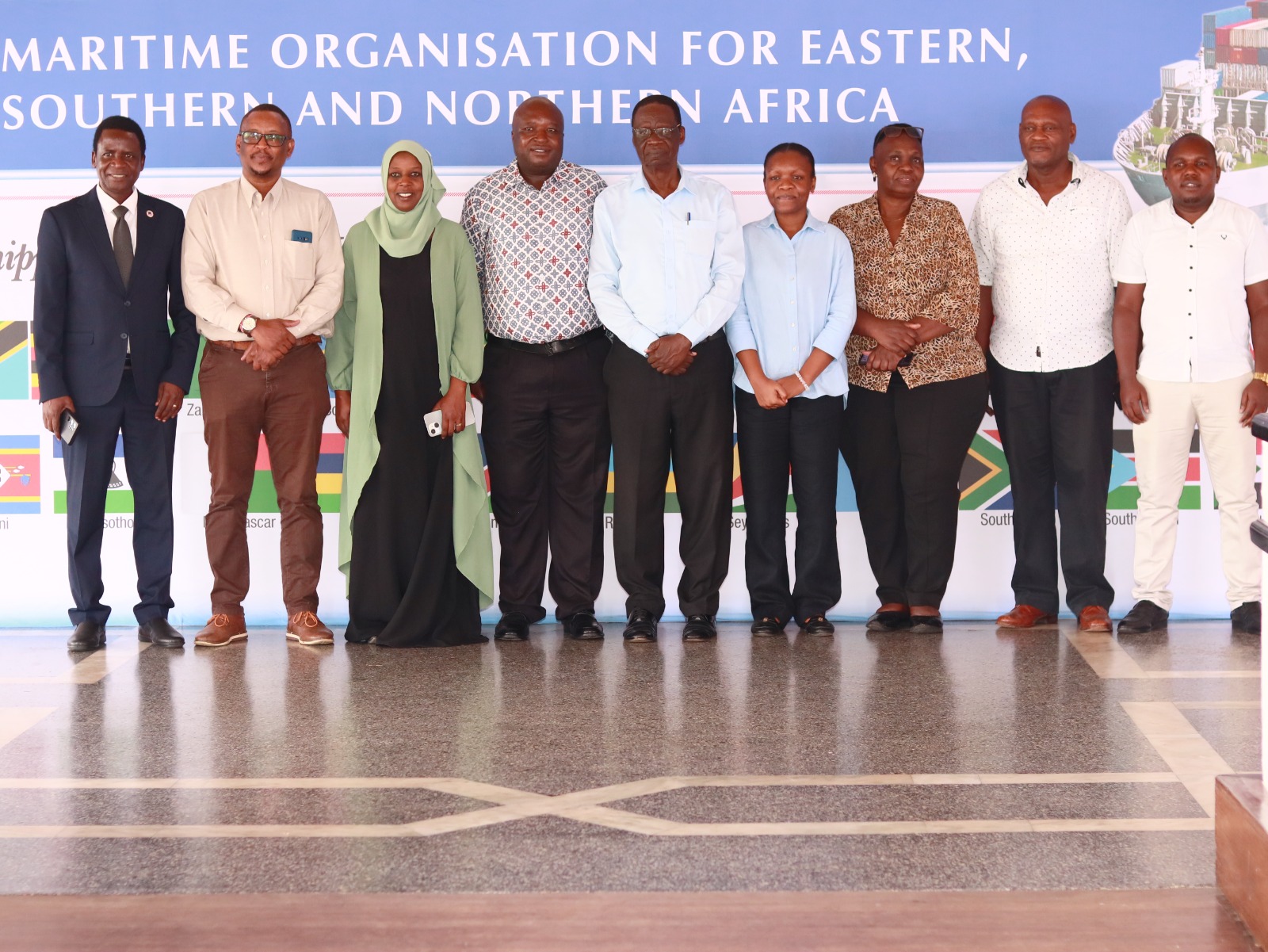
Across the inland lakes, coastal waters, and river systems of Eastern, Southern, and Northern Africa, thousands of small vessels carry passengers, fish, goods, and livelihoods every day. Yet the people at the helm—coxswains—operate under a patchwork of inconsistent training, assessment, and certification regimes. A new competency-based framework developed under the Maritime Organisation for Eastern, Southern and Northern Africa (MOESNA), led technically by Kenya’s Bandari Maritime Academy (BMA), aims to change that. Maritime stakeholders in Mombasa have now validated a proposed Coxswain Grade 3 curriculum with only minor amendments. This is more than a technical update. It is a necessary step toward safer waterways, professional recognition, and the practical unlocking of the region’s blue economy.
A coxswain is the person responsible for navigating, steering, and commanding a small vessel and its crew. In much of the MOESNA region—covering countries such as Kenya, Tanzania, Uganda, Zambia, the Democratic Republic of Congo, Ethiopia, Burundi, Botswana, and Malawi—most member states have lacked formalized, standardized, competency-based curricula or mutually recognized certification for these operators. Training has often been informal, locally designed, or nonexistent in structured form. The result is variable skill levels, limited professional pathways, and elevated safety risks. Human factors such as inadequate training, weak seamanship, and poor emergency readiness contribute to the large majority of marine accidents worldwide; the same dynamics play out on African inland and near-coastal waters.
The proposed framework seeks to replace this fragmentation with a common, modular, competency-based curriculum covering both inland waterways and coastal navigation. It emphasizes demonstrated competence rather than mere time served or paper qualifications. Stakeholders validated the draft after a situational analysis and training-needs assessment conducted by BMA. The process has involved maritime regulators, training institutions, and industry experts. Recognition of prior learning is already being piloted in places such as Kenya’s Lake Region, where hundreds of experienced but uncertified coxswains have been assessed. This approach respects practical expertise while bringing it into a formal, portable standard.
The case for harmonization is compelling on several fronts. Safety is the most immediate. Avoidable accidents on passenger ferries, fishing boats, and cargo craft continue to claim lives and erode public confidence. Standardized training in boat handling, navigation, rules of the road, emergency procedures, and safety management reduces those risks. Professionalism follows. Many operators possess years of experience yet lack credentials that allow career progression, higher earnings, or mobility across borders. Mutual recognition of certificates would open regional labor markets and support the free movement of skilled maritime workers. Accessibility matters too: the curriculum is designed to be more affordable and practical than conventional long-form maritime courses, making it reachable for small-vessel operators who cannot leave their livelihoods for extended classroom programs.
These reforms sit within a larger strategic context. Africa’s blue economy—encompassing fisheries, transport, tourism, and emerging sectors—depends on safe, efficient small-vessel operations. Regional instruments such as the African Integrated Maritime Strategy 2050 and the revised African Maritime Transport Charter encourage precisely this kind of coordinated capacity-building. MOESNA itself evolved from the earlier Intergovernmental Standing Committee on Shipping to promote, protect, and coordinate the shipping and maritime interests of its members. A shared coxswain standard is a concrete expression of that mandate. It also aligns with global trends: Australia, for example, introduced a Coxswain Grade 3 certificate under Marine Order 505 to create an entry-level pathway for low-complexity commercial operations, with clear limits on vessel size, power, and operating areas. Similar graded systems exist elsewhere. Africa need not invent the concept; it can adapt proven competency models to regional realities of inland lakes, shallow coastal waters, and mixed formal–informal fleets.
Implementation will determine whether the promise becomes practice. Curriculum validation is only the first stage. Member states must adopt the framework into national law and regulation, accredit training providers, develop assessment tools, and establish mutual recognition mechanisms. Instructors and assessors will need capacity-building. Quality assurance systems must prevent dilution of standards. Funding and political will are required so that training reaches operators in remote lake communities and coastal villages, not only those near major ports. Recognition of prior learning must remain robust so that experienced coxswains are not locked out. Monitoring of safety outcomes and labor-market mobility will show whether the system delivers.
Critics might argue that regional standards risk becoming bureaucratic hurdles that raise costs for already-marginal operators, or that national differences in waterways and vessel types make one-size-fits-all impossible. These concerns are real but manageable. A modular, competency-based design can accommodate local conditions while maintaining core safety and professional benchmarks. Phased rollout, subsidized training for small operators, and strong industry input can keep the system practical. The alternative—continued fragmentation—has already proven costly in lives, lost economic opportunity, and stalled regional integration.
The Mombasa validation marks a quiet but significant advance. By moving from disparate national practices toward a common competency framework for Coxswain Grade 3, MOESNA and BMA are laying foundation stones for safer waterways and a more professional small-vessel workforce. If member states follow through with adoption, mutual recognition, and accessible delivery, the region will gain more than standardized certificates. It will gain measurable reductions in preventable accidents, clearer career pathways for coxswains, and a stronger human foundation for the blue economy. The helm is being set. The question now is whether governments, training institutions, and operators will hold the course.