


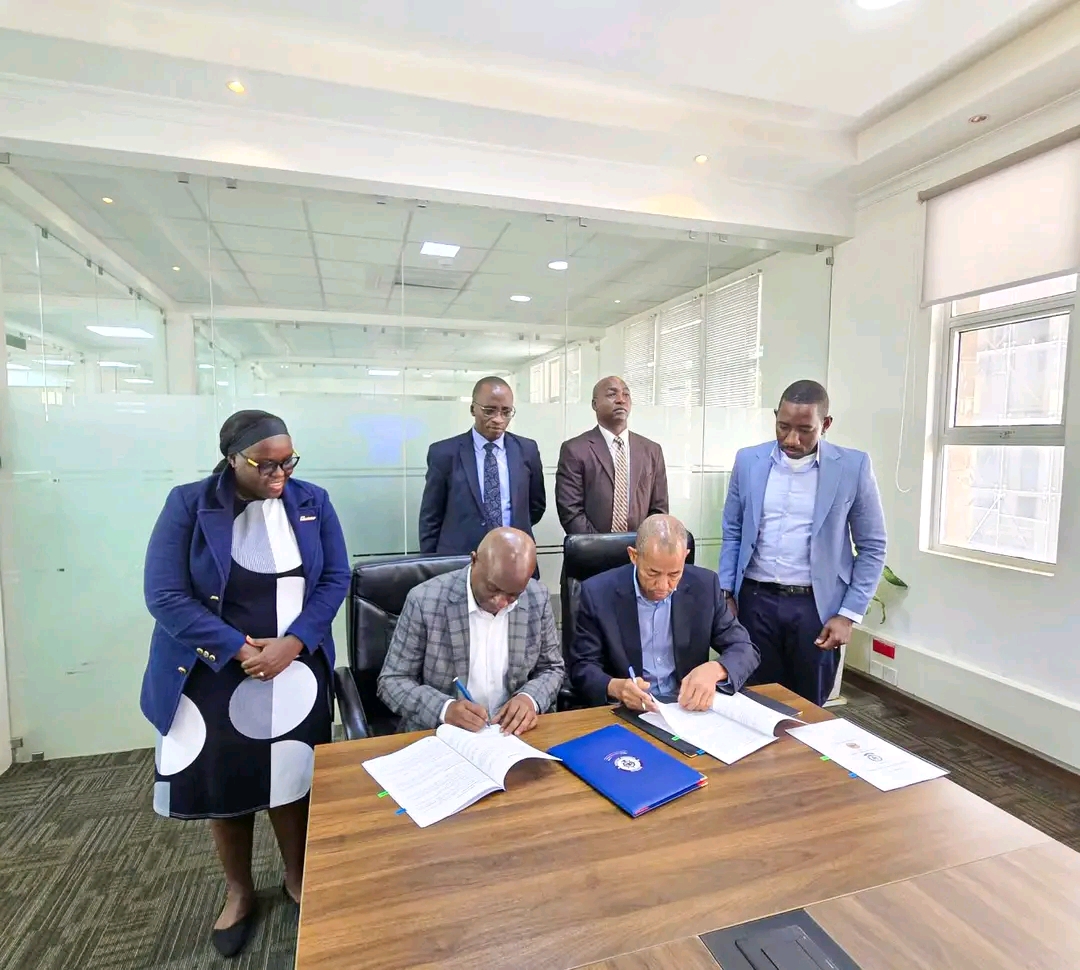
The recent contract signing between Bandari Maritime Academy (BMA) and Kenya Shipyards Limited (KSL) for the delivery of the training vessel MV My Dream is more than a procedural milestone. It is a concrete step toward closing one of the most persistent gaps in Kenya’s maritime education: reliable access to practical, shipboard experience for cadets. Donated by the Republic of Korea, the vessel will support seagoing training at BMA’s Mombasa campus and complement the Academy’s Full Bridge Mission Simulator. In doing so, it directly addresses a structural bottleneck that has long constrained the pipeline of qualified Kenyan seafarers ready for the global market.
For years, Kenya’s maritime training institutions have excelled in classroom instruction and simulation while struggling to secure the mandatory sea time required under the International Maritime Organization’s Standards of Training, Certification and Watchkeeping (STCW) Convention. Cadets in Nautical Science, Marine Engineering, and Ratings courses often complete theoretical modules only to face lengthy waits for berths on commercial vessels. BMA has made notable progress through partnerships that have placed dozens of cadets with international operators, yet the absence of a dedicated national training ship has left the system dependent on external goodwill and limited slots. MV My Dream changes that equation by offering a controlled, purpose-built environment for hands-on learning in navigation, engine maintenance, seamanship, cargo handling, watchkeeping, emergency response, firefighting, lifesaving procedures, and shipboard communication.
BMA Chief Executive Officer Dr. Eric Katana has rightly framed the vessel’s arrival as an enhancement of the Academy’s capacity to develop skilled human capital for the Blue Economy. Simulation remains essential for risk-free mastery of complex scenarios, but nothing fully substitutes for the sensory and operational realities of an actual vessel—motion, noise, hierarchical routines, and the irreversible consequences of error. Integrating the training ship with existing simulators creates a continuum from virtual to real that should produce more competent, confident graduates. This is particularly valuable for Ratings courses and for building foundational competencies before cadets seek commercial sea time.
The partnership with Korea underscores a broader strategic pattern. Kenya and the Republic of Korea have deepened cooperation through memoranda on seafarer certificate recognition, cadet exchange programs at institutions such as the Korea Institute of Maritime and Fisheries Technology, and technology and capacity-building support. The donation of a modern training vessel fits this pattern of practical assistance rather than purely rhetorical partnership. For Kenya, it offers a model of how targeted international collaboration can accelerate domestic capability without creating permanent dependency—provided the vessel is effectively operated, maintained, and integrated into the curriculum.
KSL’s role in preparing and delivering the vessel is equally significant. As the state corporation charged with building and maintaining maritime assets, its involvement links training infrastructure to Kenya’s nascent shipbuilding and repair capacity. Successful delivery and subsequent upkeep will test whether the country can sustain sophisticated maritime assets beyond the initial gift. Operational costs, crewing, insurance, docking, and curriculum redesign will require sustained budget commitments and clear governance between BMA, KSL, the Kenya Maritime Authority, and the Ministry of Mining, Blue Economy and Maritime Affairs.
The stakes extend beyond individual cadets. Kenya’s Blue Economy ambitions rest on the premise that the country’s extensive coastline, exclusive economic zone, and strategic location can generate substantial employment and revenue. Government targets have included ambitious growth in the number of seafarers, yet the global shipping industry faces a documented shortage of officers even as European supply ages. Kenyan graduates who speak English, meet international standards, and possess practical experience are well positioned to fill part of that gap—and to remit earnings that support households and the national economy. A dedicated training vessel increases the probability that more cadets complete the full pathway to Certificates of Competency rather than stalling after theory.
Yet realism is required. One vessel, however well equipped, cannot absorb every trainee. Effective utilization will demand careful scheduling, prioritization of those closest to certification, and continued pursuit of commercial sea-time partnerships. Maintenance and fuel costs could strain public budgets if not offset by efficient operations or shared use with other institutions. Curriculum adaptation, instructor readiness, and safety protocols must be rigorous. There is also the risk that the vessel becomes a symbolic achievement rather than a high-utilization training platform if monitoring and accountability are weak.
Still, the contract signing is a moment of genuine progress. It signals that Kenya is moving from aspiration to infrastructure in maritime human-capital development. Combined with ongoing investments in survival training facilities, simulator upgrades, and international placements, MV My Dream strengthens BMA’s claim as a regional centre of excellence. For young Kenyans considering careers at sea, it shortens the distance between classroom knowledge and the competencies the industry demands.
The true measure of success will not be the ceremony in Nairobi or the vessel’s eventual arrival in Mombasa, but the number of cadets who sail from its decks into sustainable maritime careers, the quality of their performance on commercial ships, and the contribution they make to Kenya’s Blue Economy. That outcome depends on disciplined follow-through: adequate operational funding, transparent performance metrics, continued Korean and other partnerships where they add value, and an unwavering focus on competence rather than optics. If those conditions are met, MV My Dream will have lived up to its name—not as a one-off gift, but as a working platform for Kenya’s maritime future.