


The question is no longer whether the site was right. It is whether Kenya will finish the corridor that makes the port matter—and whether KPA will sell it from Addis Ababa.
In 1975, Kenya and Japan did something later generations would treat as prophecy. They commissioned a feasibility study for a second deep-water port, and they pointed to Lamu. Mombasa was already straining as the country’s only serious gateway. Planners wanted an alternative that could take larger ships, open the neglected north, and give landlocked neighbours a shorter route to the sea. The geography was obvious even then: Manda Bay is naturally deep and sheltered. The politics were not.
What followed was one of the longest pauses in Kenyan infrastructure history. A 1976 ministerial study and a 1977 cabinet paper by Isaac Omolo Okero named Lamu as the preferred site. A 1977 report, Manda Bay Port: Feasibility Study of Kenya’s Second Port, put the idea on paper. Then the file went cold. Cost, competing priorities, and the absence of a regional cargo story stronger than Mombasa’s kept the project on the shelf for a generation.
That delay is the first lesson: a good site is not a project. A project is a political coalition, a financing plan, and a hinterland that can actually move cargo.
The Idea That Would Not Die
When the plan returned in the 2000s, it had grown. Lamu was no longer just a second port. It was the coastal hinge of LAPSSET: port, roads, railway, pipelines, airports, special economic zones, resort cities. The 2010–11 feasibility work by Japan Port Consultants produced the numbers that still get quoted: Lamu Port’s long-term economic rate of return around 23 percent; the crude pipeline about 22 percent; the railway in the mid-teens. Vision 2030 absorbed the corridor. Ground was broken in 2012. China Communications Construction Company built the first three berths.
For years after those berths opened, the port looked like a monument to unfinished ambition. Traffic was thin. Complementary roads and rail lagged. Critics called it a white elephant with gantry cranes. That critique was not empty. A deep-water terminal without a reliable inland spine is a parking lot for ships that have nowhere useful to send their cargo.
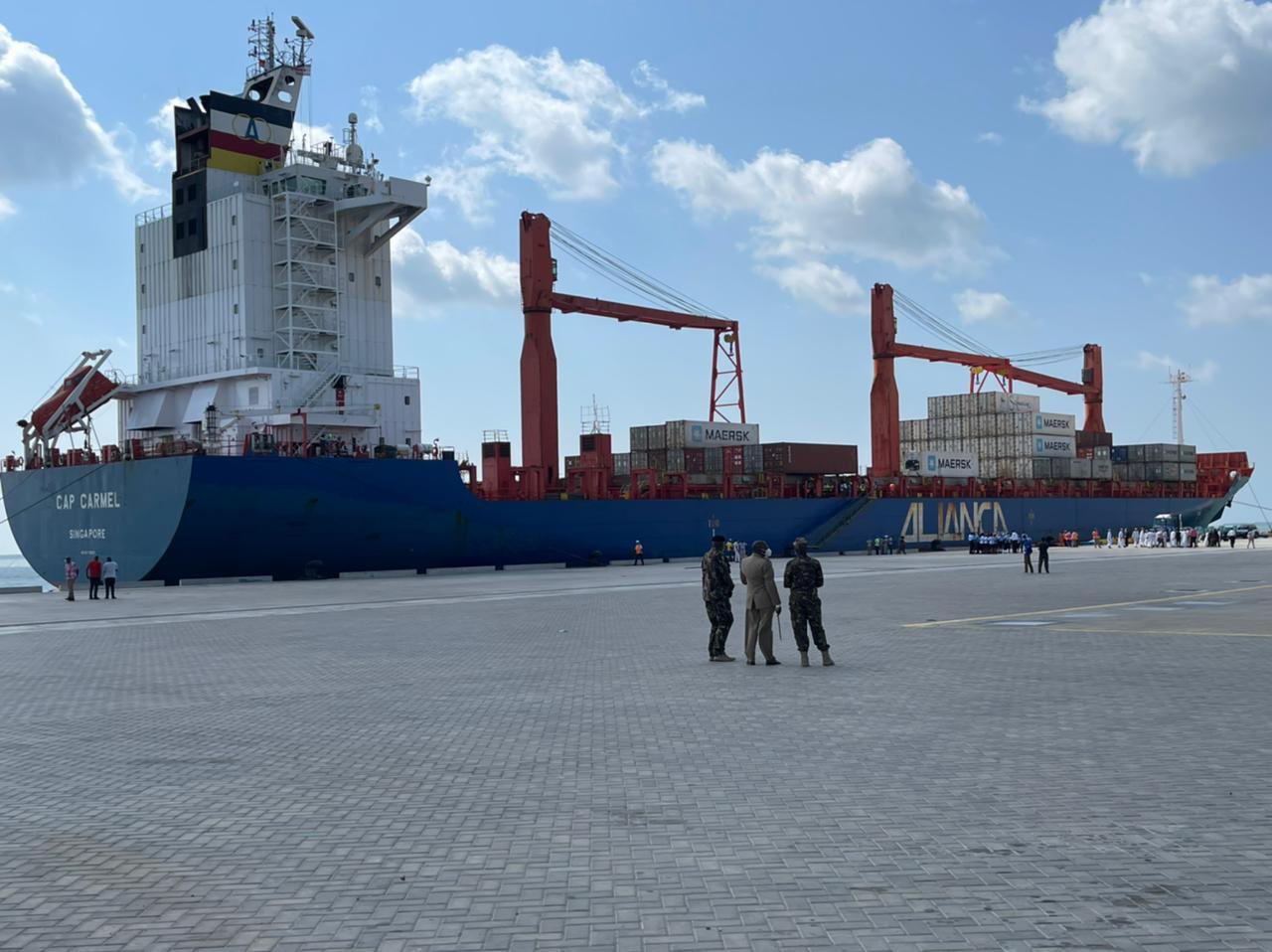
The last year has begun to puncture that story, without fully disproving it. LAPSSET reports that Lamu handled more TEUs in the first half of 2026 than in all of 2025. Large vessels that Mombasa cannot easily take have called. Ethiopia has started testing the route with fertilizer. Project cargo for the planned Dangote East African Oil Refinery has landed at Kililana. Those are not footnotes. They are the first real market signals that the 1975 site choice was not romantic.
They are also fragile. One fertilizer ship and one refinery cargo do not make a corridor. They make a test.
What the 1975 Study Got Right—and What It Could Not See
The old study was right about location. Lamu’s draft, island shelter, and room to expand still distinguish it from a congested Mombasa. Post-Panamax ships can berth. That is a structural advantage, not a slogan.
It could not see the world that arrived later. Containerisation deepened. Oil discoveries in South Sudan and Kenya briefly made pipelines look inevitable, then prices and politics made them optional. China became the builder of first resort. Ethiopia’s industrial parks created a possible cargo base that 1975 Kenya could barely imagine. Al-Shabaab turned the northern coast into a security problem as well as a development one. Lamu Old Town’s UNESCO status and the bay’s fisheries became constraints that a 1970s engineering brief treated lightly, if at all.
The 2018 High Court ruling on the Lamu fishermen was the bill coming due for that omission. Compensation of Sh1.76 billion was ordered. Thousands have been paid; others are still waiting. Mangroves, reefs, and fishing grounds were damaged by dredging and reclamation. A port that ignores the people who already used the water will keep generating court files instead of cargo.
That is the second lesson. Feasibility is not only EIRR. It is social licence, security, and ecology. The 1975 study asked whether ships could come. The 2026 question is whether Lamu’s communities, Ethiopia’s importers, and Kenya’s Treasury can live with the answer.
The Corridor Is the Port
Lamu Port Phase 1—three berths—is built. Phase 2 and 3 are still planning. The Isiolo–Moyale road is done. Lamu–Garissa and Garissa–Isiolo are incomplete. The railway is a brochure. Crude and product pipelines remain paper assets with attractive rates of return and no steel in the ground. The Lamu SEZ has titles. Titles are not factories.
This is why the Ethiopia trial matters more than the ribbon cuttings. Officials say Lamu to Moyale can be shorter than Djibouti to southern Ethiopia by a few hundred kilometres—if the road is actually there and trucks can run it safely and cheaply. Until the missing links are finished, cargo will keep defaulting to the route that already works. Ports do not create hinterlands. Hinterlands fill ports.
The Dangote Factor: East African Oil Refinery
The proposed Dangote East African Oil Refinery, if it proceeds at the scale advertised, would change the traffic mix: crude in, products out, project cargo in between. That is the kind of anchor tenant the 1975 planners never had. It could underwrite berth utilisation, justify pipeline and storage investment, create backhaul opportunities, and give Ethiopia and northern Kenya a new industrial cargo base.
But it is also a concentration risk. A corridor that depends on one industrial bet is one cancelled final investment decision away from quiet quays again. The refinery should be a pillar, not the roof. Lamu needs diversified cargo: transit goods for Ethiopia and South Sudan, regional agricultural exports, project cargo, and eventually manufacturing in the SEZ.
An Editorial Conclusion
Kenya should stop talking about Lamu as a dream deferred and start treating it as a half-built system that will either compound or rust.
Four things follow.
First, finish the boring infrastructure before announcing the next spectacular phase. The Lamu–Garissa–Isiolo road, border posts that already clear goods in hours at Moyale, power, water, and fibre will do more for vessel calls than another groundbreaking. Private operators will not bid seriously for later berths if trucks still crawl.
Second, make Ethiopia and northern Kenya the customers, not the backdrop. Preferential, predictable handling and a reliable dry-port chain will beat press statements. If the first fertilizer consignments stall inland, the next nine ships will not come.
Third, close the 1975 moral deficit. Pay the remaining fishermen. Publish environmental monitoring. Design Phase 2 as if Lamu Old Town and the bay are constraints, not afterthoughts. A heritage coast can host a modern port. It cannot survive a port that pretends the coast is empty.
Fourth, the Kenya Ports Authority should establish a permanent office in Addis Ababa. If Ethiopia is to be a core customer, KPA cannot manage the relationship from Mombasa. A standing office in Addis would put Lamu’s commercial case directly in front of Ethiopian importers, freight forwarders, the Ethiopian Maritime Authority, customs officials, and corridor planners. It would allow KPA to resolve bottlenecks before they become lost cargo, market Lamu as a reliable alternative to Djibouti, and gather real-time intelligence on what Ethiopian shippers need. Trade follows relationships, not press releases. If Lamu is serious about Ethiopia, KPA must be in Addis.
The 1975 study was not a miracle document. It was an early, correct reading of Kenya’s geography. Fifty years of delay proved that geography is patient and governments are not. The ships now nosing into Manda Bay are the first evidence that patience may finally be running out—in the useful direction. Whether Lamu becomes the second gateway those Japanese and Kenyan planners sketched, or remains a beautiful, underused answer to a question the hinterland never fully asked, will be decided in the next few construction seasons, not the next feasibility study.