


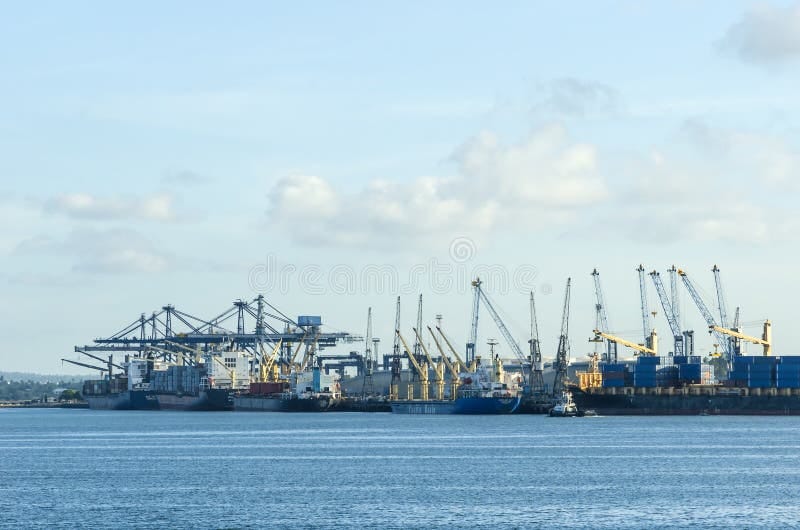
The latest Container Port Performance Index (CPPI) 2025, a joint publication by the World Bank and S&P Global Market Intelligence, contains a statistic that deserves far more attention than a passing glance: Dar es Salaam Port has vaulted 105 places in the global rankings, from 360th to 255th. This is not a mere statistical curiosity. It is a seismic shift in the competitive landscape of East and Central African trade corridors and a compelling case study in how sustained investment, private-sector partnership, and operational discipline can transform an African maritime gateway.
The CPPI measures a single, crucial variable: the time a container ship spends in port, from arrival at anchorage to departure after cargo operations, adjusted for vessel size and workload. It is not a holistic measure of logistics costs, customs efficiency, or hinterland connectivity. It is, however, a clean, comparable indicator of maritime efficiency. In a year when the global average performance slightly deteriorated, Dar es Salaam defied the trend. Its standardized score rocketed from a deeply negative -176 in 2021 to approximately -7.75 in 2025. This progress places it decisively ahead of regional rivals like Mombasa (396th) and Lamu (345th), as well as major South African hubs including Durban and Cape Town.
For the Central Corridor—serving Burundi, the Democratic Republic of Congo, Malawi, Rwanda, Tanzania, Uganda, and Zambia—this is far more than a ranking. Dar es Salaam is the principal maritime gateway for these seven nations. Faster vessel turnaround directly reduces demurrage fees, improves schedule reliability for shipping lines, and lowers the cost of moving goods into landlocked markets. This enhanced reliability strengthens the Central Corridor’s competitive position against the Northern Corridor and alternative routes. As one recent assessment noted, the gains go “far beyond the ranking.” Efficiency at the port translates into faster cargo movement, more predictable supply chains, and stronger regional competitiveness.
What Drove the Improvement?
Several reinforcing factors are clearly at work. First, private terminal operations have delivered transformative productivity gains. DP World, which began operations at its Dar es Salaam terminal in April 2024, reported that discharge times for comparable cargo plummeted by over 90 percent—from more than 300 hours to under 28. This kind of radical compression in vessel service time is precisely what the CPPI captures.
Second, cargo volumes have surged even as handling times have improved. Tanzania Ports Authority data show Dar es Salaam handled a record 33.7 million tonnes in the 2025/26 financial year, up from 27.7 million the previous year and roughly 23.7 million in 2023/24. Improving efficiency while absorbing higher throughput is a far stronger signal than improving during a period of stagnant demand.
Third, complementary infrastructure investments are beginning to align. The expansion of the Standard Gauge Railway, modernization of port equipment, digitalization of procedures, and broader corridor reforms are reducing friction beyond the berth. A port does not operate in isolation; its performance is shaped by the quality of its connections inland. Tanzania’s multi-year bet on port capacity, hinterland links, and institutional reform is finally showing returns in the data that international shippers and ranking systems actually watch.
Regionally, the picture is mixed and dynamic. Djibouti and Mogadishu improved even more dramatically in the same edition of the index, reflecting different dynamics in the Horn of Africa. Mombasa, by contrast, slipped, with reports attributing longer waiting times partly to higher demand and rerouted services. The East African coast is no longer a static hierarchy; relative positions are shifting, and the competition is heating up.
The Limits of the Metric—and Why It Still Matters
The CPPI has clear boundaries. It does not capture the full door-to-door cost of trade, the performance of customs and border agencies, road and rail bottlenecks, or the reliability of last-mile delivery. A ship that leaves Dar es Salaam quickly can still face delays at inland borders or on congested roads. Rankings can also be influenced by external shocks—geopolitical rerouting, weather, or sudden shifts in global liner networks—beyond any single port’s control.
Yet the index remains invaluable precisely because it isolates one critical, measurable variable: time in port. In global shipping, time is money, emissions, and schedule integrity. Ports that consistently turn vessels faster attract more calls, support higher-frequency services, and reduce the inventory-carrying costs borne by importers and exporters. For landlocked countries in the Central Corridor, those savings compound.
Moreover, the ranking provides an external, data-driven benchmark that domestic political narratives cannot easily dismiss. When a port moves more than 100 places while handling record volumes, it becomes difficult to argue that reforms are purely cosmetic. It also creates a visible target for further improvement and a basis for comparison with peers.
Strategic Implications
For Tanzania, the ranking validates a long-term infrastructure and partnership strategy. Sustaining the gains will require continued focus on capacity expansion, equipment reliability, digital systems, labor productivity, and seamless coordination among the Tanzania Ports Authority, terminal operators, shipping lines, and hinterland agencies. Complacency would be costly; other ports are also investing heavily.
For the Central Corridor as a whole, a more efficient Dar es Salaam strengthens the case for treating the route as a genuine Green Economic Development Corridor rather than a traditional transit path. Reliable maritime access is a necessary—though not sufficient—condition for industrial investment, agricultural exports, and mineral trade from the hinterland.
For regional competition, the shift raises the stakes. East African ports are no longer competing solely on geography or historical market share. They are competing on measured performance. That competition, if it drives further efficiency across the region, ultimately benefits shippers, consumers, and landlocked economies.
A Cautious Optimism
Dar es Salaam’s 105-place rise is real, data-backed progress. It reflects years of investment and operational change beginning to register in independent global metrics. It is not, however, a finished story. Global rankings move; volumes can surge further; external shocks can reappear. The test now is whether the port and its partners can lock in the gains, close remaining gaps in the end-to-end logistics chain, and translate efficiency into broader trade and development outcomes for the seven countries that depend on this gateway.
In an era when supply-chain resilience is a strategic priority, a quieter, data-driven improvement in vessel turnaround times at one of Africa’s key Indian Ocean ports is worth more attention than many flashier announcements. Dar es Salaam has moved the needle. The region should notice—and keep raising the bar.
About the Author
Andrew Mwangura is a maritime analyst and founder of Maritime Business Review.