


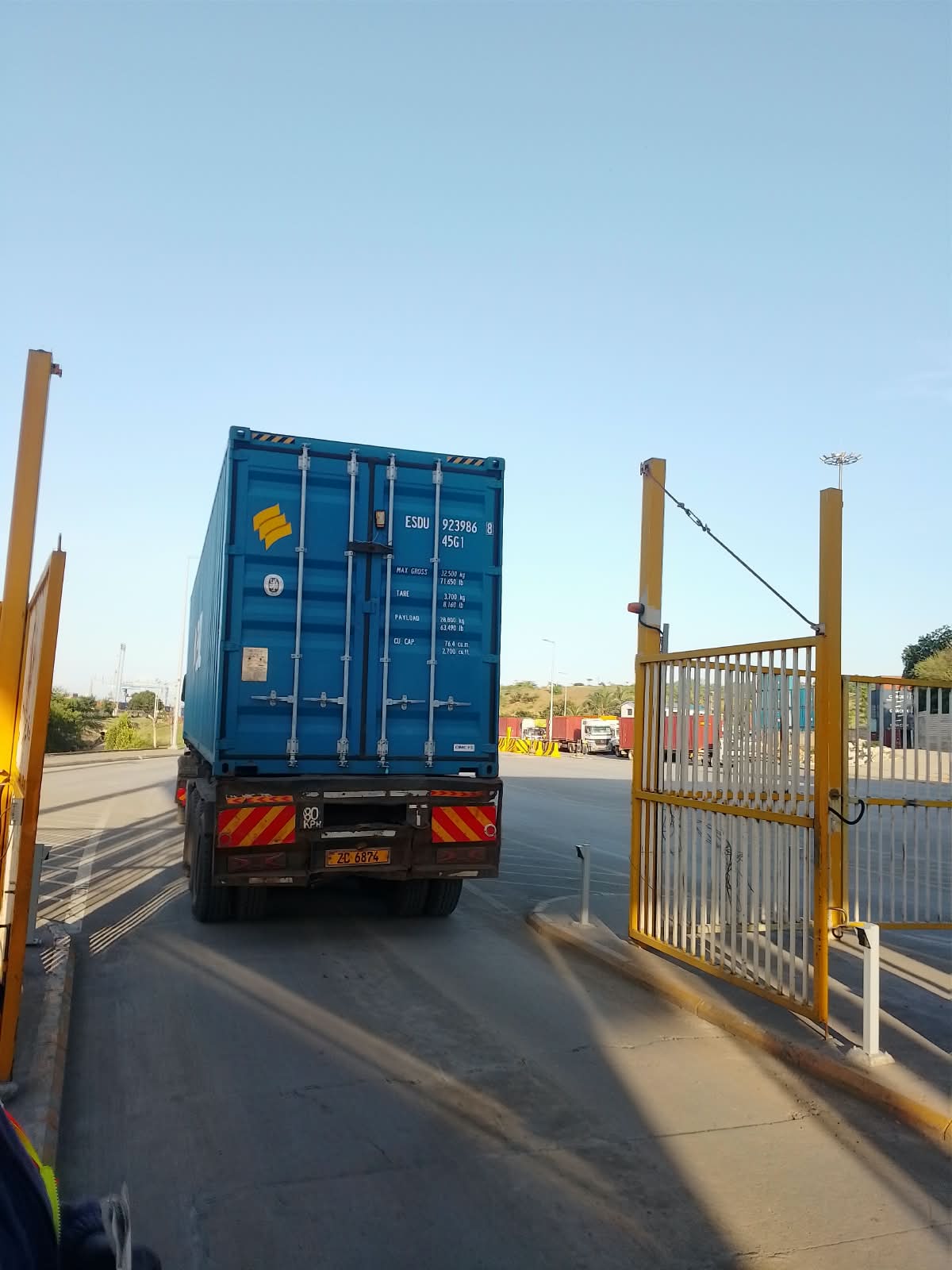
On the evening of September 30, 2026, a blue 40-foot high-cube container bearing the marks ESDU 9239868 rolled out of the Port of Mombasa. It was loaded onto a truck, passed through the gate, and began its long journey to Kamembe, Rwanda — a small town tucked into the hills of the country’s Western Province. On its own, the movement of one consolidated container of electronics, hardware, and household goods would barely register in the daily churn of East Africa’s busiest port. But for the team at ATEX Express Logistics Limited, that container represented something far more significant: the successful clearance of their very first shipment, and a milestone that speaks to a deeper shift in Kenya’s logistics landscape.
The story of ATEX’s maiden clearance is not simply a corporate feel-good narrative. It is a case study in what Kenya’s clearing and forwarding sector must become if the country is to fully realise its ambitions as the gateway to East and Central Africa — and a reminder of the obstacles that stand in the way.
The Context: A Port Under Pressure, a Region in Motion
The timing of ATEX’s first clearance is no accident. The Port of Mombasa is handling more cargo than ever before. In July 2026, total throughput rose 13.4 per cent year-on-year to 4.23 million tonnes, with exports hitting a record 517,131 tonnes. Transit cargo serving landlocked neighbours through the Northern Corridor jumped 13 per cent to 8.34 million tonnes in the first half of 2026 alone. The port handled 45.45 million tonnes of cargo in 2025, up 10 per cent from the previous year, while container traffic increased to 2.11 million TEUs.
This growth is not merely a matter of volume. It reflects a strategic realignment of regional trade. In June 2026, Kenya and Rwanda signed a government-to-government framework allowing Rwanda to import bulk refined petroleum products through Mombasa and the Northern Corridor, reversing more than a decade of Kigali’s reliance on the Central Corridor through Dar es Salaam. Rwanda’s petroleum imports through Kenya are projected to rise tenfold, from about 50,000 cubic metres in 2025 to more than 500,000 cubic metres annually. Rwanda is even investing in a logistics hub in Mai Mahiu to fast-track cargo movement via the Standard Gauge Railway.
For Kenyan clearing agents, this is both an opportunity and a test. More cargo means more business — but it also means more pressure on a system that has historically struggled with congestion, delays, and regulatory uncertainty.
The Execution: Why Speed Mattered
The ATEX container moved quickly. According to the company’s own account, the truck was loaded and departed from Mombasa Port within hours of arrival, with the clearing and forwarding process handled by a team led by General Manager Dan Mbithi and Shipping Operations Officer Kennedy Ochieng’. Trans Desert Transport Company, ATEX’s sister company, coordinated the overland leg to Kamembe.
Speed matters in this business. Demurrage and detention charges can quickly erode margins, and delays at the port cascade through the entire supply chain. A clearing agent charged roughly Sh6,000 per day in demurrage costs can accumulate tens of thousands of shillings in penalties over two weeks, costs that are ultimately passed on to consumers. The Kenya Revenue Authority’s own Advance Cargo Declaration system, launched for containerised cargo in August 2026, requires commercial invoices, freight invoices, bills of lading, and export declarations before cargo is even shipped — adding layers of documentation that, if mishandled, can bring the entire process to a halt.
The fact that ATEX managed to clear and dispatch its first container within hours, rather than days, is a testament to preparation. It also highlights a fundamental truth about the clearing and forwarding industry: expertise is not optional. It is the difference between a container that moves and one that sits.
The Landscape: A Sector at a Crossroads
Kenya’s clearing and forwarding sector is at an inflection point. More than 1,200 licensed agents operate across the country’s trade networks, managing payments, cargo records, and compliance requirements that connect the Port of Mombasa to domestic businesses and regional markets. The industry is becoming an increasingly important market for financial technology companies, as the sheer volume of transactions — one shipment can generate multiple payments and records across customs, shipping lines, banks, and transporters — creates demand for digital solutions that can reconcile payments and streamline workflows.
But the sector also faces serious headwinds. In September 2026, clearing agents protested a new Export Declaration requirement introduced under the Finance Act 2026, arguing that it had stalled cargo release and caused thousands of consignments to pile up at the port and container freight stations. The Kenya Revenue Authority defended the requirement as legally mandated under Section 23B of the Tax Procedures Act, but agents warned that the burden would ultimately be passed on to ordinary Kenyans through higher business costs. A separate dispute over the customs benchmark value for consolidated cargo — initially raised to Sh3.2 million before being retained at Sh2.5 million following presidential intervention — further illustrates the tension between revenue enforcement and trade facilitation.
These are not abstract policy debates. They determine whether a clearing agent can move a container in hours or whether it sits for days, accruing costs that ripple through the economy. For new entrants like ATEX, navigating this environment requires not just operational competence but regulatory fluency — the ability to anticipate rule changes, manage compliance proactively, and maintain relationships with port authorities and customs officials.
The Team: Behind Every Clearance
The PDF accompanying this article introduces the ATEX team: Dan Mbithi, the General Manager; Kennedy Ochieng’, the Shipping Operations Officer; Henry Mkal, the Transport Coordinator; and Gilbert Oduor, the Workshop Manager. Their roles are distinct but interdependent — a reminder that logistics is a team sport. The shipping operations officer cannot clear cargo without the workshop manager confirming the truck’s readiness. The transport coordinator cannot dispatch the container without the general manager’s oversight.
This is the unglamorous reality of the logistics industry. It is not built on grand strategy alone but on coordination, communication, and the ability to solve problems in real time. A truck breakdown, a missing document, a last-minute customs query — any one of these can derail a shipment. The ATEX team’s ability to clear and dispatch their first container within hours suggests that they understand this reality.
The Path Forward: What Kenya Needs from Its Logistics Sector
ATEX’s maiden clearance is a small milestone, but it points to a larger question: what kind of logistics sector does Kenya need to fulfil its ambition of becoming East Africa’s undisputed trade gateway?
First, the sector needs regulatory predictability. The disputes over export declarations and customs valuations are not simply bureaucratic irritants. They create uncertainty that discourages investment and slows trade. The Kenya Revenue Authority’s legitimate interest in preventing undervaluation must be balanced against the practical realities of moving goods. Policies introduced without adequate notice or consultation — as agents have repeatedly complained — impose costs that the entire economy bears.
Second, the sector needs investment in digital infrastructure. The partnership between KIFWA and CapitalPay to develop a Centralised Clearing and Forwarding Management System is a step in the right direction, but it is only a beginning. The port’s own investments — including the KSh 1 billion Vessel Traffic Management and Information System commissioned in July 2026 — are welcome, but they must be matched by upgrades in the systems that agents use daily.
Third, the sector needs new entrants who can raise the bar. The logistics industry is not short of players, but it is short of players who combine operational excellence with a genuine commitment to service. ATEX’s stated motto — “Attention to Excel,” as Chairman Peter Were put it in his address — is a promise that must be tested not in one container but in hundreds, and eventually thousands. The company’s chairman was right to frame the maiden clearance as “Day One.” The real measure of success will be whether the second container, the tenth, and the hundredth receive the same level of care.
A Final Word
The container that left Mombasa Port on September 30 was bound for Kamembe, a town most Kenyans will never visit. But its journey — from port to truck to border to final destination — is the journey that thousands of containers make every week through the Northern Corridor. Each one represents a livelihood, a business, a promise kept or broken.
ATEX’s first clearance is worth celebrating, but it is also worth scrutinising. In an industry defined by pressure, competition, and regulatory complexity, the only sustainable advantage is competence. If ATEX can build on this milestone — if it can turn one successful clearance into a system of reliable, efficient service — then it will have earned its place in Kenya’s logistics story. If it cannot, then this maiden voyage will be remembered as little more than a promising start.
Kenya’s trade ambitions are too important to be left to chance. The country needs logistics companies that can move cargo quickly, safely, and transparently. ATEX has shown that it is capable of doing so. The question now is whether it can do so consistently.