


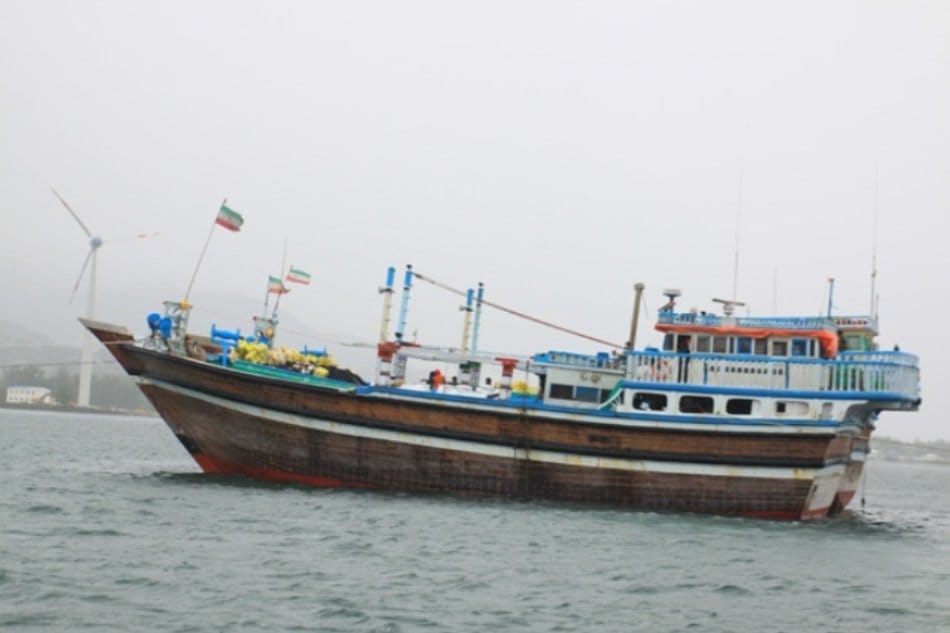
On the afternoon of 29 October 2026, approximately a dozen armed men boarded the Iranian-flagged fishing dhow AZINI between Bandarbayla and Hafun District off the coast of Puntland, Somalia. The vessel carried 21 Iranian crew members and two Somali armed guards. Its captain managed to send a distress voice message to another vessel before communications ceased. The Maritime Security Centre – Indian Ocean (MSCIO) confirmed the hijacking, and Operation Atalanta is investigating. The last known position was roughly 09°42′N 053°55′E. Critically, the AZINI is assessed as a potential mothership—precisely the classic tactic that once allowed Somali pirates to project power hundreds of nautical miles into the Indian Ocean.
This is not an isolated incident. It is the latest data point in a clear resurgence of Somali piracy that has already produced multiple successful commercial hijackings in 2026—the first sustained wave since international naval operations largely suppressed the industry after 2012. The International Maritime Bureau recorded eight hijackings in the first nine months of 2026, all attributed to Somali pirates, who accounted for 94 percent of crew members taken hostage globally. While overall worldwide piracy incidents fell to a 34-year low, the concentration of risk in the western Indian Ocean and Gulf of Aden has sharpened dramatically.
Why Now? A Perfect Storm of Opportunity
Three structural factors explain the return.
First, naval capacity has been diverted. The Houthi campaign in the Red Sea and Bab el-Mandeb since late 2023, combined with the broader escalation involving Iran in 2026, pulled warships, aircraft, and intelligence assets northward and into the Persian Gulf. The dense multinational presence that once blanketed the Somali Basin—EU NAVFOR Atalanta, Combined Maritime Forces, and independent national deployments—thinned. Pirates noticed.
Second, local grievances and weak governance persist. Illegal, unreported, and unregulated (IUU) fishing by foreign fleets remains a flashpoint along the Puntland coast. Coastal communities still see foreign vessels depleting stocks while delivering little local benefit, and Puntland officials have repeatedly linked pirate recruitment to this resentment. At the same time, the federal government in Mogadishu remains preoccupied with Al-Shabaab and lacks a coherent, well-resourced coast guard capable of asserting sovereignty over its vast exclusive economic zone. The semi-autonomous Puntland Maritime Police Force (PMPF), supported by the United Arab Emirates, has scored tactical successes—recovering vessels such as the Honour 25 at the cost of five crew lives, as well as other ships—but it cannot police the entire coastline or deep-ocean approaches alone.
Third, the business model still works. Successful ransoms, even if fewer than in the peak years, demonstrate that the risk-reward calculation remains attractive. Fishing dhows and smaller commercial vessels offer lower-risk entry points that can then be converted into motherships for higher-value targets. The AZINI fits this pattern exactly.
The Mothership Threat and Second-Order Risks
The conversion of a hijacked dhow into a mothership is particularly dangerous. It allows pirate action groups to operate far beyond the range of small skiffs, blend into legitimate fishing traffic, and loiter for days while searching for tankers or bulk carriers. MSCIO has already flagged the AZINI for this potential use. In previous cycles, such platforms enabled attacks hundreds of nautical miles offshore, raising insurance premiums, forcing costly routing changes, and occasionally prompting private armed security deployments that themselves carry legal and escalation risks.
Beyond the immediate crew and cargo, the second-order effects are significant. Shipping companies may again route vessels farther south, increasing transit times and fuel costs. Insurers will adjust rates. Regional states will face pressure to expand their own naval footprints, potentially heightening competition among external powers already jockeying for influence in Somalia—Türkiye, the UAE, Saudi Arabia, and others. And every successful hijacking risks normalising the practice among younger recruits who never experienced the peak years of international pressure.
What Must Be Done
Reactive naval chasing of individual motherships is necessary but insufficient. A durable response requires three parallel tracks.
Restore focused presence. Operation Atalanta and partner forces must rebalance assets toward the Somali Basin without abandoning Red Sea duties. Sustained aerial surveillance, boarding teams, and rapid-reaction vessels remain the most effective deterrent. The Indian Navy’s recent interventions demonstrate the value of independent but coordinated national contributions.
Strengthen local capacity and incentives. The PMPF has proven it can deliver results when properly supported. Expanding its reach, professionalisation, and integration with federal and international structures is essential. Simultaneously, serious efforts to curb IUU fishing—through better licensing transparency, monitoring, and enforcement—would undercut one of the most potent local recruitment narratives. Clan-based mediation and economic alternatives for coastal youth matter as much as kinetic operations.
Close the legal and financial loop. Successful prosecutions—as India has shown with its Maritime Anti-Piracy Act—and disruption of ransom payment channels remain critical. Without credible consequences on shore, sea-based deterrence only delays the next wave.
The hijacking of the AZINI is a warning, not yet a catastrophe. Somali piracy in 2026 is not a simple replay of 2008–2012. The volume of attacks is lower, the geopolitical environment more contested, and local security forces more capable than a decade ago. But the fundamental conditions that allowed pirates to thrive—ungoverned spaces, economic desperation, and opportunistic gaps in international attention—have reasserted themselves. Ignoring them invites a return of the multi-billion-dollar tax on global trade and the human cost of prolonged captivity that the world once vowed never to accept again.
Seafarers on the AZINI and other vessels currently under threat deserve more than another cycle of crisis response. They deserve a strategy that treats the problem as structural rather than episodic. The waters off Puntland have spoken. The question is whether the international community is still listening.