


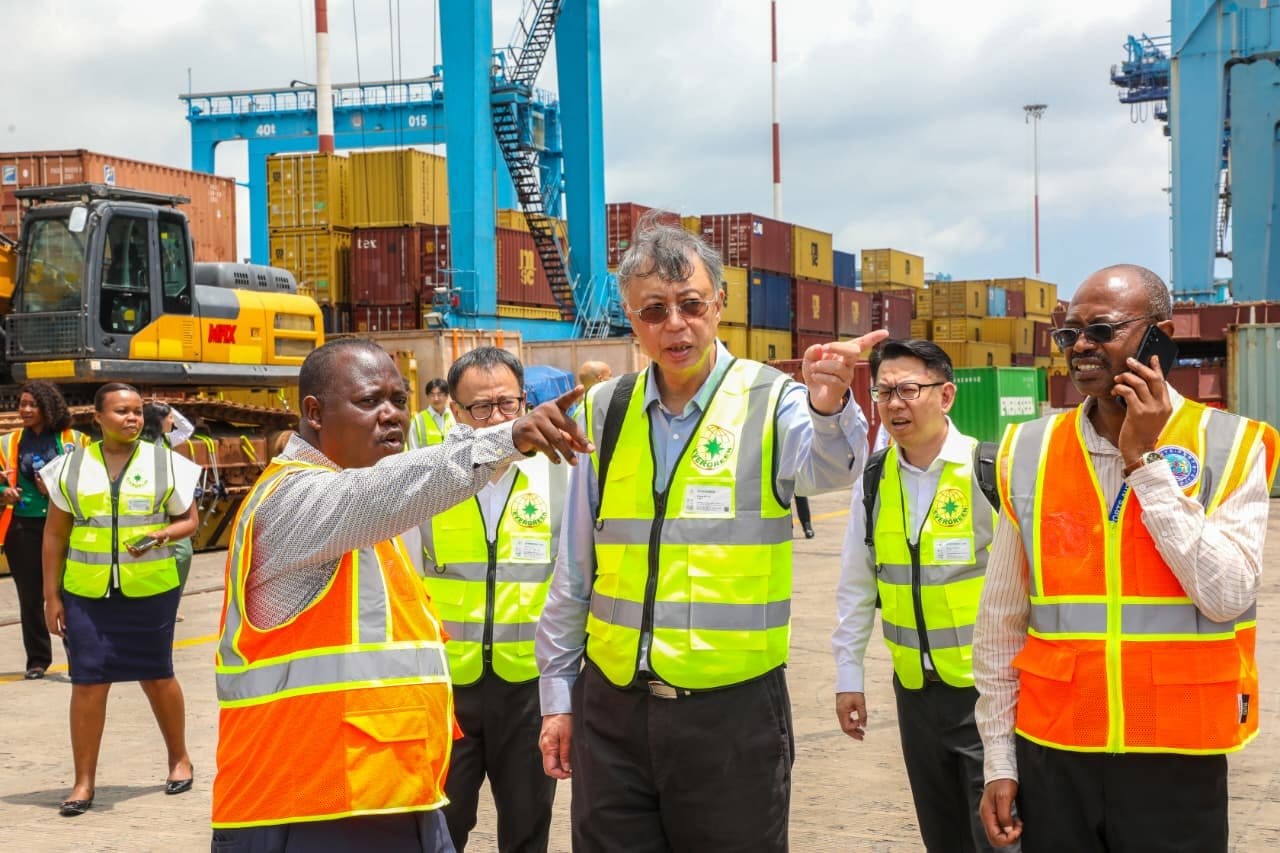
Two parallel developments have put Kenya’s port network back on the commercial radar: the Kenya Ports Authority (KPA) is expanding container-handling capacity, and Evergreen Marine Corporation is investing in a new generation of vessels. Together, they suggest a potential alignment between a carrier building future fleet capacity and a port authority building future berth capacity. But the operative word is “potential.” No deployment commitments were announced during Evergreen’s recent business tour of Mombasa. That makes this a moment of opportunity—not yet a commercial breakthrough.
The facts are straightforward. Evergreen President K. H. Wu led a delegation to Mombasa, accompanied by Bahaa Badr, chairman of Gulf Badr, Evergreen’s agent, for discussions on port infrastructure, operational capacity and the outlook for maritime trade. Representing KPA Chief Executive Officer Capt. William K. Ruto, General Manager Cargo Operations Sudi Mwasinago outlined the Authority’s expansion programme. That includes the imminent completion of Berth 19B, expected to add approximately 300,000 twenty-foot equivalent units (TEUs) to Mombasa’s annual container-handling capacity, and planned developments at Berths 23 and 24.
On the carrier side, Evergreen has ordered 23 feeder and medium-sized container ships and 11 LNG dual-fuel mega vessels, including ships capable of carrying 24,000 TEUs. That order book reflects a two-track strategy: regional cargo distribution through smaller and medium-sized ships, and long-haul shipping through very large vessels.
For Kenya, the significance lies in the overlap. Mombasa remains the main maritime gateway for Kenya and the Northern Corridor. Lamu offers additional capacity and a longer-term platform for regional trade. KPA is investing in the infrastructure needed to accommodate larger vessels and more cargo. Evergreen is investing in the fleet that will move that cargo. The commercial question is whether Kenya can convert this parallel momentum into binding service deployments, transshipment flows and logistics investment.
The answer depends on matching capacity to vessel classes. Evergreen’s 24,000 TEU mega vessels will not automatically call at Mombasa. Such ships require deep drafts, large cranes, expansive yards and highly efficient hinterland connections. Berth 19B and the planned Berths 23 and 24 will improve Mombasa’s ability to handle larger vessels and rising volumes, but capacity alone is not enough. Ports win carrier calls through reliability, productivity, tariff predictability and corridor performance. A berth is only as valuable as the cargo it can move inland and the time it saves.
The more immediate opportunity is likely in Evergreen’s feeder and medium-sized fleet. These vessels are the workhorses of regional distribution. If Mombasa can offer competitive berth windows, efficient transshipment and reliable connections to East and Central Africa, it can position itself as a regional container hub—not just a gateway for Kenyan imports and exports. That would create opportunities for feeder operators, freight forwarders, inland container depots, trucking and rail operators, ship agencies such as Gulf Badr, and logistics firms along the Northern Corridor.
Lamu should be viewed in the same commercial logic, but with patience. It offers additional capacity and a longer-term platform for regional trade. It should not be marketed as a duplicate of Mombasa. Its niche may lie in bulk, energy, regional transshipment or future industrial cargo, depending on connectivity and demand. The port network works best when Mombasa and Lamu are complementary, not competing for the same container traffic without a clear commercial rationale.
There are real risks. The Evergreen visit does not equal a service launch. Carrier deployment decisions are driven by global network design, cargo demand, port costs, congestion, draft, equipment and hinterland reliability. Kenya’s ports still face familiar constraints: dwell times, customs clearance, road and rail connectivity, and regional competition. Capacity without connectivity is just concrete. Berth 19B’s 300,000 TEU addition is meaningful, but its value will depend on utilization. Berths 23 and 24 will require sequencing, equipment and financing discipline.
KPA and its partners should therefore turn the tour into a commercial roadmap. First, publish a vessel-readiness matrix for Mombasa—maximum draft, beam, crane outreach, yard capacity and berth productivity—so carriers can match ships to berths. Second, negotiate a memorandum of understanding with Evergreen and Gulf Badr for a feeder or transshipment pilot with clear service-level targets. Third, sequence Berth 19B completion with yard, crane and digital-clearance investments so new capacity is operational, not just physical. Fourth, set corridor service standards with rail, road and customs agencies. Fifth, study green-shipping demand cautiously: Evergreen’s LNG dual-fuel vessels signal a cleaner fleet future, but bunkering investment should follow feasibility, not headlines. Sixth, keep Lamu’s commercial pitch focused on its realistic niche.
The Evergreen tour is best read as a signal of interest. Kenya now has a narrow window to convert that interest into contracts, cargo and corridor investment. If KPA, carriers, agents and logistics operators align on vessel classes, service levels and hinterland performance, Kenya’s port network can become a genuine regional logistics platform. If not, the capacity will be there—but the ships may go elsewhere.