


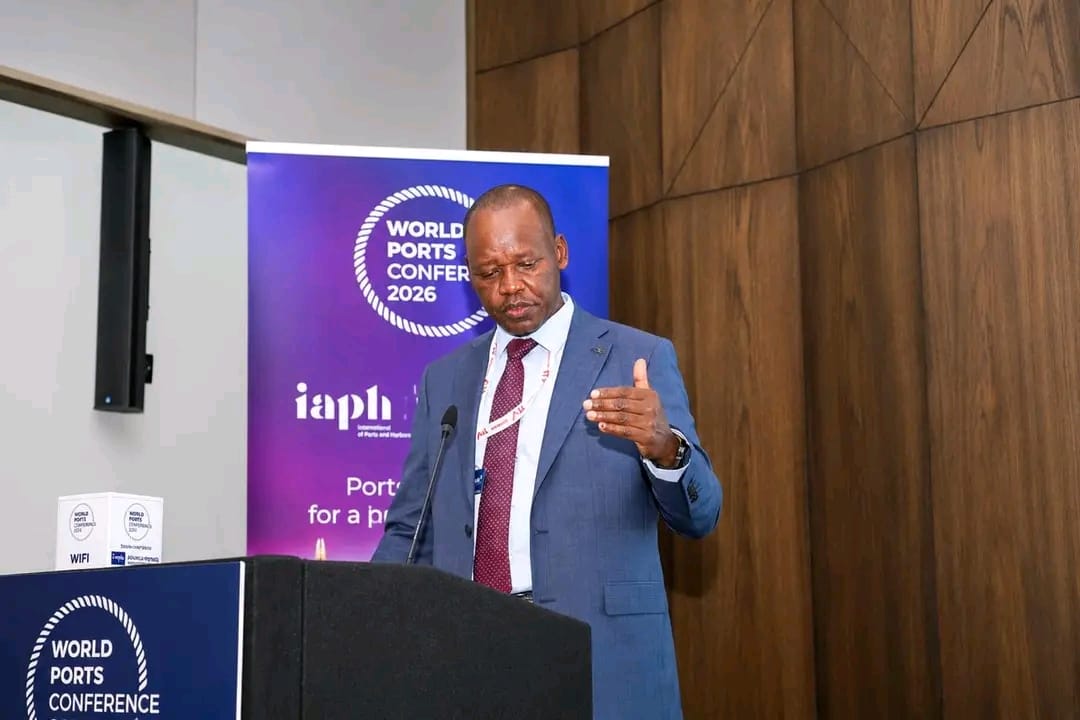
At the IAPH World Ports Conference 2026, Kenya Ports Authority CEO Capt. William Ruto outlined a paradigm shift in African maritime strategy. The future of the continent’s trade will not be won by building the biggest berths, but by mastering the seamless, end-to-end movement of cargo across entire regional ecosystems.
For decades, the narrative of African maritime development has been dominated by a “build it and they will come” mentality. The race was on to dredge deeper channels, install larger ship-to-shore cranes, and expand container yards. While this physical infrastructure remains crucial, a profound strategic shift is underway. As Capt. William Ruto, Chief Executive Officer of the Kenya Ports Authority (KPA), aptly noted at the recent International Association of Ports and Harbors (IAPH) World Ports Conference in London, the rules of engagement have changed.
“Competition in East Africa is shifting from individual seaports to entire logistics corridors,” Capt. Ruto observed. This is a critical realization. Mombasa, Dar es Salaam, and Djibouti are no longer just competing for vessel calls; they are competing for the trade of landlocked nations and the industrial output of their respective hinterlands. The modern African port is no longer a destination; it is a transit point within a complex, interconnected supply chain.
Capt. Ruto’s assertion that “a competitive port is not necessarily the one with the biggest quay—it is the gateway that provides the most reliable end-to-end service” strikes at the heart of Africa’s logistical challenges. A port is only as efficient as the rail network that evacuates its cargo, the border posts that clear its goods, and the inland terminals that distribute them. If a container sits idle for weeks in a congested port, or gets stuck on a dilapidated highway, the efficiency gains of a state-of-the-art terminal are entirely negated.
The KPA CEO identified four policy trends currently reshaping Africa’s maritime sector. These pillars provide a robust framework for policymakers and industry stakeholders:
1. Scale and Flexibility: It is not enough to simply build bigger; infrastructure must be adaptable. Ports are investing in deeper berths and larger equipment, but they must also be flexible enough to handle shifting global cargo demands—from the rise of e-commerce to the complexities of green energy transitions.
2. Corridor Integration: This is perhaps the most vital trend. Governments must stop treating ports as isolated assets and start treating them as a single cargo-flow system. The investment in rail links, inland container depots (ICDs), and border efficiency (such as One-Stop Border Posts) is the new frontline of maritime competition. The Northern Corridor linking Mombasa to Kampala, Kigali, and beyond must function as a single, synchronized organism.
3. Digital Trust: The era of paper-based logistics is over. The adoption of Port Community Systems, National Single Windows, and real-time cargo visibility platforms is essential. “Digital trust” is not just about reducing paperwork; it is about providing shippers and freight forwarders with the confidence that their goods will be tracked, secure, and delivered on time.
4. Blended Delivery Models: The capital expenditure required for modern logistics corridors is immense. African governments cannot shoulder this burden alone. Public-Private Partnerships (PPPs) and terminal concessions are increasingly vital to mobilize international capital, technical expertise, and technology, while governments must retain robust regulatory oversight to protect public interest.
Yet, as we analyze these four trends, it is crucial to remember the human element. The most advanced digital systems and the longest rail lines will fail without a trained, competent workforce. The efficient movement of cargo across a corridor requires not just engineers and IT specialists, but also skilled deckhands, crane operators, customs officials, and logistics managers. As Africa invests in corridor integration and digital trust, it must simultaneously invest in robust maritime education and training institutions. The seamless corridor is built on the backs of a skilled workforce capable of maintaining the standard of global trade.
The theme of the IAPH conference, “Ports Policy in Practice,” demands that these insights move from the boardroom to the policy document. Africa’s policymakers must abandon siloed thinking. A port expansion project in Mombasa is incomplete without a corresponding investment in the rail network to Nairobi and the customs systems at the Malaba border.
Capt. Ruto concluded with a vision that should serve as the guiding star for Africa’s maritime strategy: “The most competitive ports of the future will not necessarily be those with the largest infrastructure assets, but those capable of integrating infrastructure, technology, logistics, sustainability, and industrial development into a coherent trade ecosystem.”
As the global shipping industry faces persistent disruptions, from geopolitical tensions to climate change, the ability to provide reliable, end-to-end logistics will become the ultimate competitive advantage. Africa has a massive opportunity to capture global trade and drive its Blue Economy. To do so, it must look beyond the quay and build corridors that are not only physically connected, but digitally integrated, financially sustainable, and humanly capable. The race for African maritime supremacy will not be won at the water’s edge; it will be won along the rail tracks and highways that lead to the heart of the continent.