


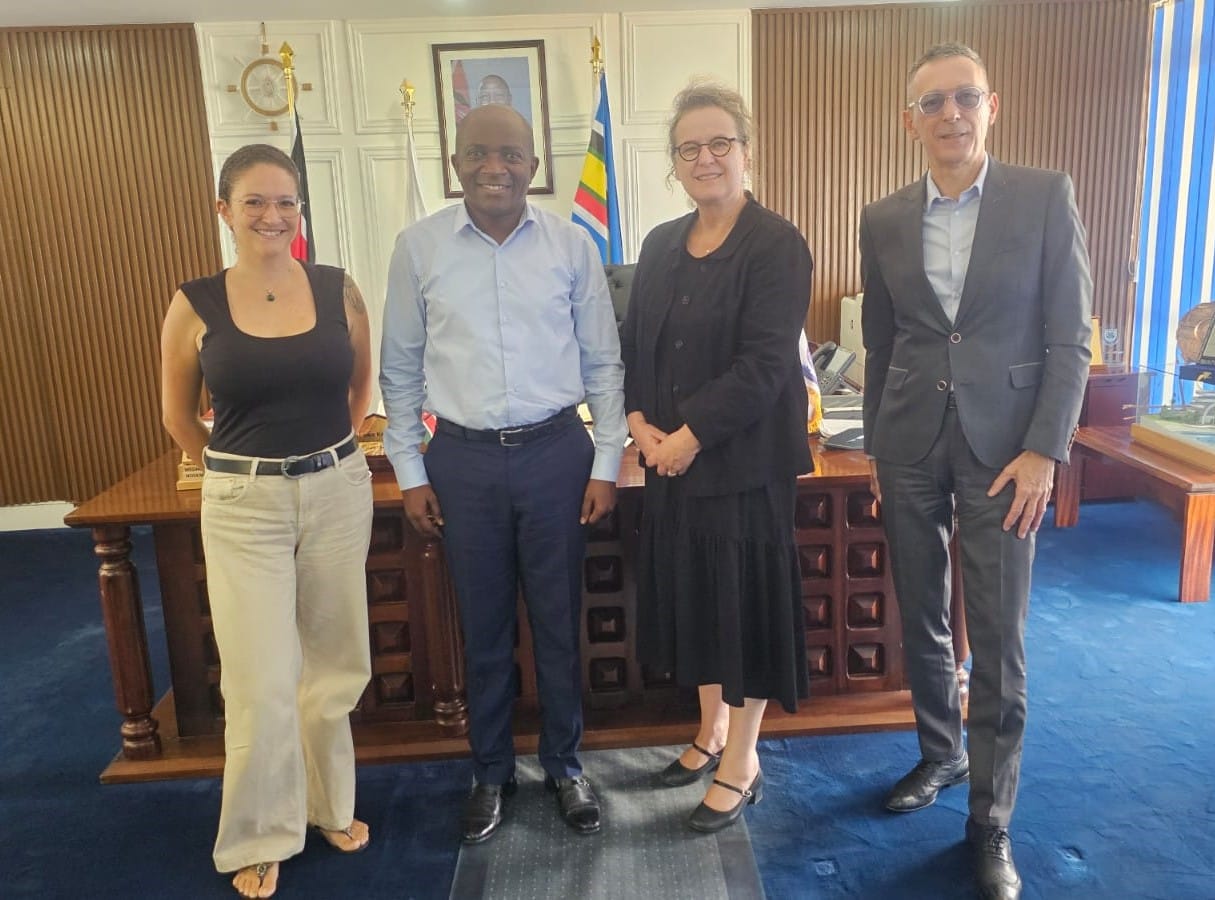
The recent partnership talks between Kenya’s Bandari Maritime Academy and French education officials signal a new era of international cooperation. But for Africa to truly solve the global seafarer shortage, this collaboration must translate into tangible, hands-on training for the ratings who form the backbone of the industry.
The recent courtesy visit by a French delegation—comprising key players in education and hospitality—to Bandari Maritime Academy (BMA) in Mombasa is more than just a diplomatic photo opportunity. Led by BMA CEO Dr. Eric Katana, the discussions centered on leveraging shared expertise, strengthening institutional linkages, and exploring skills development opportunities. It is a welcome recognition that Africa’s maritime training institutions are ready to engage with global partners to elevate standards. Yet, as we applaud these high-level talks, we must ask a critical question: how will this translate into the practical competencies required to build a competitive African maritime workforce?
The global shipping industry is facing a persistent and escalating shortage of qualified seafarers. The International Chamber of Shipping has warned of a serious shortage of officers, with a projected need for an additional 89,510 officers by 2026 to operate the world merchant fleet. The Drewry Manning Report 2025/26 estimates the current global officer shortage at 8.5%, rising to 10% by 2030. Africa, with over 60% of its population under the age of 25, is uniquely positioned to fill this gap. However, despite this demographic advantage, African seafarers currently make up only about 4% of the global workforce, a figure that points to deep systemic gaps in training, certification, and industry linkages.
The BMA-French engagement is precisely the kind of international cooperation needed to bridge these gaps. The BMA has already demonstrated its commitment to building a competitive workforce by securing training commitments from global shipping lines and launching recruitment drives. It has also invested in advanced simulation technology, recognizing that hands-on training is indispensable for developing the skills needed to navigate modern maritime challenges. The IMO has also recognized BMA as a key partner, hosting a workshop in Mombasa for simulator instructors from across Eastern and Southern Africa to enhance the implementation of the STCW Convention. These are commendable steps.
But the focus must extend beyond the officer class. The “Efficient Deck Hand” (EDH) certification is a critical entry point into the maritime profession, yet it is often overlooked in favour of higher-profile cadetships. Maritime academies across the continent, from Nigeria’s NIMASA-approved institutions to South Africa’s accredited training providers, offer these courses. The challenge is one of scale, quality, and standardization. The harmonization of training standards across regional economic communities, as advocated by the African Union’s 2050 AIM Strategy, is essential to ensure that a deckhand trained in Kenya is as competent and employable as one trained in Ghana or Côte d’Ivoire.
Moreover, the tools of modern maritime training must extend to the deckhand level. The full-mission bridge simulator is a vital asset for officer training, but simulators for cargo handling, mooring operations, and basic seamanship are equally important for ratings. The IMO’s simulator instructor training in Mombasa is a step in the right direction, but it must be complemented by a sustained investment in the infrastructure and instructors needed to deliver high-quality, practical training to ratings.
The Blue Economy is often framed in terms of large-scale infrastructure, port expansion, and offshore energy. These are undeniably important. But the engine of this economy is human capital. If Africa is to move from being a passive user of maritime services to a genuine maritime power, it must invest in a comprehensive career ladder that begins with the deckhand. This means expanding EDH programs, providing sea-time opportunities for ratings, and ensuring that training curricula are designed in direct consultation with the employers who will hire them.
The BMA-French partnership is a promising step toward strengthening those links. But for Africa to truly capitalize on the global demand for seafarers, its maritime education and training institutions must make the training of efficient, competent, and safety-conscious deckhands a flagship priority, not an afterthought. The future of the African maritime industry will not be built solely on the bridge; it will be secured, knot by knot, on the deck.