


Five seafarers died, and Africa’s maritime workers are still treated as an afterthought.
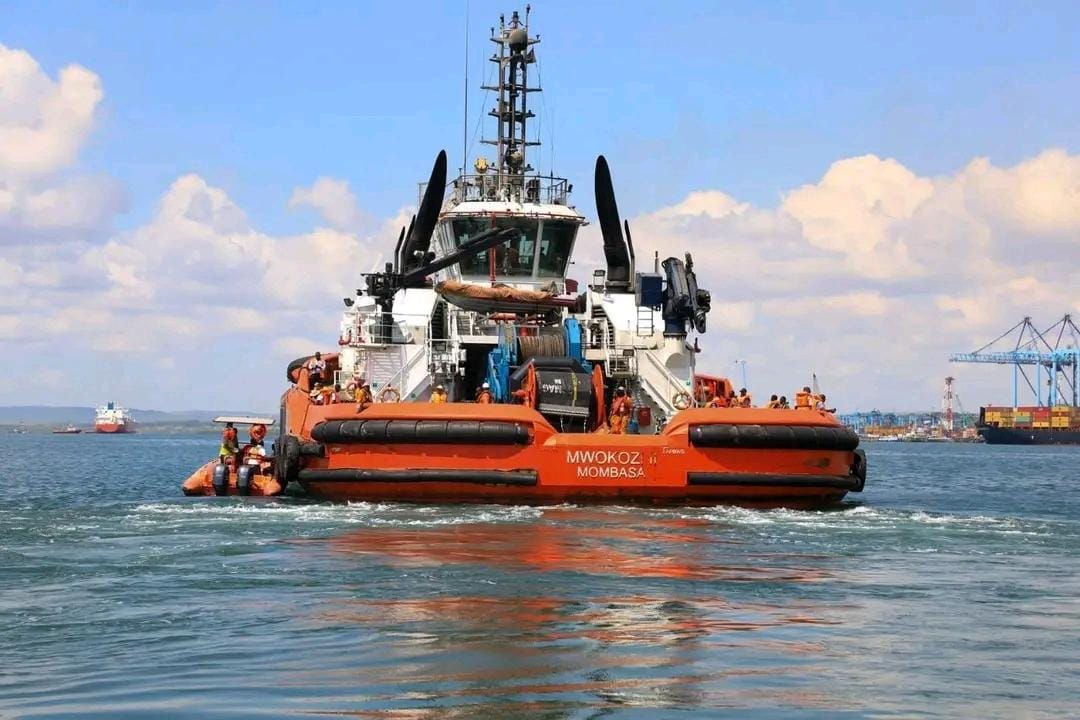
At 07:42 on 30 September 2026, about 47 nautical miles south of Mossel Bay, a man fell from the deck of the tug Umkhuseli. The bridge alarm sounded. Four of his shipmates ran to the Fast Rescue Boat station. They did not argue. They did not wait for better weather. That is not what seafarers do.
The boat was launched. It capsized. In ninety seconds, a routine emergency became a mass casualty.
Cape Town’s Maritime Rescue Co-ordination Centre—one of the finest in Africa—diverted ships and launched NSRI craft and SAPS helicopters. Searchers recovered three bodies from the oil and foam: Second Officer Akhona Mlaba, 34; Fourth Engineer Simphiwe Simayi, 28; and Able Seaman Ditaba Leoto, 41.
Five weeks on, Oiler Zolile Milbaziso and Able Seaman Sibonile Qalani are still missing. Their families in the Eastern Cape have no bodies and no death certificates. Under current law, that means no compensation.
This was not an isolated accident. It was a systemic failure.
I. The numbers we don’t publish
Seafarers keep going missing, and few of these cases make headlines:
· 2 March 2026: Nigerian tug LEO, 80 nautical miles south of Mossel Bay—five missing, one dead, twelve rescued.
· 29 September 2026: Tanker Honour 25, off Puntland—five crew killed during a Puntland Maritime Police operation, two injured.
· 30 September 2026: Umkhuseli—two missing, three dead.
Piracy is returning. The IMB reports a rise in vessels hijacked in the Somali Basin between January and September 2026 compared with all of 2025. EUNAVFOR Atalanta has extended its mandate to February 2027, and UKMTO has raised its threat level. Yet SAMSA and the Kenya Maritime Authority still have no joint emergency towing plan for the Mombasa–Mogadishu–Cape Town corridor.
II. Why the rescue boat capsized: an old story
East African seafarers sailed on Clan Line ships in the 1970s with the same davit-launched Fast Rescue Boat. The danger is well documented in IMO papers—and still unfixed.
Side launch in beam seas. Umkhuseli is an 83-metre, 5,400 GT vessel built in 2013; her FRB launches from a single-arm davit. In the Agulhas Current, with a 3–4 metre swell and a 25-knot southeaster, the boat swings like a pendulum. By the time the hook releases, it is often half-flooded.
The hook. AMSOL has opened an internal investigation. The on-load release mechanism is the likely culprit; similar hooks have been implicated in earlier fatal lifeboat accidents. Safety bulletins have been issued, but no mandatory redesign has followed.
Manpower. Why was a man working alone on deck in heavy weather without a harness? An emergency towing vessel should keep a two-person deck watch. Was she short-crewed to save money? SAMSA’s inquiry must answer this.
This is not an attack on AMSOL, Africa’s best towage operator. It kept the tug Inkanyezi searching, at its own cost, after SAMSA suspended the official search on 1 October. That is true seamanship.
The blame lies with the contracting model. The state charters the ship. A private company employs the crew. The state conducts the rescue—and then the state stops. The families are left at the mercy of a private insurer.
III. The law that forgets the missing
Under South Africa’s and Kenya’s Merchant Shipping Acts, a seafarer missing at sea is not legally dead for seven years. That means delayed access to compensation and pensions at the moment families are most vulnerable.
For the Honour 25 survivors, Pakistan’s Foreign Minister had to intervene personally to bring three men home. For the LEO, Nigerian consular officials are still working the case. Africa’s own seafarers deserve a better system.
We need a protocol to the Maritime Labour Convention with a presumption of death after 30 days when a man-overboard recovery fails, and an immediate ex-gratia payment to families. The ITF Seafarers’ Trust has supported welfare for Ukrainian seafarers in the Black Sea. Why not for Africans off our own coast?
IV. Four demands
As a former Secretary General who buried several seafarers in Mombasa—men who lost their lives under mysterious circumstances at sea in the 1980s and 1990s—I demand:
A public inquiry, not a preliminary one. SAMSA must publish the VDR audio, the FRB maintenance log and the manning certificate. Families must have union representation from SATAWU and SUK, not just company lawyers.
A 72-hour rule. South Africa’s SAR policy and Kenya’s KMA SAR manual should require a 72-hour active search for any man overboard from an emergency towing vessel, with state-funded continuation. In the Agulhas Current, a drifting man can travel 60 nautical miles in 24 hours.
Stern launch, not side davit. All emergency towing vessels operating south of 33°S should be retrofitted with stern-ramp FRB launch, and the IMO should make it mandatory for new builds.
A memorial and a college. Africa has no memorial for seafarers lost at sea. Let us build a wall with their names at Mombasa’s Liwatoni and in Mossel Bay: Milbaziso, Qalani, Mlaba, Simayi, Leoto, and the five killed on the Honour 25. And let us finally build an East African Maritime Labour College in Mombasa, modelled on Ruskin College, Oxford, to teach safety as well as seamanship.
Coda
Umkhuseli’s Fast Rescue Boat was found overturned and empty, engines still running, circling. A ghost boat.
That boat is Africa’s maritime policy: circling with its engines on and no one at the helm. We must not forget Zolile and Sibonile. The sea has them, but we still have a duty to bring them home—in law, in memory and in conscience.
Andrew Mwangura is a maritime safety advocate and former Secretary General of the Seafarers Union of Kenya.