


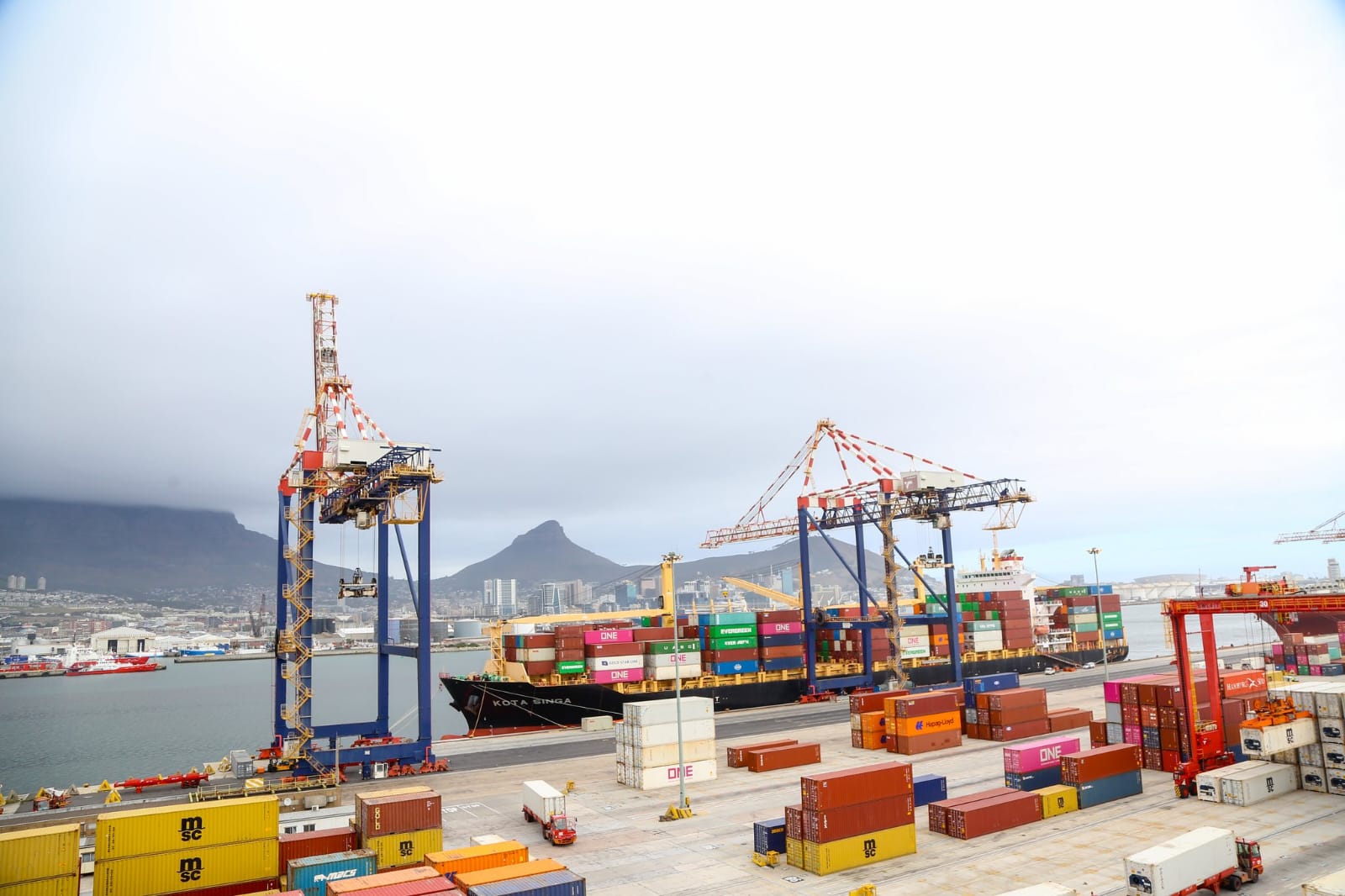
The SAAFF/BUSA Cargo Movement Update No. 306 for the week ending 1 November 2026 captures a familiar and frustrating South African pattern: pockets of operational progress that fail to resolve systemic drag. National container terminals handled 100,423 TEUs—a solid 20% week-on-week rise—with average daily throughput climbing to 14,346 TEUs. Cape Town surged 76%, Ngqura hit 129% of target, and Port Elizabeth posted an exceptional 204% increase, partly reflecting diversion from Durban. Rail on the Durban ConCor line rose 40%. These are real improvements. They are not enough.
Durban remains the decisive bottleneck. Durban Gateway Terminal (DGT, Pier 2) lifted waterside throughput 12% to roughly 35,000 TEUs, yet vessels still waited more than 11 days to berth. The overall vessel queue at the port stood at 43 across categories. Anchorage times improved modestly from prior extremes but remain measured in hundreds of hours. This is not a temporary weather or peak-season blip. It traces largely to the August 2026 transition to the Navis N4 terminal operating system at DGT under the ICTSI–Transnet partnership, compounded by equipment constraints, yard and landside frictions, and the sheer volume that Durban still concentrates. Transport Minister Barbara Creecy has publicly acknowledged that the timing of the transition was “not good” and that meaningful recovery—bolstered by new equipment expected in December—may stretch into early 2027.
The update correctly widens the lens beyond the berth. Beitbridge continues to choke under Zimbabwean customs-system problems and deteriorating South African border times averaging around 11–12 hours. These landside and regional frictions compound the cost of maritime delays. Air cargo at OR Tambo showed modest growth, but it cannot absorb the scale of containerised trade disruption. Globally, expanding container capacity raises the spectre of overcapacity and softer freight rates, while security incidents in the Strait of Hormuz remind us how quickly external shocks can amplify domestic weaknesses.
The deeper issue is structural. South Africa’s logistics system has long suffered from under-investment, fragmented governance, and an over-reliance on a single congested gateway. Durban handles a disproportionate share of the country’s containers. When it falters, the entire supply chain—importers, exporters, manufacturers, retailers, and inland transporters—pays in demurrage, higher inventory costs, lost sales, and eroded reliability. Diverting cargo to Cape Town or the Eastern Cape provides temporary relief and highlights latent capacity elsewhere, but it is not a sustainable national strategy. Rail recovery remains tentative despite encouraging weekly numbers. Border inefficiency turns regional trade into a tax on competitiveness.
Public–private partnerships were meant to break this cycle. The ICTSI arrangement at DGT is precisely the kind of hybrid model reformers advocated: private operational discipline paired with state ownership of strategic assets. Early results show the transition risks that accompany any major system change. The test is whether the partnership can accelerate capital deployment, stabilise productivity above the levels needed to clear the queue while absorbing new arrivals, and improve landside coordination—truck booking, rail interface, yard density. Without sustained output significantly above current demonstrated rates, the backlog simply regenerates. Similar discipline is required across Transnet Port Terminals and the broader Transnet network.
What would a more coherent response look like? First, treat Durban’s recovery as a national priority with transparent weekly metrics on moves per day, crane availability, truck turn times, and projected clearance dates under realistic arrival assumptions. Second, accelerate equipment and systems upgrades while protecting labour relations that have historically constrained reform. Third, push harder on corridor-level integration—rail, road, and borders—so that port gains are not stranded inland. Fourth, diversify risk by continuing to build capability at secondary ports and alternative corridors rather than hoping Durban will always absorb the surge. Finally, align incentives so that performance, not merely volume, is rewarded and measured against international benchmarks.
South Africa’s trade competitiveness is not determined solely by how many TEUs its terminals can theoretically handle. It is determined by the reliability and total cost of moving cargo from origin to destination. The update ends on the right note: higher throughput alone will not resolve the country’s logistics challenges. The encouraging numbers at Cape Town, Ngqura, Port Elizabeth, and on rail are evidence that improvement is possible. The persistent Durban queue and border delays are evidence that the system as a whole still falls short of what a competitive trading economy requires. Closing that gap demands sustained execution, not another round of optimistic weekly reports.