


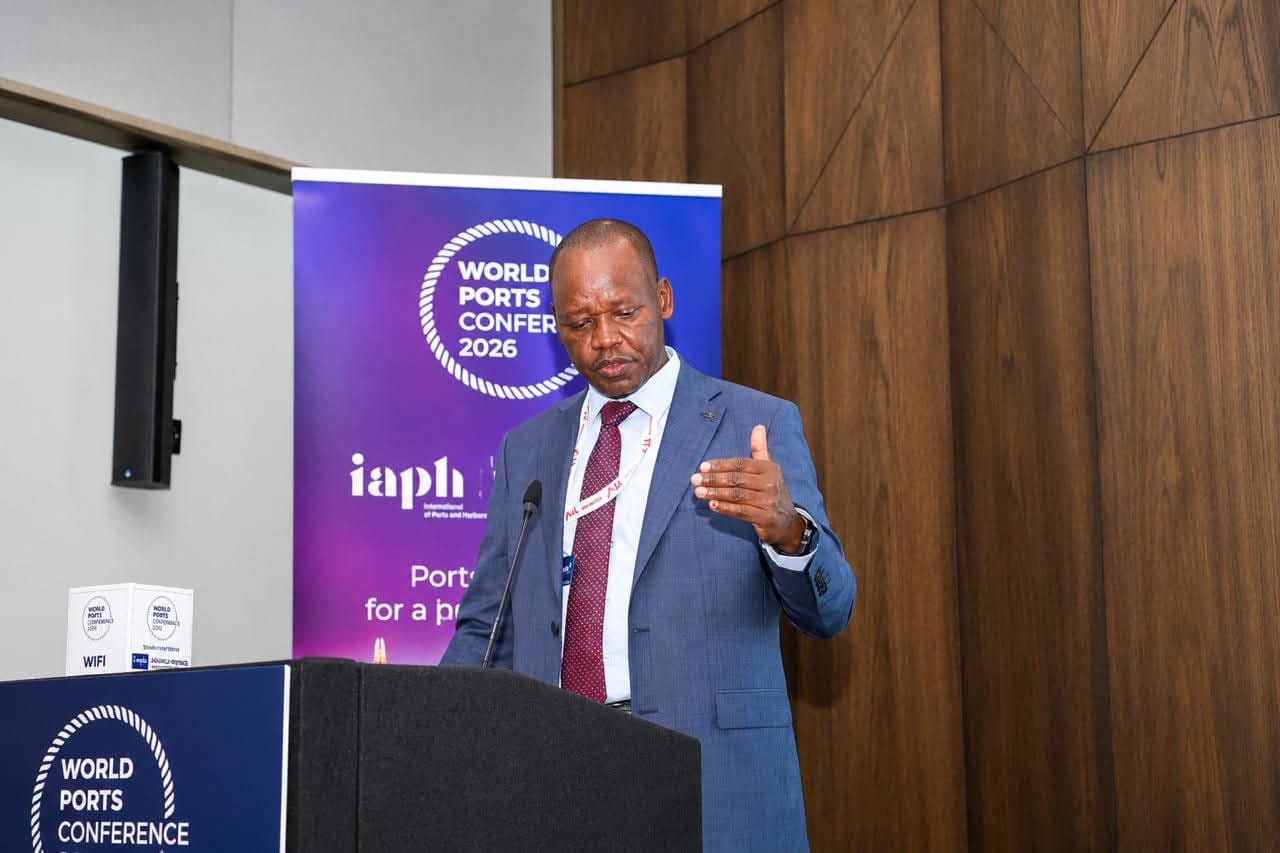
Capt. William Ruto is the strongest-performing CEO the Kenya Ports Authority has had in recent memory—and the clearest path to making Mombasa a true peer of Nhava Sheva runs through sustained, disciplined execution of the model he is already advancing.
On the international stage, KPA’s leadership is no longer speaking from the periphery. As seen at the World Ports Conference 2026, Capt. Ruto is positioning Mombasa not merely as a regional feeder port, but as a serious contender in global maritime logistics. His visible presence at such high-level forums demonstrates a leadership approach that actively courts international shipping lines, investors, and technology partners—an approach that has translated into the record-breaking domestic metrics the Authority now celebrates.
The Kenya Ports Authority has finally found institutional continuity and measurable results under Capt. William Kipkemboi Ruto. Appointed in 2023 after years of acting leadership and earlier turbulence, he has overseen record cargo throughput, rising container volumes, improved vessel and truck turnaround, equipment modernization, digital initiatives, and staff bonuses tied to performance. Stakeholders, shipping lines, and independent surveys have publicly ranked him among Kenya’s better-performing parastatal heads. Workers have even called for an extension of his term. These are not cosmetic gains; they reverse a period of drift and position Mombasa as the dominant East African gateway once again.
The numbers tell the story. In 2025, the Port of Mombasa handled a record 45.45 million metric tonnes—up roughly 11% from 2024—and container traffic reached approximately 2.1–2.24 million TEUs. Transit cargo and volumes to Uganda, South Sudan, and the DRC have grown. Vessel productivity and truck turnaround have improved. Lamu and Kisumu have also recorded meaningful increases. KPA has paid higher dividends to the Treasury, earned strong performance-contract ratings, and attracted praise from major lines such as Maersk and CMA CGM for professionalism and safety. Infrastructure projects—Berth 19B (adding ~300,000 TEUs), Dongo Kundu Special Economic Zone berth works, smart gates, terminal operating system upgrades, and equipment acquisition—are advancing under his watch.
The presence of modern, next-generation vessels—such as the methanol-powered CMA CGM MONTE CRISTO—illustrates the kind of global fleet Mombasa must be ready to serve. Shipping lines are increasingly deploying larger, greener, and more technologically advanced ships, and they allocate these assets only to ports that can guarantee swift turnaround, deep drafts, and reliable hinterland connections. KPA’s recent improvements in vessel productivity and its deepening ties with major carriers like CMA CGM and Maersk are not just diplomatic wins; they are practical prerequisites for attracting the high-value mainline services that define a global gateway.
This is the best sustained operational and commercial performance KPA has delivered in the post-Manduku era. Earlier leaders faced corruption scandals, prolonged acting appointments, or slower volume growth. Ruto’s combination of internal knowledge—a long-serving KPA professional—operational focus, and willingness to engage stakeholders has produced visible results without the paralysis that previously marked the institution.
Why Nhava Sheva Remains the Benchmark
Jawaharlal Nehru Port (Nhava Sheva) outside Mumbai is India’s premier container gateway and a useful aspirational model. It routinely handles 5–8+ million TEUs annually—several times Mombasa’s current volume—and ranks far higher on global container port performance indices. Key strengths include:
- Multiple private terminals operating under public-private partnership (landlord port) arrangements that bring capital, technology, and competition.
- Deep drafts, super-post-Panamax cranes, and modern yard equipment that support large vessels efficiently.
- Strong hinterland connectivity, including the Western Dedicated Freight Corridor for high-capacity rail.
- Digital systems, direct port delivery models, and relatively competitive dwell times when volumes are managed well.
- Scale that attracts more mainline services and creates denser feeder networks.
Mombasa’s advantages—strategic location for East and Central Africa, growing inland container depots, the Standard Gauge Railway, and expanding SEZ potential—are real. Its disadvantages relative to Nhava Sheva are equally clear: lower absolute capacity and scale, slower full automation, multi-agency coordination frictions that still lengthen dwell times, and less aggressive private-terminal competition.
How to Close the Gap: A Practical Agenda Under Strong Leadership
Turning Mombasa into a port that competes with Nhava Sheva on efficiency, reliability, and cost is not about copying India’s geography. It is about adopting the operating principles that made JNPT successful while exploiting Mombasa’s regional role.
- Accelerate Landlord-Port and PPP Models
Concession additional terminals or berths to proven global operators with clear performance obligations—crane rates, dwell times, truck turnaround. Retain public oversight and strategic control while injecting private capital and expertise. Nhava Sheva’s growth was built on this foundation.
- Finish and Expand Physical Capacity Relentlessly
Complete Berth 19B, push Dongo Kundu to operational readiness, deepen selected channels and berths for larger vessels, and expand empty-container and reefer facilities. Pair this with continuous equipment modernization so productivity gains stick.
- Make Digital and Process Reform Non-Negotiable
Full rollout of a modern Terminal Operating System, smart gates, vessel traffic management, and seamless integration with the National Single Window and other agencies is essential. Reduce multi-agency friction that still causes truck queues and dwell-time variability. Visibility and predictability matter more to shipping lines than raw berth length.
- Treat the Northern Corridor as a Single Logistics System
Port performance is only as good as the rail, road, and border continuum. Strengthen SGR reliability and capacity, expand ICDs, improve last-mile trucking efficiency, and push for better coordination with Uganda, Rwanda, and other transit partners. Nhava Sheva’s edge partly comes from dedicated freight rail; Mombasa needs the equivalent corridor discipline.
- Build Industrial and Value-Add Ecosystems Around the Port
Accelerate Dongo Kundu SEZ and related zones so cargo is not only transited but processed. Cool-chain, manufacturing, and logistics parks create sticky demand and higher-value throughput—exactly the industrial logic behind successful Asian ports.
- Institutionalize Performance Culture and Continuity
Ruto’s results demonstrate what focused leadership can achieve. The Board and government should protect operational autonomy, tie incentives to transparent KPIs—vessel productivity, dwell time, customer satisfaction, financial returns—and avoid politicizing appointments. Extend successful leadership when metrics justify it.
The Path Forward
Mombasa does not need to become a carbon copy of Nhava Sheva. It needs to become the most reliable, cost-competitive, and digitally enabled gateway for its hinterland. Under Capt. William Ruto, KPA has shown it can deliver volume growth, operational improvement, and stakeholder confidence simultaneously. Sustaining that trajectory—while aggressively closing the remaining gaps in private-sector participation, digital integration, and corridor efficiency—is the realistic route to elevating Mombasa from East Africa’s leading port to a genuine peer of the region’s global benchmarks.
The opportunity is clear. The leadership that has already produced the best recent results is in place. Execution, not rhetoric, will decide whether Mombasa seizes it.