


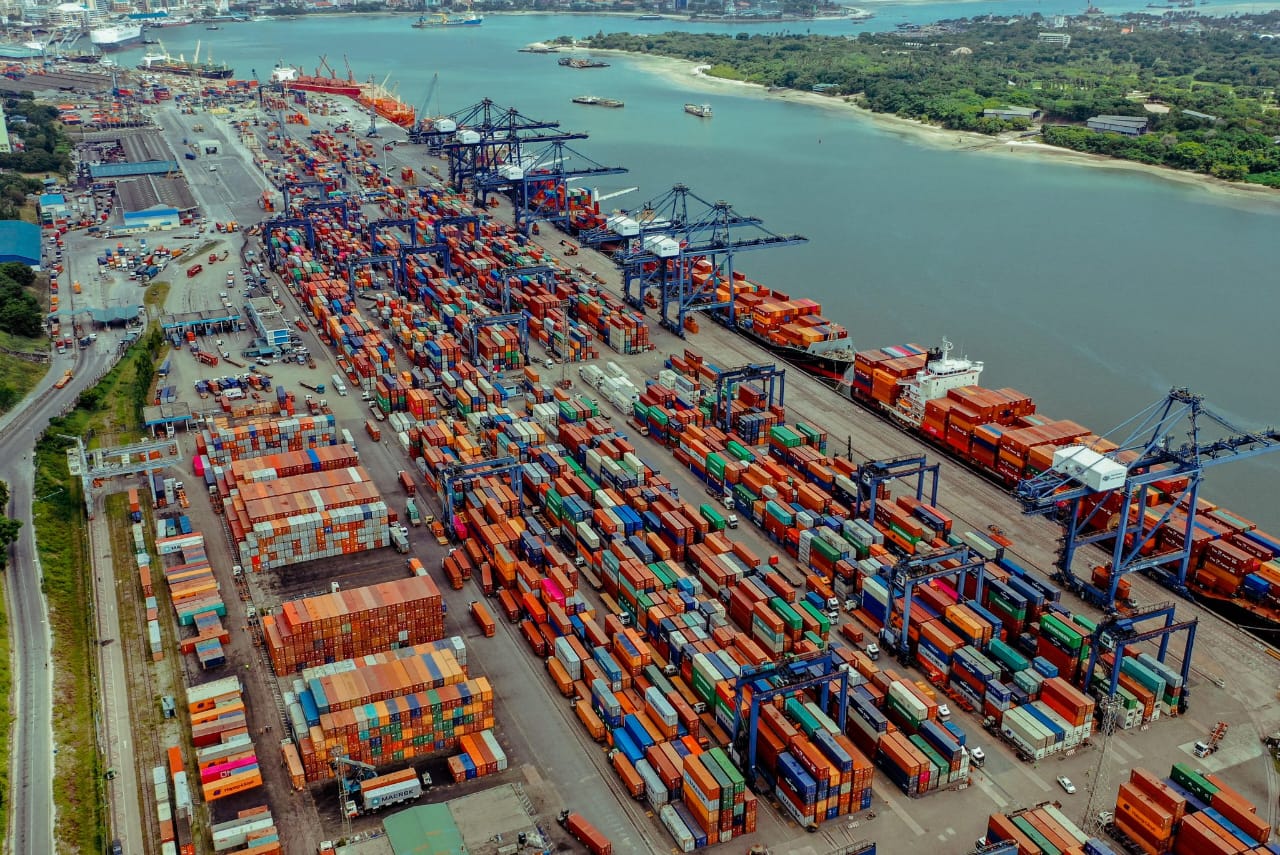
The World Bank’s latest Kenya Economic Update has delivered a harsh but necessary verdict. Mombasa Port, East Africa’s largest and most important gateway, ranked 375th out of 403 container ports in the 2024 Container Port Performance Index (CPPI)—a slide of nearly 50 places from its already poor 2022 standing. Congestion, multiple inspections, system downtime, rising fees, unstable leadership at the Kenya Ports Authority, and allegations of rent-seeking have combined to make the port a drag on Kenyan competitiveness and regional trade.
Meanwhile, across the Indian Ocean, Nhava Sheva—formally the Jawaharlal Nehru Port Authority (JNPA) in Navi Mumbai—has climbed into the global top tier. In the CPPI 2025 it ranked 22nd worldwide and retained its position as India’s best-performing major port. Over the five years to 2025 it improved its score by 32 points and featured among the world’s top 20 most-improved ports. Vessel turnaround times have been driven down dramatically, while productivity metrics on berth, crane and landside operations have risen steadily.
The contrast is instructive—not because the two ports are identical, but because the gap is largely the product of deliberate policy and management choices rather than immutable geography or scale. Mombasa can close much of that gap. Doing so requires treating the World Bank ranking not as an insult but as a diagnostic.
What Nhava Sheva Did Differently
JNPA’s improvement rested on four interlocking pillars.
First, terminal competition and private-sector operational discipline. Multiple private terminal operators—PSA, DP World, APM Terminals joint ventures and others—compete on the same waterfront under a strong landlord-port authority. Capacity additions were not purely public works; they came with contractual performance obligations and commercial incentives.
Second, a ruthless focus on vessel time in port. The CPPI measures precisely this: how long a ship spends from arrival to departure relative to the containers it moves. JNPA reduced turnaround times, raised moves per hour, and improved truck and rail evacuation so that berths were not blocked by yard congestion.
Third, process and digital reform. Single-window systems, better gate automation, coordinated inspections and real-time visibility reduced the administrative friction that multiplies dwell time. Leadership stability allowed multi-year programmes to run their course instead of being reset with every change of managing director.
Fourth, landside connectivity treated as part of the port product. Efficient rail and road links, centralised parking and inland container depots turned the port from a bottleneck into a genuine logistics platform.
Mombasa’s problems map almost perfectly onto the inverse of these strengths: frequent leadership turnover at KPA (five managing directors in a decade, including extended acting periods), multiple overlapping inspections that create both delay and corruption risk, weak competition in the Container Freight Station ecosystem, and persistently high inland transport costs. Shipping a 20-foot container from China to Mombasa costs roughly $2,000; moving it the 480 km to Nairobi costs another $850–1,250—a per-kilometre rate substantially higher than comparable European distances.
A Practical Path for Mombasa
The recipe is not mysterious.
Stabilise and professionalise governance. End the revolving door at the top of KPA. Appoint leadership with multi-year mandates, clear performance contracts tied to CPPI metrics (vessel time in port, dwell time, truck turnaround), and transparent public reporting. Managerial instability and the perception of rent-seeking are not soft issues; they destroy the credibility required for long-term investment and process reform.
Consolidate inspections and digitise clearance. Multiple agency inspections are the single most frequently cited operational failure. A true single-window system with risk-based targeting, advance cargo information, and joint or sequential rather than repetitive inspections would cut days off dwell times. The government has already begun elements of this; it must finish the job and enforce it.
Inject genuine competition and performance discipline into terminals and CFSs. Whether through additional private terminal concessions, stricter performance-linked licensing of CFSs, or a clearer separation between landlord and operator functions, the current system of connection-driven rather than competition-driven off-dock facilities must end. Capacity expansion—new berths, deeper drafts, more equipment—is necessary but insufficient if the operational model remains the same.
Treat the Northern Corridor as an extension of the port. The Roadblock Reduction Initiative and the dualling of the Nairobi–Mombasa highway are positive steps. They must be matched by reliable rail utilisation, predictable weighbridge and police-stop regimes limited to a handful of gazetted points, and digital cargo tracking that reduces opportunities for informal payments. High inland logistics costs are not an inevitable African feature; they are a policy outcome.
Measure what matters and publish it. Adopt the same core metrics the World Bank uses—average vessel time in port, crane productivity, yard dwell, truck turnaround—and report them monthly. Public accountability is the cheapest and most powerful reform tool available.
None of this requires reinventing the wheel or waiting for perfect infrastructure. Dakar’s dramatic climb in the same CPPI rankings shows that rapid improvement is possible when governance and process take priority. Tanger Med’s top-five global position shows what sustained investment plus commercial discipline can achieve on the African continent.
Mombasa already handles the majority of East African transit cargo for Uganda, Rwanda, South Sudan and the eastern DRC. Every extra day a vessel or container spends in port is paid for by the entire region in higher prices, lost competitiveness and diverted trade. The alternative is clear: a port that continues to slide down global rankings while its customers quietly explore other routes, or a port that treats the World Bank’s ranking as a wake-up call and executes the same combination of stable leadership, private-sector operational intensity, digital process reform and corridor integration that lifted Nhava Sheva into the world’s top 25.
Kenya has the cargo, the location and the regional mandate. What it has lacked is the sustained operational seriousness that turns a large port into an efficient one. The template exists across the water in Navi Mumbai. The only remaining question is whether Mombasa will use it.