


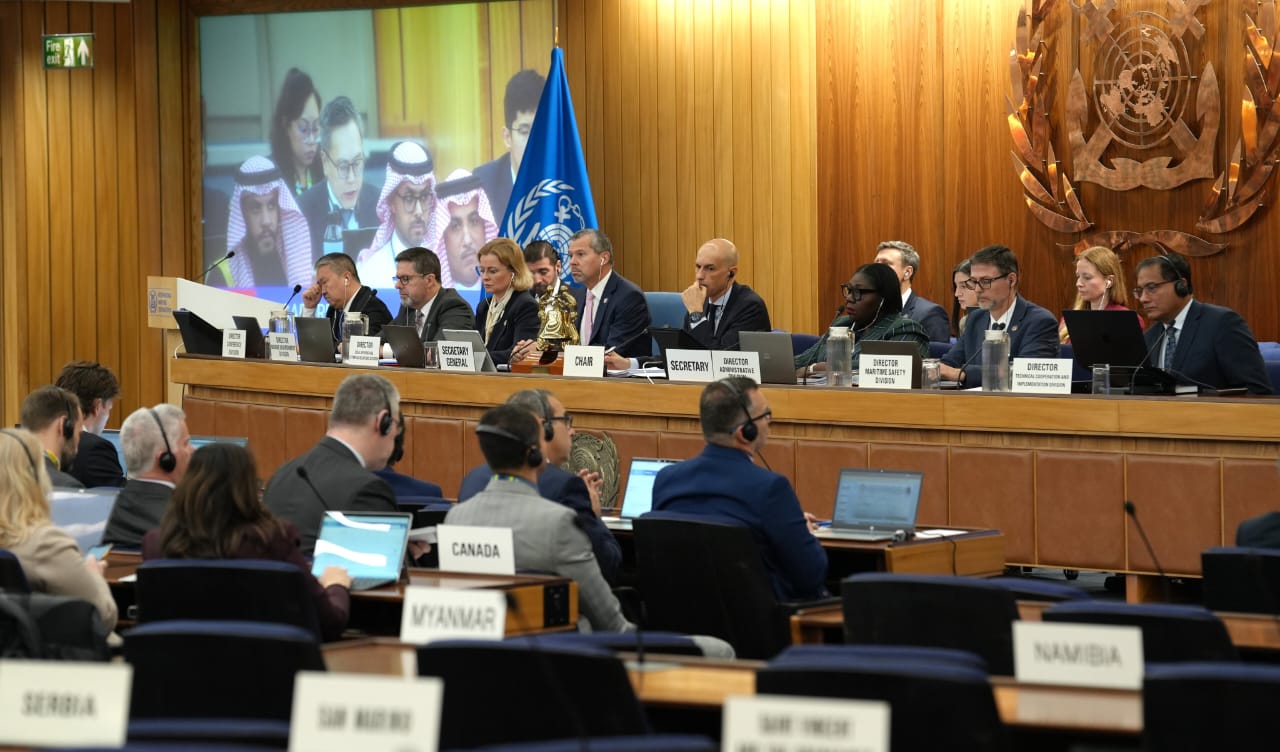
The International Maritime Organization’s Council has concluded its 138th session in London with a familiar and necessary refrain: seafarers must be protected, vital shipping lanes must remain open and safe, and commercial mariners should not become pawns in geopolitical disputes beyond their control. The statement, issued after meetings from 2–6 November 2026, is correct in principle. It is also profoundly insufficient in practice.
Secretary-General Arsenio Domínguez put the human cost in stark terms. Seafarers continue to die, suffer serious injuries, face abandonment, are denied repatriation, and are deprived of food, water, and medical care because of ongoing conflicts. The latest confirmed fatality—a crew member on the Marshall Islands-flagged product tanker M/T Velos Sapphire, struck in the Strait of Hormuz on 5 November—brought the death toll among seafarers in the Middle East theater to 25 since the conflict escalated. The IMO has verified at least 130 attacks on commercial vessels in the region. Thousands more remain at risk, including crews on ships unable to leave the Persian Gulf.
The Council rightly condemned Houthi attacks on merchant shipping in the Red Sea and Bab al-Mandeb; Russian attacks on vessels, seafarers, port infrastructure, and maritime safety services linked to Ukraine’s special maritime corridor in the Black Sea; and noted the rise in piracy and armed robbery in the Western Indian Ocean and Gulf of Aden (17 incidents so far this year). It urged Member States to refrain from unlawful measures that endanger seafarers and international shipping, and it reaffirmed that straits and shipping lanes must stay open regardless of nationality.
These are correct principles. The problem is that principles alone have not stopped the bodies from stacking up.
The Expanding Geography of Risk
The Strait of Hormuz has dominated headlines, and for good reason. Since the U.S.-Iran conflict intensified in late February 2026, commercial shipping has absorbed repeated strikes. Tankers, bulk carriers, and other vessels have been hit by projectiles, with Indian nationals bearing a disproportionate share of the casualties. Ships have been stranded, crews trapped, and insurance costs have soared. The Velos Sapphire incident is only the latest data point in a pattern of attrition against the civilian backbone of global energy and trade.
Yet by some metrics, the Black Sea has become even deadlier. Maritime security analyses indicate more seafarer fatalities there in 2026 than in the Hormuz theater, with hundreds of vessels struck as Russia and Ukraine target each other’s maritime logistics. Grain exports, critical to global food security, have been severely disrupted. Attacks have edged closer to NATO waters off Romania and Bulgaria. War-risk premiums have spiked, and the human cost continues to mount on both sides of the conflict.
Add the persistent Houthi threat in the Red Sea and the re-emergence of piracy risks in the Western Indian Ocean, and the picture is of a global maritime domain under simultaneous, multi-theater pressure. Seafarers—often from developing nations such as the Philippines and India that supply the bulk of the world’s shipboard labor—are the ones paying the price for decisions made in capitals far from the bridge.
Why Statements Fall Short
The IMO is not a military alliance. It cannot enforce freedom of navigation with warships or impose sanctions. Its strength lies in setting standards, convening states, monitoring developments, and applying diplomatic pressure. Domínguez’s commitment to explore additional concrete measures and to keep Member States informed is welcome. The renewal of his mandate for another four-year term provides continuity.
But the pattern is clear: condemnation follows attack, monitoring continues, and the next strike occurs. Member States that benefit from open sea lanes—virtually every major trading nation—have been slow to translate collective statements into coordinated action that changes the risk calculus for those launching the attacks. Flag states, shipowners, and insurers have adapted through higher premiums, route diversions, and enhanced security measures, but adaptation is not protection. It is cost-shifting onto the people least able to absorb it.
Seafarers already operate under a system that often treats them as expendable labor. Long contracts, limited access to shore leave, mental health strains, and uneven enforcement of the Maritime Labour Convention leave them vulnerable even in peacetime. When conflict turns commercial ships into targets or incidental victims, those structural weaknesses become lethal. Denial of repatriation, abandonment after attacks, and delayed medical care compound the trauma.
What Would Actual Protection Look Like?
Meaningful progress requires more than reaffirmation of existing principles. Several practical steps are within reach:
1. Elevated monitoring and rapid reporting. The IMO already tracks incidents. Making verified data more transparent and timely—linked to flag-state responsibilities and insurance markets—can increase accountability and pressure on aggressors.
2. Stronger enforcement of existing obligations. States that restrict the movement of seafarers, refuse safe passage, or allow prolonged detention without due process should face clearer diplomatic and commercial consequences. The principle that seafarers are civilians, not combatants, needs operational teeth.
3. Industry-state coordination on high-risk areas. Temporary protected corridors, coordinated naval presence where politically feasible, and standardized best-management practices for vessels in contested waters can reduce exposure without requiring full demilitarization of the disputes.
4. Support for seafarers and their families. Compensation mechanisms, mental health resources, and streamlined repatriation protocols after attacks should be treated as core elements of maritime security, not afterthoughts.
5. Broader political will. The countries that rely most heavily on seaborne trade—China, the United States, European states, Japan, South Korea, India, and major energy exporters and importers—have the leverage to make attacks on commercial shipping more costly for those who order them. Using that leverage consistently remains the missing ingredient.
The Council also advanced other business: renewing the Secretary-General’s mandate, awarding the 2027 Gender Equality Award, approving funding for digital platforms, and updating rules of procedure. These are legitimate organizational priorities. They should not, however, distract from the fact that the most urgent crisis facing the maritime sector is the systematic exposure of its workforce to violence.
Global trade depends on roughly 1.9 million seafarers. They keep energy flowing, food moving, and supply chains functioning. Treating their safety as a secondary consideration in great-power competition is not only morally indefensible; it is strategically shortsighted. Every successful attack raises insurance costs, encourages route diversions, increases the risk of environmental disaster, and erodes confidence in the open maritime order that underpins global prosperity.
The IMO has correctly diagnosed the problem. The test is whether Member States will treat the protection of seafarers as a non-negotiable priority rather than a recurring agenda item. Until the cost of targeting commercial ships exceeds the perceived benefits, the body count will continue to rise. Statements of principle are the starting point. They must not be the finish line.