


Today, at the Kenya Institute of Curriculum Development in Nairobi, the State Department for Shipping and Maritime Affairs and the Kenya Maritime Authority host the latest public participation forum on the Draft Kenya Maritime Investment Policy and its accompanying Incentives Regime. The theme is ambitious: “Building a Competitive, Innovative and Inclusive Maritime Sector.” The poster is polished, the logos of the Ministry of Mining, Blue Economy and Maritime Affairs and KMA are prominent, and the invitation is open to Nairobi residents and those from its environs.
This is not a routine consultation. It is the inland leg of a deliberate coastal-to-capital process that has already taken the drafts through Mombasa, Malindi, Kwale, and Lamu. The timing is equally deliberate. Kenya is attempting to convert long-standing rhetoric about the Blue Economy into a concrete investment proposition at a moment when global shipping is restructuring, seafarer shortages are acute, and regional competition for cargo and capital is intensifying.
The Scale of the Opportunity—and the Cost of Inaction
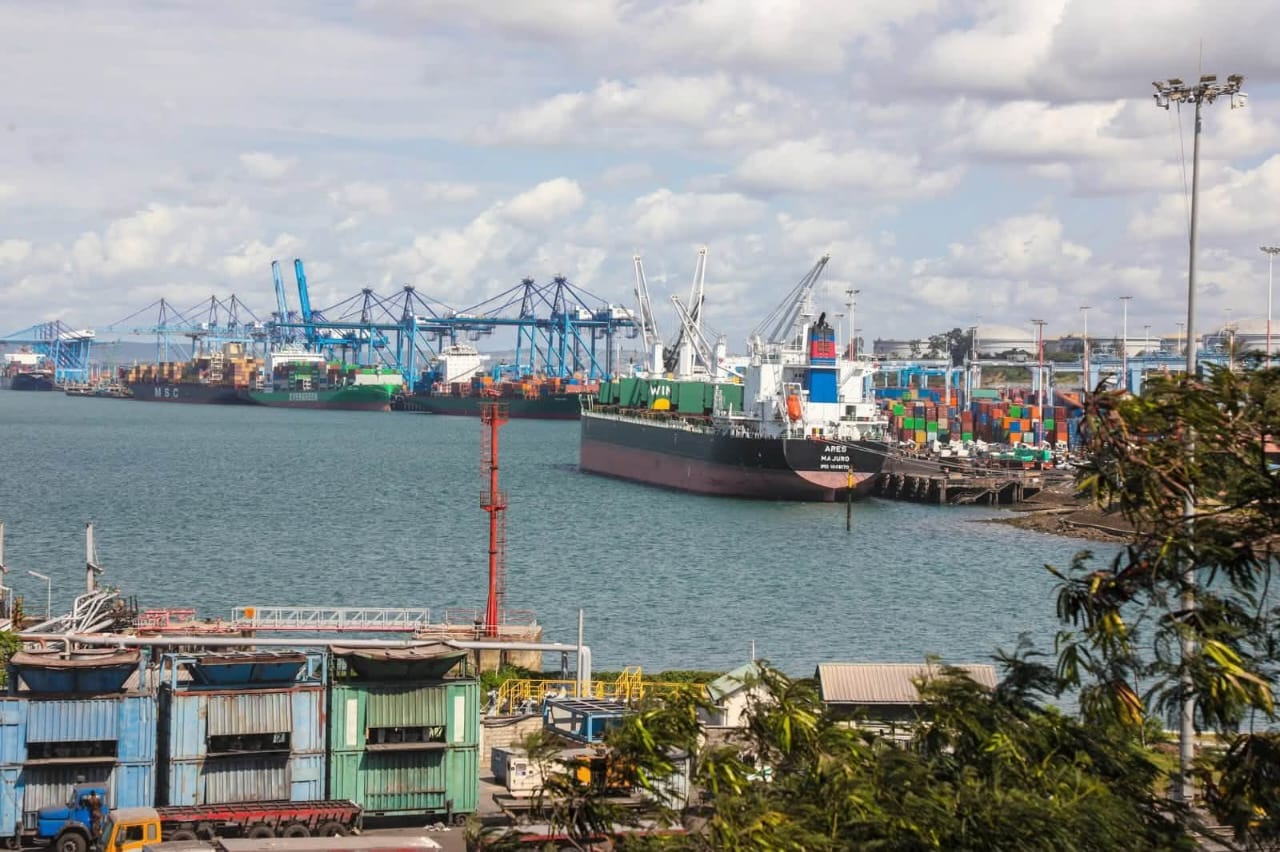
Kenya’s maritime domain is substantial: roughly 640 kilometres of coastline, a significant Exclusive Economic Zone, and navigable inland waters that together represent a large share of the country’s total area. Over 90–95 per cent of Kenya’s international trade moves by sea, with the Port of Mombasa serving as the primary gateway for a hinterland of more than 300 million people. The sector currently contributes around 2.5 per cent of GDP and generates an estimated KSh 178 billion annually, with officials citing potential to reach KSh 500 billion if fully unlocked.
Yet the gaps are equally striking. Kenya loses an estimated KSh 600 billion a year to foreign shipping lines that carry the bulk of its imports and exports. The country has trained roughly 19,000 seafarers and aims to produce another 10,000 in the medium term and up to 40,000 longer-term, against a global projected shortfall of tens of thousands of officers and hundreds of thousands of ratings by the end of this decade. Ship ownership, shipbuilding and repair, bunkering, marine insurance, and local cabotage remain underdeveloped relative to the country’s geographic advantages.
The draft policy correctly diagnoses the problem: fragmented facilitation, the absence of a sector-specific investment framework, high capital intensity, regulatory complexity, and limited awareness among financiers and domestic investors. It seeks to position Kenya as a competitive destination by clarifying investment profiles across shipping, shipbuilding and recycling, logistics, marine tourism, education and training, green energy, and allied Blue Economy value chains. The companion incentives document catalogues existing fiscal tools—investment allowances, SEZ and EPZ preferences, reduced rates for shipbuilding, zero-rating of certain supplies, customs exemptions on vessels—and proposes cluster-specific enhancements.
What Public Participation Must Deliver
Constitutional public participation is not a box-ticking exercise. Coastal forums have already surfaced practical concerns: prioritisation of local investors, tax and licensing burdens that discourage entrepreneurship, the need for adequate time to review dense drafts, and deliberate inclusion of youth, women, persons with disabilities, and community groups engaged in Blue Economy activities. Nairobi’s forum should go further. It must bring in financiers, inland logistics players, training institutions, county governments, and the private sector actors who will ultimately decide whether the policy is bankable.
Several tests will determine whether this process produces a usable framework rather than another well-intentioned document.
First, specificity of incentives. Listing existing allowances is useful; designing performance-linked, time-bound, and WTO-compatible incentives that address the actual risk profile of maritime projects—long payback periods, cyclical markets, high fixed costs—is harder. The regime must distinguish between incentives that attract genuine new capacity and those that merely subsidise existing activity.
Second, institutional coherence. Kenya already has multiple agencies with overlapping mandates. The policy proposes a Maritime Investments Oversight Committee and clearer coordination roles for KMA and investment promotion bodies. Without disciplined implementation and reduced regulatory friction, incentives will be offset by bureaucratic delay and policy uncertainty—a point already illustrated by recent litigation over the Merchant Shipping (Maritime Transport Operators) Regulations.
Third, domestic participation and skills. Local ownership requirements and seafarer employment targets are politically popular and economically logical, but they must be sequenced with realistic capacity building. Training pipelines, access to financing for Kenyan shipowners, and transparent ship registry administration will matter more than declaratory targets.
Fourth, financing architecture. Maritime projects are capital-intensive. The policy’s call for sustainable financing and public-private partnerships will remain aspirational unless banks, development finance institutions, and capital markets develop products suited to the sector’s risk and tenor. Recent appeals for financial institutions to move beyond traditional lending models are welcome but insufficient without concrete instruments.
Risks That Cannot Be Papered Over
Public forums risk becoming venues for aspirational statements while structural constraints persist. Budgetary constraints have already slowed projects and training initiatives. Enforcement capacity at KMA has been publicly questioned. Some Blue Economy projects on the coast have stalled or faced accusations of diversion of funds. Port concessions and Lamu Port incentives are advancing, yet overall cargo and investment outcomes will depend on reliability, cost competitiveness, and security rather than incentives alone.
There is also a political-economy risk. Heavy emphasis on local content and ownership, if poorly calibrated, can deter the very international operators and capital that currently dominate global shipping. The recent suspension of certain transport operator regulations pending judicial determination shows how quickly investor confidence can be affected. A successful policy will balance developmental goals with the operational realities of a global industry.
From Forum to Framework
The drafts themselves are a step forward. They recognise that the maritime sector is not a residual activity but a potential engine of industrialisation, employment, foreign exchange, and regional connectivity under the Bottom-Up Economic Transformation Agenda and Vision 2030. They attempt to move from general Blue Economy rhetoric to investment profiles, procedures, and incentives.
Whether they succeed depends on what happens after the microphones are switched off. Meaningful incorporation of stakeholder input, clear timelines for finalisation and Cabinet approval, alignment with parallel reforms (Merchant Shipping Act, KMA Act, Marine Spatial Planning, Bandari Maritime Academy legislation), and measurable implementation metrics will determine credibility.
Kenya has the geography, the ports, the growing training capacity, and the strategic location. It does not yet have a fully coherent, investor-trusted, and operationally executable maritime investment regime. Today’s forum in Nairobi is one more opportunity to close that gap. The measure of success will not be attendance figures or polished presentations, but whether the final policy reduces the cost and uncertainty of doing maritime business in Kenya while expanding genuine local participation and capability.
The ocean does not wait for perfect policy. Capital and talent will go where the rules are clear, the incentives are real, and the institutions deliver. Kenya’s task is to make sure that destination is here.
Andrew Mwangura is a maritime analyst and consultant.