


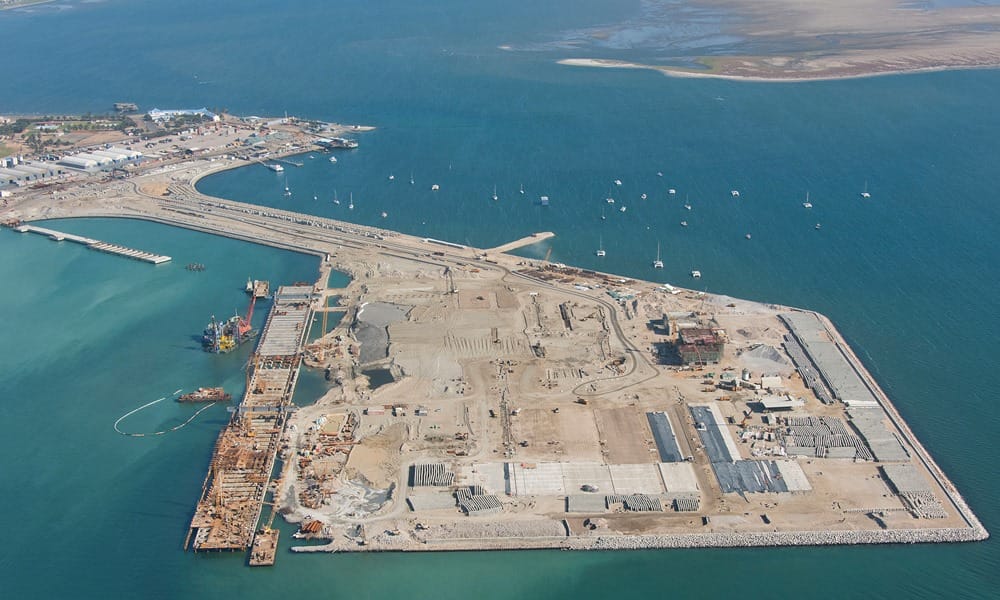
On 4 November 2026, Aliko Dangote stood in Walvis Bay with Namibian President Netumbo Nandi-Ndaitwah and announced a roughly US$2.5 billion fuel storage and regional pipeline project. The tank farm alone is planned at approximately 600 million litres (about 4 million barrels)—360 million litres of diesel and 240 million litres of petrol—eight times the capacity of Namibia’s existing national storage facility operated by Namcor. A 16-kilometre pipeline will link the port jetty to the terminal at Farm 58. Beyond that lies the grander vision: a proposed 1,700-kilometre regional pipeline network that could reach Botswana, Zambia, Zimbabwe, Malawi, and parts of the Democratic Republic of Congo.
The scale is impressive. The promise—cheaper fuel, reduced logistical vulnerability, and Walvis Bay as a Southern African fuel logistics hub—is even more so. Yet the most useful lens for judging whether this project will reshape regional energy markets is not the headline investment figure or the eventual pipeline length. It is the quieter question raised by Will Daniel’s “Broken Linkages” analysis: can coastal storage be reliably connected to dependable inland demand?
The First Test Will Arrive by Truck
Dangote has signalled that the terminal is targeted for completion in 18–20 months. The full pipeline will take longer—engineering studies, route surveys, environmental clearances, and cross-border approvals remain ahead. In the interim, the practical bridge is road transport. Walvis Bay already sits on established corridors into Botswana, Zambia, and the DRC Copperbelt. Truck-loading facilities at the new terminal will allow distributors to move product inland while the pipeline is still on the drawing board.
This is where the Broken Linkages Framework becomes essential. Storage capacity is necessary but not sufficient. The critical linkage is between that capacity and steady, year-round offtake by mines, trucking fleets, power generators, and industrial users in the hinterland. Without signed supply agreements that give the terminal predictable volumes, the tanks risk becoming expensive underutilised inventory. With those contracts, the terminal generates cash flow early, proves the commercial case for the pipeline, and begins to shift the delivered-cost equation for inland buyers.
For a copper mine in the DRC or a fleet operator in Botswana, the decisive metrics are straightforward: delivered cost per litre and the number of days of supply disruption. Existing routes—often longer, more expensive, or more vulnerable to congestion, weather, or political friction—set the benchmark. A new corridor from Walvis Bay succeeds only if it consistently beats that benchmark on both price and reliability. Adding capacity that sits half-empty does not constitute a better option; it merely redistributes risk.
Why the Timing and Geography Matter
Southern Africa’s fuel architecture has long been shaped by distance, dependence on imports, and the constraints of landlocked markets. Many countries rely on a mix of South African refining and storage (including the large but underutilised Saldanha Bay facilities), East African routes, or longer maritime hauls. Dangote’s Nigerian refinery—already the continent’s largest and expanding further—gives the project a credible source of product. Shipping refined fuel from Lagos to Walvis Bay, storing it at scale, and moving it inland creates a west-coast alternative that shortens some supply chains and diversifies others.
Namibia itself gains on multiple fronts. The project addresses high shipping costs, limited national storage, and energy insecurity. The president’s decision to place the project under the Presidency signals an intent to cut bureaucratic delays that have historically deterred investors. Local employment during construction, port activity, and the prospect of lower domestic fuel prices—Dangote has publicly promised “much, much cheaper” petroleum products—are tangible near-term benefits.
Regionally, the stakes are higher. Landlocked economies pay a structural premium for fuel. Mines and heavy industry are sensitive to both price spikes and shortages. A reliable alternative corridor can improve operating margins, reduce inventory buffers, and support industrialisation goals. If the pipeline eventually materialises, the economics improve further: pipelines typically deliver lower unit transport costs and greater security than continuous trucking once volumes justify the capital.
The Risks That Capacity Alone Cannot Solve
Optimism must be tempered by realism. Several linkages remain incomplete or unproven.
First, commercial offtake. Announcing storage and a proposed pipeline does not automatically secure multi-year contracts with the large consumers who would underwrite utilisation rates. Distributors and end-users will negotiate hard on price, volume guarantees, quality specifications, and delivery reliability. Without those agreements, the terminal’s early years could be leaner than projected.
Second, the pipeline itself. The 1,700-kilometre figure is directional. Final routing, cost (some reports have floated higher figures for more ambitious alignments), environmental and social impact assessments, land access, and intergovernmental coordination will determine whether—and when—it is built. Cross-border infrastructure projects in the region have a mixed track record of timely delivery.
Third, competition and existing infrastructure. South Africa’s storage assets, established trading relationships, and refining capacity will not disappear. Other suppliers—from the Middle East, Asia, or alternative African sources—will continue to compete. The Walvis Bay corridor must demonstrate sustained advantage, not merely novelty.
Fourth, operational execution. Construction timelines in African infrastructure projects frequently slip. Fuel quality management, inventory optimisation, truck logistics capacity on the corridors, and security along inland routes will all require disciplined management.
Measuring Success Correctly
The right scorecard is not the ribbon-cutting or the capacity number. It is the progressive closing of the broken linkages.
In the first 12–24 months after the terminal opens, the indicators to watch are the volume of offtake contracts signed, the average delivered cost to key inland destinations relative to competing routes, and the measured reduction in supply-disruption days for contracted customers. If those indicators move favourably, the commercial case for the pipeline strengthens and political support across the region becomes easier to sustain. If they lag, the project risks becoming another large coastal asset searching for inland demand.
Dangote’s broader Vision 2030 ambition—raising the group’s African investment target and building interconnected production, storage, and distribution centres—depends on precisely these linkages working. The Nigerian refinery supplies the molecules. Walvis Bay supplies the coastal gateway. The missing pieces are reliable commercial bridges to the customers who need the fuel every day.
A Realistic Path Forward
The project is a serious attempt to rewire part of Southern Africa’s fuel supply architecture. Its success is not predetermined by the size of the cheque or the length of the proposed pipeline. It will be determined by whether Dangote and local partners can convert storage into contracted, reliable, competitively priced supply that inland users prefer to existing options.
Policymakers in Namibia and neighbouring states can accelerate the positive outcome by streamlining approvals, clarifying transit and customs frameworks for the corridors, and encouraging offtake discussions with major industrial and mining consumers. Distributors and end-users should engage early, using the delivered-cost and reliability metrics as the basis for negotiation rather than waiting for the pipeline to appear.
For observers applying the Broken Linkages Framework, the coming months offer a live experiment. Coastal capacity is being built. The question is whether the commercial and logistical connections inland will be forged with equal seriousness. If they are, Walvis Bay can become more than a new tank farm—it can become a genuine regional fuel gateway. If they are not, the region will simply have added expensive storage without solving the deeper problem of reliable, affordable inland supply.
The first trucks will tell the real story.
Andrew Mwangura is a maritime safety analyst and writer. The views expressed are the author’s own.