


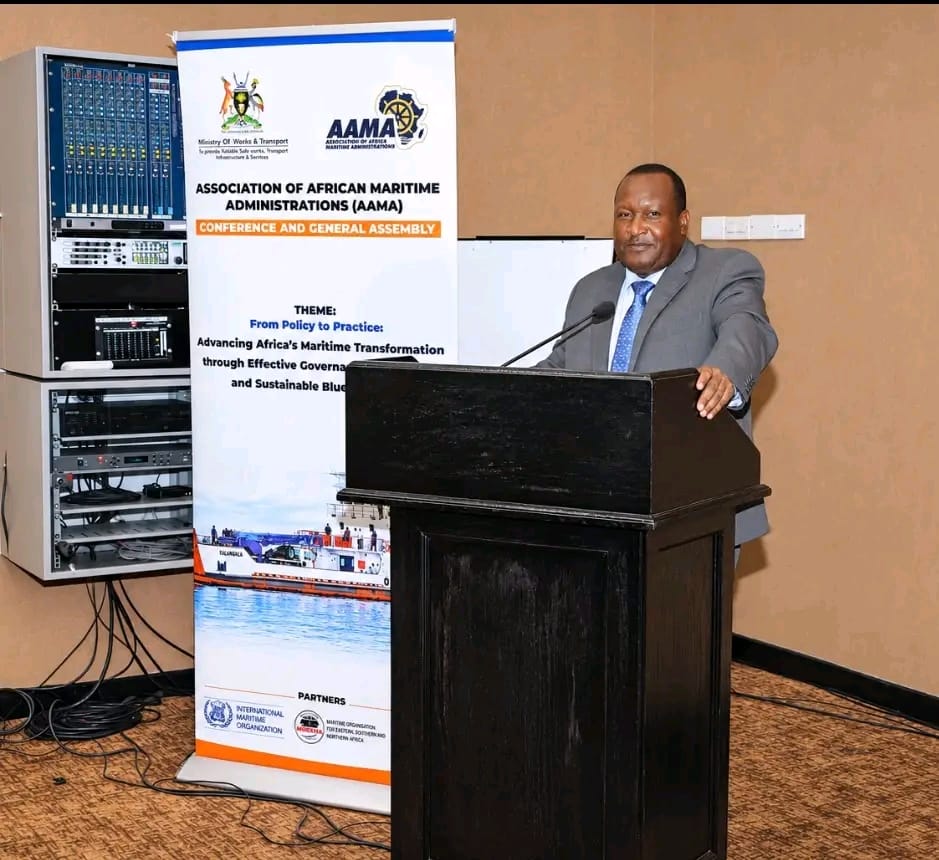
Kenya’s unanimous re-election as Chairperson of the Association of African Maritime Administrations (AAMA) for another two-year term is more than a diplomatic formality. It is a clear continental endorsement of Nairobi’s leadership at a critical juncture for Africa’s maritime sector—a moment poised between persistent threats and transformative potential.
The decision, taken by member states at the Association’s General Assembly at Speke Resort Munyonyo in Kampala, Uganda, saw Kenya run as the sole nominee. Kenya Maritime Authority Director General CPA Justus Omae Nyarandi will continue as AAMA Chairperson. The vote reflects confidence in Kenya’s stewardship of priorities that matter across the continent: maritime safety and security, sustainable shipping, regulatory harmonization, and the growth of the blue economy.
A Body with Continental Weight
AAMA is no talking shop. Established pursuant to Article 5 of the Revised African Maritime Transport Charter (adopted by the African Union in Kampala in 2010), it serves as the coordinating organ for Africa’s maritime administrations. Its mandate includes promoting policy harmonization, sharing best practices, building capacity, and enabling African states to speak with a more coherent voice in global forums such as the International Maritime Organization (IMO).
Under Kenya’s recent chairmanship, the Association has recorded tangible institutional progress—securing permanent office space, opening a bank account, and intensifying member-state cooperation—despite limited resources. Nyarandi has consistently pressed for moving “from rhetoric to concrete outcomes,” particularly on the digitalization of maritime administration, domain awareness, seafarer training, and aligning Africa with the global push toward shipping decarbonization.
Why the Confidence in Kenya Matters
Kenya’s own maritime ambitions provide the backdrop. The country loses an estimated KSh 600 billion annually to foreign shipping lines, while its blue economy contributes only about 2.5 percent of GDP—far below its potential. With a strategic location on major Indian Ocean shipping routes, a growing port complex at Mombasa and Lamu, and a significant Exclusive Economic Zone, Kenya has both the incentive and the capacity to lead. Nyarandi’s background—spanning the Kenya Ports Authority, the Northern Corridor Transit and Transport Coordination Authority, and now KMA—positions him to bridge national priorities with continental ones.
The re-election therefore strengthens Kenya’s hand in regional and global negotiations. It also places responsibility on Nairobi to deliver results that benefit landlocked as well as coastal states. Issues such as the safety of domestic ferries, combating illegal, unreported and unregulated (IUU) fishing, reducing piracy and other maritime crimes, and ensuring African ports remain competitive under emerging carbon pricing regimes cannot be solved by any single country.
The Stakes Are Rising
Africa’s maritime challenges are structural. The continent still owns a negligible share of the global commercial fleet, forcing nations to pay high freight bills to foreign carriers. Piracy has evolved rather than disappeared. Climate-driven pressures and the IMO’s net-zero trajectory risk raising costs for African trade unless the continent shapes the rules and builds readiness. At the same time, the African Continental Free Trade Area (AfCFTA) creates demand for more efficient, secure, and lower-cost intra-African shipping and logistics corridors.
Kenya’s leadership of AAMA offers a platform to push practical measures: harmonized regulations that lower the cost of doing business, joint capacity-building for seafarers and maritime administrations, stronger port-state and flag-state performance, and coordinated positions at the IMO. Recent AAMA technical work on the Net Zero Framework shows the Association can function as a strategic instrument rather than merely a conference circuit.
From Mandate to Delivery
A vote of confidence is not a blank cheque. The next two years will test whether AAMA under Kenyan chairmanship can translate consensus into measurable progress—more African-owned tonnage, better-trained seafarers finding sea time, reduced IUU losses, safer domestic water transport, and ports that are both greener and more competitive. Success will require sustained political support from member governments, improved financing for the Association’s work, and a willingness to move beyond declarations.
For Kenya, the re-election reinforces its claim to regional leadership in the blue economy. It also raises the bar. The country must continue modernizing its own maritime institutions, expanding its ship registry and training capacity, and demonstrating that continental cooperation can deliver tangible national gains.
The Kampala vote was unanimous for a reason. African maritime administrators see value in continuity under Kenya’s stewardship. The task now is to convert that confidence into safer seas, more sustainable shipping, and a blue economy that finally begins to match the continent’s vast potential. The opportunity is real. The clock on the new two-year mandate is already running.