


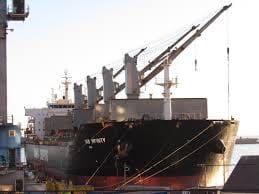
On November 16, 2026, Sharaf Shipping Agency (K) Limited announced another routine success: the seamless handling of the MV Van Infinity, a vessel discharging salt at the Port of Mombasa. To the casual observer, this is mundane corporate self-promotion—a shipping agent doing its job. But viewed against the broader trajectory of Kenya’s maritime economy, this seemingly ordinary operational update reveals something far more consequential: the quiet, competent execution of everyday logistics that ultimately determines whether Kenya’s ambitious port expansion translates into real regional competitiveness.
The Context: A Port Under Pressure and In Transition
The Port of Mombasa is no longer a sleepy gateway. In 2025, the port handled a record 45.45 million metric tonnes of cargo, a 10 percent increase from the previous year, while container traffic reached 2.11 million TEUs. The Northern Corridor Transit and Transport Coordination Authority reported that dry bulk cargo—the category encompassing the salt discharged by MV Van Infinity—grew by 29 percent in the first half of 2026, the highest increase of any cargo segment. This surge is not merely a statistical curiosity; it represents the lifeblood of regional trade flowing through Kenya to landlocked neighbors including Uganda, Rwanda, and South Sudan.
Yet this growth has arrived ahead of schedule. KPA’s earlier projections for cargo volumes by 2029 were met prematurely in 2025, straining infrastructure and exposing bottlenecks that threaten Mombasa’s status as the region’s preferred maritime gateway. Tanzania’s Port of Dar es Salaam has been aggressively courting transit cargo, and Kenya has reportedly been losing between five and eight percent of high-value transit cargo annually due to inefficiencies and non-tariff barriers along the Northern Corridor.
Against this backdrop, the operational competence of private shipping agents like Sharaf Shipping becomes a matter of national economic significance. When a vessel like MV Van Infinity is handled “seamlessly,” as the company’s announcement claims, it represents a small but meaningful victory in the broader war against delay, congestion, and reputational erosion.
The Argument: Routine Excellence as Strategic Asset
The Sharaf Shipping announcement highlights services spanning “Bulk Cargo to Containers, Motor Vehicles, Oil & General Cargo, and Project Cargo,” alongside comprehensive vessel husbandry. This breadth is not merely marketing rhetoric; it reflects the diversified demands of a port that must simultaneously serve salt imports, containerized consumer goods, petroleum products, and project cargo for infrastructure development.
Vessel husbandry—the unglamorous work of coordinating a ship’s port call, from crew changes to supplies to regulatory compliance—is precisely the kind of service where competence is invisible and failure is catastrophic. A delayed vessel incurs demurrage costs, disrupts downstream supply chains, and erodes shipper confidence. In a region where cargo owners have alternatives, every smooth operation is a vote of confidence in Mombasa.
The Sharaf Shipping operation also underscores the collaborative ecosystem required for port efficiency. The company’s acknowledgment of Kenya Ports Authority, partners, and its own team reflects the reality that no single actor can deliver seamless port operations alone. KPA has invested substantially in this ecosystem: the ongoing construction of Berth 19B, expected to add 300,000 TEUs of capacity, was reported at 56 percent completion in late 2026. A Sh1 billion Vessel Traffic Management and Information System was unveiled in July 2026 to improve vessel turnaround times. These are meaningful investments, but they only yield returns if private operators execute effectively on the water and at the quay.
The Counterargument: Systemic Bottlenecks Remain
It would be naive, however, to celebrate individual operational successes without acknowledging the structural challenges that persist. Reports from mid-2026 documented over 20 ships waiting offshore at Mombasa, frequent scanner breakdowns at the Nairobi Inland Container Depot, and inter-agency synchronization failures that slow customs clearance. The port’s infrastructure, despite expansion efforts, has struggled to keep pace with demand that arrived four years ahead of schedule.
Moreover, the competitive threat from Tanzania is real and growing. The Northern Corridor, stretching 1,700 kilometers from Mombasa to Uganda and beyond, handles over 80 percent of Kenya’s transit trade, but persistent bottlenecks have undermined its competitiveness. Kenya’s loss of high-value transit cargo to Dar es Salaam is not merely a logistical inconvenience; it represents lost revenue, diminished geopolitical influence, and a weakening of the corridor’s network effects.
In this light, the Sharaf Shipping announcement might be seen as a single data point in a sea of systemic challenges—a well-executed salt discharge that does little to address the deeper structural issues. Individual competence, after all, cannot compensate for inadequate berth capacity or inefficient customs procedures.
The Synthesis: The Micro-Foundations of Maritime Competitiveness
Yet this dichotomy between individual operational success and systemic challenge is false. National port competitiveness is not an abstraction; it is built—or eroded—through thousands of individual vessel calls. Each smooth operation reinforces Mombasa’s reputation as a reliable gateway. Each delay sends shippers searching for alternatives. The aggregation of these micro-level experiences determines whether Kenya’s substantial infrastructure investments yield their intended returns.
The Sharaf Shipping operation also points toward a broader truth about Kenya’s maritime future: the diversification of cargo and services. The company’s presence in Mombasa and its apparent expansion into container freight station and empty depot operations suggest private sector confidence in the port’s trajectory. The planned $1.2 billion port privatization program, which will bring private operators into Mombasa’s container terminals and Lamu’s emerging facilities, represents a fundamental shift toward the landlord port model. In this model, KPA retains ownership and regulatory oversight while private operators finance equipment and manage terminals. The competence of private operators—their ability to handle vessels efficiently, manage labor, and maintain equipment—will become even more central to port performance.
Kenya’s ambitions extend beyond Mombasa. Lamu Port is emerging as a transshipment hub, with 74 vessels docking since January 2026, including mega car carriers that previously would have called elsewhere. The planned East African Oil Refinery in Lamu, a Sh2.2 trillion investment, promises to generate demand for an entire ecosystem of maritime services—pilotage, towage, bunkering, ship agency, and more. These developments will require not just infrastructure but human capital: skilled professionals capable of executing complex operations with precision.
The Conclusion: Vigilance, Not Complacency
The Sharaf Shipping announcement about MV Van Infinity is, in isolation, unremarkable. But it is precisely this unremarkability that matters. A port that handles routine operations routinely is a port that can compete. A port where every vessel call is a crisis is a port in decline.
Kenya’s maritime moment is real, but it is not guaranteed. The cargo volumes are there. The infrastructure investments are underway. The private sector is engaged. But the ultimate determinant of success will be the accumulated quality of thousands of operational decisions—the berthing schedules met, the cargo discharged efficiently, the documentation processed without error. Sharaf Shipping’s “seamless” handling of a salt carrier is a small contribution to that larger project. It deserves neither breathless celebration nor dismissive neglect. It deserves, instead, to be recognized for what it is: the essential, unglamorous work of building a maritime nation, one vessel at a time.