


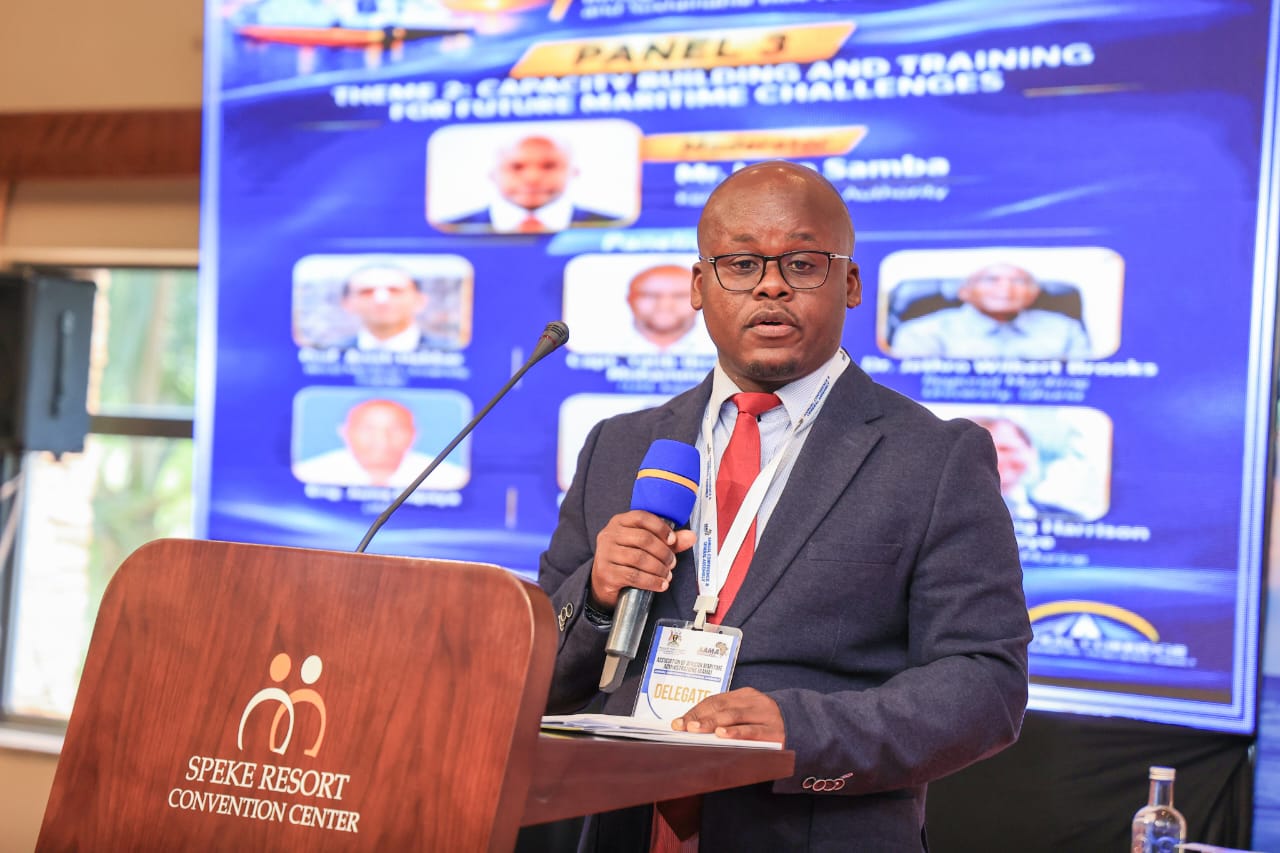
Africa’s maritime destiny will not be secured by deeper harbours, more container ships or elegant policy documents alone. It will be decided by whether the continent can produce, certify and retain enough skilled seafarers and maritime professionals to operate, regulate and innovate in a rapidly transforming industry. That was the clear message from a high-level panel on capacity building and training for future maritime challenges, moderated by Eng. Luke Samba, Acting Director of Maritime Training Standards at the Kenya Maritime Authority.
The discussion cut through the usual rhetoric. Africa sits astride some of the world’s busiest sea lanes, controls vast exclusive economic zones and is home to the youngest population on the planet. Yet the continent remains a marginal supplier of the global seafarer workforce and continues to struggle with the quality, recognition and practical experience of its maritime graduates. Closing that gap is no longer optional; it is a strategic imperative.
From Quantity to Quality in Maritime Education and Training
The panel rightly placed African seafarer development at the centre. Maritime Education and Training (MET) institutions across the continent have expanded, but expansion without relevance and global recognition produces graduates who struggle to find shipboard employment. Curricula still lag behind the demands of modern shipping: integrated bridge systems, energy-efficient ship operations, cybersecurity awareness and the soft skills required for multicultural crews. The result is a persistent mismatch between what African MET institutions deliver and what international shipowners demand.
Improving quality requires more than new buildings or additional lecturers. It demands systematic alignment with the Standards of Training, Certification and Watchkeeping (STCW) Convention, rigorous quality management systems and genuine partnerships with industry. Without these, African certificates risk remaining second-tier in the eyes of flag states and employers.
The Sea-Time Bottleneck
Certification is only half the battle. The other half is sea-time. African cadets routinely face long delays or outright inability to obtain the required onboard training experience. Ships are reluctant to take trainees, berths are limited, and the administrative and financial barriers for cadets from developing countries are high. Without sufficient sea-time, even well-trained graduates cannot complete their certification pathways or gain the competence that only real ships provide.
This is not merely an African problem, but it hits Africa hardest. Solutions exist: structured cadet training programmes sponsored by shipowners, regional training ships, expanded use of approved simulators for certain competencies, and bilateral agreements that open more training berths. None of these will scale without deliberate policy and commercial incentives.
Africa’s Demographic Opportunity—and the Supply Gap
The global seafarer supply gap is widening. An ageing workforce in traditional maritime nations, combined with the growth of the world fleet, creates demand that Africa is uniquely positioned to fill. With the youngest population in the world, the continent has the human raw material. What it lacks is the pipeline: accessible, high-quality MET, affordable pathways to certification, and career structures that make seafaring an attractive, sustainable profession rather than a temporary escape from unemployment.
Treating this purely as a numbers game would be a mistake. The industry needs competent, not merely available, seafarers. Mass production of under-prepared candidates will damage Africa’s reputation and leave its young people stranded with expensive certificates and limited prospects.
Two Decades of the Maritime Labour Convention
The panel’s reflection on twenty years of the Maritime Labour Convention, 2006 was timely. MLC, 2006 has improved the legal framework for seafarers’ rights, welfare and working conditions. Progress has been real. Yet implementation remains uneven. Many African seafarers still encounter delayed wages, inadequate medical care, isolation, and limited access to shore leave or fair dispute resolution. Decent work is not a soft issue; it is a prerequisite for attracting and retaining talent. A profession that treats its people poorly will not attract Africa’s best.
Technology as Both Disruptor and Enabler
Digitalisation is reshaping capacity development itself. E-learning platforms, high-fidelity simulation, remote assessment and digital certification can reduce costs, improve access and raise standards—if they are properly regulated and integrated into national systems. The risk is a two-tier system: well-resourced institutions and companies that embrace technology, and the rest that fall further behind. Africa cannot afford to treat digital tools as optional extras. They must become core infrastructure for maritime training.
From Commitment to Investment
Policy statements are plentiful. What is scarce is sustained, practical investment in people. Governments must treat MET as critical infrastructure, not a residual budget item. Industry must move beyond occasional scholarships to structured, long-term partnerships that guarantee training berths and employment pathways. Regional bodies need to harmonise standards and mutual recognition so that an African certificate carries weight across the continent and beyond. And institutions must be held accountable for outcomes measured in employability and competence, not merely enrolment numbers.
A skilled, certified, digitally capable and properly supported maritime workforce is the foundation of safe, secure, efficient and sustainable shipping. Without it, Africa’s ports will remain gateways for other people’s ships and other people’s crews. With it, the continent can claim a meaningful share of the value created by the maritime economy—not only as a source of labour, but as a source of competence, innovation and leadership.
The window is open. The demographic advantage will not last forever, and the technological transformation of shipping will not wait for laggards. Africa’s maritime future depends on choosing to invest in its people now, with seriousness and scale.
Andrew Mwangura is a maritime safety and security analyst and the founder of the Maritime Business Review in Mombasa, Kenya.