


With only days remaining before the Third Aquatic Resources and Blue Economy Conference (ARBEC III) opens in Nairobi, the question posed by the Kenya Marine and Fisheries Research Institute (KMFRI) is both urgent and clarifying: Can science help build a more resilient Blue Economy? The answer is unequivocally yes—but only if the continent moves beyond presentations and into decisive, sustained implementation.
ARBEC III, running 23–27 November 2026 at the Argyle Grand Hotel in Nairobi under the theme “Science, Innovation and Partnerships for Resilient Blue Economies,” is more than another regional gathering. Hosted by KMFRI under the leadership of Director General Dr. Paul Sagwe Orina, it is positioned as East Africa’s premier platform for translating research into policy, practice, and livelihood outcomes. Expectations are high: more than 1,000 participants from over 40 countries, 300-plus presentations across seven thematic tracks, and a deliberate mix of scientists, policymakers, practitioners, entrepreneurs, financiers, and community representatives.
The seven tracks themselves reveal the ambition. They range from Sustainable Fisheries and Aquatic Food Systems—covering stock assessment, co-management, post-harvest loss reduction, and illegal, unreported and unregulated fishing—and Climate-Smart Aquaculture—including hatchery technology, climate-adapted species, feed formulation, biosecurity, and integrated multi-trophic systems—to Blue Tourism and Nature-Based Enterprises, Governance, Policy and Finance, Technology, Data and Digital Innovation, Climate Resilience and Ecosystem Health, and Community Engagement, Equity and Capacity Building. These are not academic silos; they map directly onto the pressures Africa’s inland and marine ecosystems face—overexploitation, climate variability, pollution, habitat loss, and the persistent gap between research outputs and the lived realities of coastal and lakeside communities.
KMFRI’s own body of work illustrates both the potential and the unfinished business. Mangrove restoration, coral reef conservation, sustainable fisheries management, aquaculture innovations, and alternative livelihood development are repeatedly cited as evidence that science can deliver practical solutions. Recent and ongoing studies presented at or aligned with ARBEC—on cage-based integrated multi-trophic aquaculture combining rabbitfish, oysters, and seaweed; community-based seaweed farming that disproportionately engages women; local prawn seed production at the Shimoni marine hatchery; and organochlorine pesticide contamination in South Coast estuarine sediments—demonstrate that Kenyan researchers are generating relevant, place-based knowledge. The challenge has never been a shortage of data. It has been the speed and fidelity with which that data informs regulation, investment, and community practice.
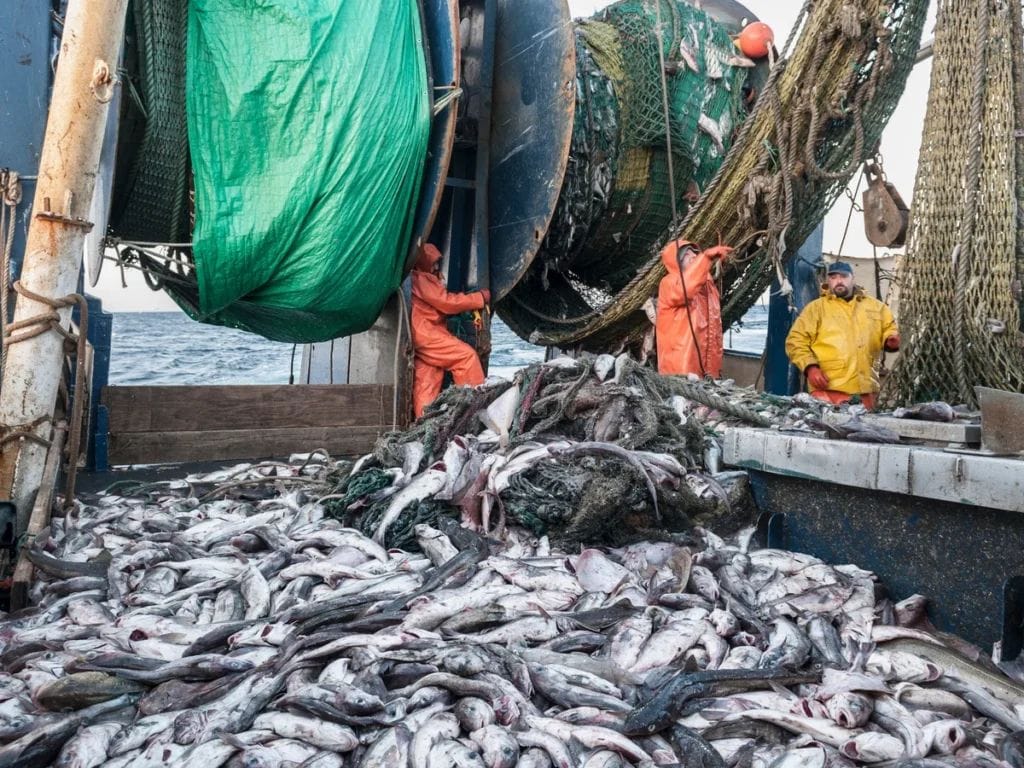
Africa’s Blue Economy potential remains substantial. Oceans, lakes, rivers, and wetlands underpin food security, employment, trade, and climate adaptation for tens of millions of people. Yet the same systems are under stress from climate change, pollution, destructive fishing practices, and weak governance. Previous ARBEC editions in Kisumu (2022 and 2024) generated recommendations and momentum. The real test for the third edition is whether those recommendations translate into measurable shifts in policy, financing instruments, and on-the-ground outcomes—particularly for small-scale fishers, women-led aquaculture groups, and youth seeking viable livelihoods in the sector.
Three conditions will determine whether ARBEC III succeeds beyond the closing ceremony.
First, science must be treated as infrastructure, not an optional input. Evidence on stock status, climate impacts, ecosystem health, and viable livelihood alternatives needs to be systematically embedded in licensing decisions, spatial planning, and investment criteria. The presence of high-level Kenyan officials—including Cabinet Secretary Hassan Ali Joho and the Principal Secretaries for the Blue Economy and for Science, Research and Innovation—creates an opportunity to lock research findings into institutional processes rather than treating them as conference outputs.
Second, partnerships must move from networking to structured collaboration. The conference deliberately convenes researchers, government agencies, development partners, financial institutions, innovators, and community representatives. Blue finance instruments, technology transfer (remote sensing, AI, IoT monitoring, blockchain traceability), and private-sector engagement in nature-based enterprises will only scale if clear accountability mechanisms and shared metrics are established. Sponsorship packages and side events are useful, but they must be tied to follow-through commitments rather than visibility alone.
Third, equity and community agency cannot be afterthoughts. Track 7 on community engagement, equity, and capacity building is essential. Seaweed farming groups in which women form the majority of members, youth participation in mariculture, and the integration of indigenous knowledge are not peripheral concerns; they are central to resilience. Research that fails to strengthen local institutions and livelihoods risks remaining extractive. Participatory methodologies and genuine co-management frameworks must be elevated from pilot projects to standard practice.
The timing is consequential. Kenya and the broader region are advancing Blue Economy strategies aligned with Vision 2030, continental frameworks, and climate commitments. ARBEC III arrives at a moment when political attention is relatively high and the costs of inaction—declining fish stocks, degraded ecosystems, and lost livelihood opportunities—are increasingly visible. The conference’s exhibition, side events, and policy dialogues offer a practical architecture for matching solutions to problems. The risk is familiar: strong opening statements followed by diluted implementation once participants return home.
A resilient Blue Economy will not emerge from declarations. It will emerge from sustained investment in research institutions such as KMFRI, from regulatory frameworks that reward sustainability, from financing that reaches small-scale operators, and from partnerships that treat communities as co-producers of knowledge rather than passive beneficiaries. Science has already shown it can identify problems and generate solutions. The question ARBEC III must answer is whether Africa’s institutions, investors, and policymakers are prepared to act on that science with the urgency the ecosystems—and the people who depend on them—require.
Five days from now, Nairobi will host the conversation. The more important work begins the day after the last session ends.
Andrew Mwangura is a maritime analyst based in Mombasa, Kenya.