


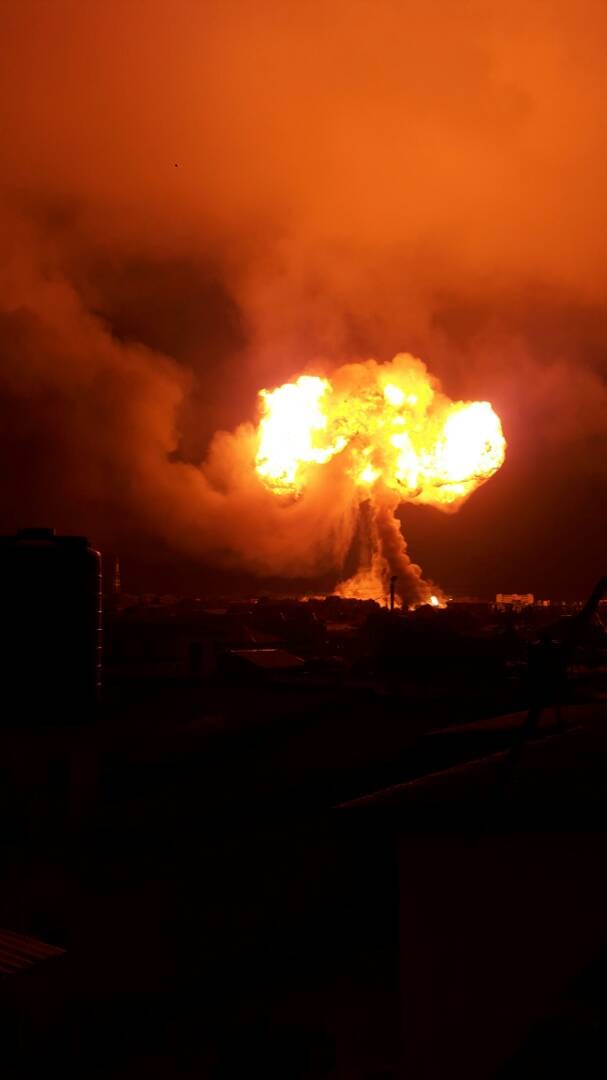
On the morning of 23 November 2026, a routine day at the Port of Mombasa turned tragic. A gas cylinder explosion at a cafeteria linked to the Kenya Ports Authority (KPA) claimed two lives and left at least two others seriously injured. Mombasa County Police Commander Stella Cherono confirmed the fatalities and the preliminary suspicion of a gas-related cause. Emergency teams from KPA and the county government contained the fire before it could spread further. The scene was later declared safe, but the questions it raises will linger far longer.
This was not a spectacular industrial accident involving a tanker or a major terminal operation. It was a gas cylinder in a food outlet—the kind of everyday infrastructure that serves port workers, truck drivers, and vendors daily. That is precisely why it should unsettle us more than a rarer, high-profile disaster. When ordinary activities prove lethal, the problem is systemic, not accidental.
The Anatomy of a Preventable Tragedy
Details remain incomplete as investigations continue. Reports describe a kiosk or cafeteria near Gate 8 or the Docks stage area where a gas cylinder either leaked or overheated, triggering a fire and explosion. Two people died; two others were rushed to Coast General Hospital. Panic spread among workers and traders as smoke rose near one of East Africa’s busiest commercial gateways.
Gas cylinder accidents are distressingly common in Kenya. They occur in homes, restaurants, and informal eateries because of a familiar mix of factors: aging or poorly maintained cylinders, inadequate ventilation, improper storage near heat sources, rushed handling during peak hours, and uneven enforcement of safety standards. In a high-traffic environment like the port—with constant movement of people, vehicles, and goods—these risks multiply. A single failure can cascade quickly.
The rapid response by KPA and county fire teams deserves acknowledgment. They limited the damage. But containment after the fact is not the same as prevention. The fact that such an incident could still occur in or near a regulated institution like KPA points to gaps in oversight of the smaller commercial spaces that operate within or adjacent to the port ecosystem.
Ports Are Not Just About Ships and Containers
The Port of Mombasa is a national economic artery, handling the bulk of Kenya’s and the region’s imports and exports. KPA invests heavily in marine safety, cargo handling standards, and emergency drills for oil spills, vessel fires, and security threats. Those systems are necessary and largely professional.
Yet this incident exposes a quieter vulnerability: the human infrastructure that keeps the port running. Food vendors, kiosks, and cafeterias form part of the daily life of thousands of workers. When those spaces are treated as peripheral rather than integral to the overall safety regime, risk migrates into the gaps. Safety culture cannot stop at the quay or the container terminal; it must extend to the places where people eat, rest, and work between shifts.
This is not unique to KPA. Similar patterns appear across Kenya’s informal and semi-formal economy. Gas safety regulations exist on paper, but compliance is inconsistent, inspections are often reactive, and accountability is diluted when multiple authorities share responsibility—port management, county government, national energy regulators, and police. In the aftermath of every such tragedy, the same cycle repeats: statements of concern, promises of investigation, and the eventual fading of public attention until the next incident.
Accountability and the Harder Questions
Police have launched investigations, and rightly so. The public deserves clear answers: Was the cylinder certified and in good condition? Were basic safety protocols—distance from heat sources, ventilation, trained handlers—followed? Were there prior complaints or near-misses at the site? Who held ultimate responsibility for safety compliance in that kiosk?
KPA and Mombasa County should treat this as more than a localized accident. A transparent, time-bound inquiry with public findings would help rebuild trust. Beyond that, practical steps are needed: mandatory safety audits of food outlets operating within or near port facilities; stricter licensing conditions tied to gas handling standards; routine joint inspections involving KPA, the county, and the Energy and Petroleum Regulatory Authority (EPRA); and basic safety training for vendors and their staff as a condition of operating in high-density zones.
Compensation and support for the families of the deceased and the injured must also be handled with dignity and urgency. Lives were lost in the course of ordinary work. That carries a moral weight that cannot be discharged with a press statement.
A Broader Failure of Risk Management
Kenya has improved in many areas of public safety—road safety campaigns, building code enforcement in some urban centers, and disaster response capacity. Yet gas-related fires and explosions remain stubbornly recurrent. They thrive in the space between formal regulation and informal practice. High-visibility institutions like KPA have both the resources and the responsibility to close that gap in their own environments.
The cost of inaction is measured not only in lives but in eroded public confidence. Every preventable death in a workplace or public space chips away at the idea that institutions can protect the people who depend on them. In a country where economic activity often operates close to the edge of risk, that erosion is dangerous.
What Should Happen Next
First, complete a thorough, independent investigation and publish the findings. Second, use this incident as a catalyst for a targeted review of gas safety in port-adjacent commercial spaces. Third, treat vendor and cafeteria safety as part of core operational risk management rather than a secondary concern. Fourth, ensure that the families affected receive timely support and that the injured receive proper care.
Tragedies of this kind are rarely the result of a single moment of carelessness. They are the accumulation of small tolerances—for outdated equipment, for skipped inspections, for the assumption that “it won’t happen here.” Two people paid the ultimate price for that accumulation on Monday morning.
The Port of Mombasa will continue to move cargo. Workers will return to their shifts. The question is whether the systems meant to protect them will finally treat everyday risks with the seriousness they deserve. Anything less is an invitation for the next, equally preventable, disaster.