


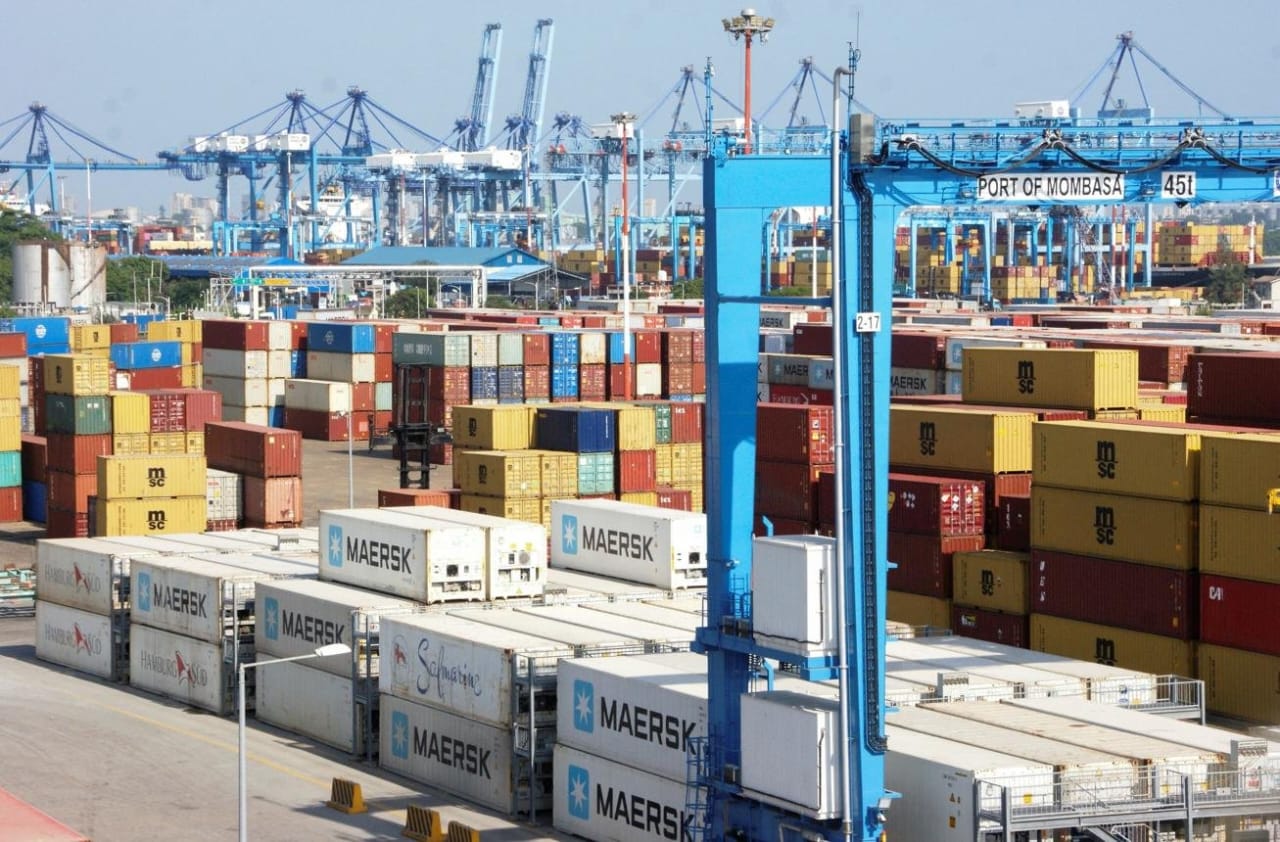
Last week, the Kenya Maritime Authority convened a four-day workshop bringing together more than a dozen government agencies—from the Kenya Civil Aviation Authority to the Energy and Petroleum Regulatory Authority—to assess Kenya’s implementation of International Maritime Organization instruments. On its face, this reads like standard bureaucratic procedure: a national technical committee doing its periodic review, ticking boxes on audit findings and corrective action plans.
It is anything but routine.
Kenya’s ability to comply with IMO instruments is not an abstract legal obligation. It is the load-bearing wall beneath the country’s ambition to transform its maritime sector into an economic engine. Every gap in implementation—every unresolved audit finding, every poorly coordinated inter-agency response—carries a price tag measured in lost investment, diminished regional competitiveness, and diminished influence in the global maritime economy.
The Audit That Told Us What We Already Suspected
Kenya underwent its IMO Member State Audit in 2017, a process designed to determine how effectively the country was implementing and enforcing core conventions like SOLAS, MARPOL, STCW, and COLREG . The audit’s purpose was never punitive; it was diagnostic. As the IMO itself has framed it, the scheme exists to help member states “improve their capabilities” rather than to expose weaknesses .
But diagnosis without treatment is mere observation. And here lies the uncomfortable truth that the current workshop must confront: across the African region, the track record of translating audit findings into completed corrective action has been dismal. As of 2022, the IMO’s own head of the Africa section noted that not a single audited African member state had completed or effectively implemented its agreed Corrective Action Plan . The IMO, he said, had been “literally begging” administrations to report back on progress.
Kenya cannot afford to be part of that statistic. The country’s strategic position along major Indian Ocean shipping routes, its role as a gateway to East and Central Africa, and its expanding port infrastructure all depend on one thing above all else: credibility. Flag states, port states, and coastal states that cannot demonstrate consistent implementation of international standards do not attract investment. They attract risk premiums.
What the Workshop Gets Right
The KMA’s agenda for this workshop reflects a sophisticated understanding of where the bottlenecks actually lie. Three elements deserve particular attention.
First, the focus on technical subcommittees signals a move beyond the ceremonial. Implementation of IMO instruments is not a single agency’s job. It requires the meteorology department to deliver accurate weather data for search and rescue coordination. It requires the ports authority to enforce security protocols. It requires the nuclear and energy regulators to manage hazardous cargo risks. The establishment of subcommittees with defined technical mandates is precisely the kind of structural reform that the World Maritime University’s research on maritime governance has identified as critical: “workflow optimization” and “clearly defined roles and responsibilities” are what separate functioning maritime administrations from dysfunctional ones .
Second, the review of the National IMO Instruments Implementation Strategy and its monitoring and evaluation framework addresses a deficiency that audit findings from other jurisdictions have repeatedly flagged. Without a system to “monitor and review the measures taken to implement and enforce the mandatory IMO instruments,” compliance becomes episodic rather than systemic . A monitoring framework with genuine accountability mechanisms is not bureaucratic excess; it is the difference between a strategy that exists on paper and one that shapes behavior.
Third, the breadth of participating institutions—KCAA, KEBS, KMD, KPA, CA, NEMA, EPRA, the Office of the Attorney General, the Kenya Coast Guard Service, and Survey of Kenya—reflects the reality that maritime safety and environmental protection cut across virtually every regulatory domain. The question is whether this breadth produces coordination or merely attendance. The workshop’s success will be measured not by the number of agencies in the room, but by whether decisions made there are actually implemented when the room empties.
The Harder Questions the Workshop Must Answer
For all its welcome seriousness, the workshop format carries an inherent risk: that it becomes a venue for reporting progress rather than confronting failure. Several hard questions deserve candid answers.
What happened to the corrective actions from the 2017 audit? The IMO’s regional data suggests that many African states have allowed their CAPs to languish. Kenya must be able to demonstrate—with documentation, not assertions—that findings from its audit have been systematically addressed. If they have not, the workshop must identify why: resource constraints, legislative gaps, institutional capacity, or simple political will.
Is the III Strategy actually operational? Kenya has had a National Strategy on IMO Instrument Implementation in place since at least 2021, according to reporting from the Southern African and Islands Hydrographic Commission . The question now is whether that strategy has teeth. A strategy without an M&E framework, without assigned responsibilities, and without consequences for non-performance is a document, not a governance tool.
Can Kenya move from compliance to leadership? Compliance is the floor, not the ceiling. The government’s parallel work on a Maritime Investment Policy and Incentive Regime suggests an understanding that regulatory credibility is a precondition for economic ambition . But Kenya could go further. A state that demonstrably meets its IMO obligations is positioned to shape the regional agenda—to advocate for the interests of East African shipping, to influence IMO technical discussions, and to serve as a model for other African administrations struggling with the same implementation deficits.
The Economic Case for Getting This Right
It would be a mistake to treat this workshop as a technical exercise divorced from Kenya’s economic trajectory. The government projects that the blue economy could contribute over 470 billion shillings to GDP and create more than 2 million jobs by 2030 . Those projections assume a maritime sector that investors trust.
Investors in shipping, shipbuilding, port infrastructure, and maritime logistics do not evaluate regulatory environments based on press releases. They look at whether a country enforces safety standards consistently, whether environmental regulations are applied predictably, and whether the maritime administration has the technical capacity to deliver on its commitments. A flag state with unresolved IMO audit findings is a flag state whose ships face heightened scrutiny in foreign ports. A port state with weak implementation is a port state that loses transshipment traffic to competitors.
The workshop’s focus on “inter-agency coordination” and “shared accountability” is therefore not administrative housekeeping. It is investment climate policy by another name.
The Measure of Success
When the four-day workshop concludes, the participating institutions will produce a communiqué, a revised strategy, and perhaps a matrix of corrective actions. None of that matters unless it changes what happens on the water.
The true measure of this workshop’s success will be visible in three places: in the IMO’s receipt of Kenya’s next CPICAP update, in the findings of the next audit cycle, and—most importantly—in the confidence that shipowners, insurers, and investors place in Kenya’s maritime jurisdiction.
Kenya has spent years building the institutional architecture for maritime governance. The National Technical Committee exists. The strategy exists. The political commitment, at least rhetorically, exists. What remains is the harder work of making the system function—of closing the gap between what Kenya has signed and what Kenya actually does.
The IMO’s audit framework was built on a premise that bears repeating: the scheme “would instead bring both sides closer together—the one helping the other in pursuit of the common goals of enhanced safety and environmental protection” . That collaborative spirit is welcome. But collaboration cannot substitute for completion. Kenya’s maritime future depends on closing the implementation gap, not merely convening to discuss it.
The author is a policy analyst focusing on maritime governance and African economic development. The views expressed are the author’s own.