


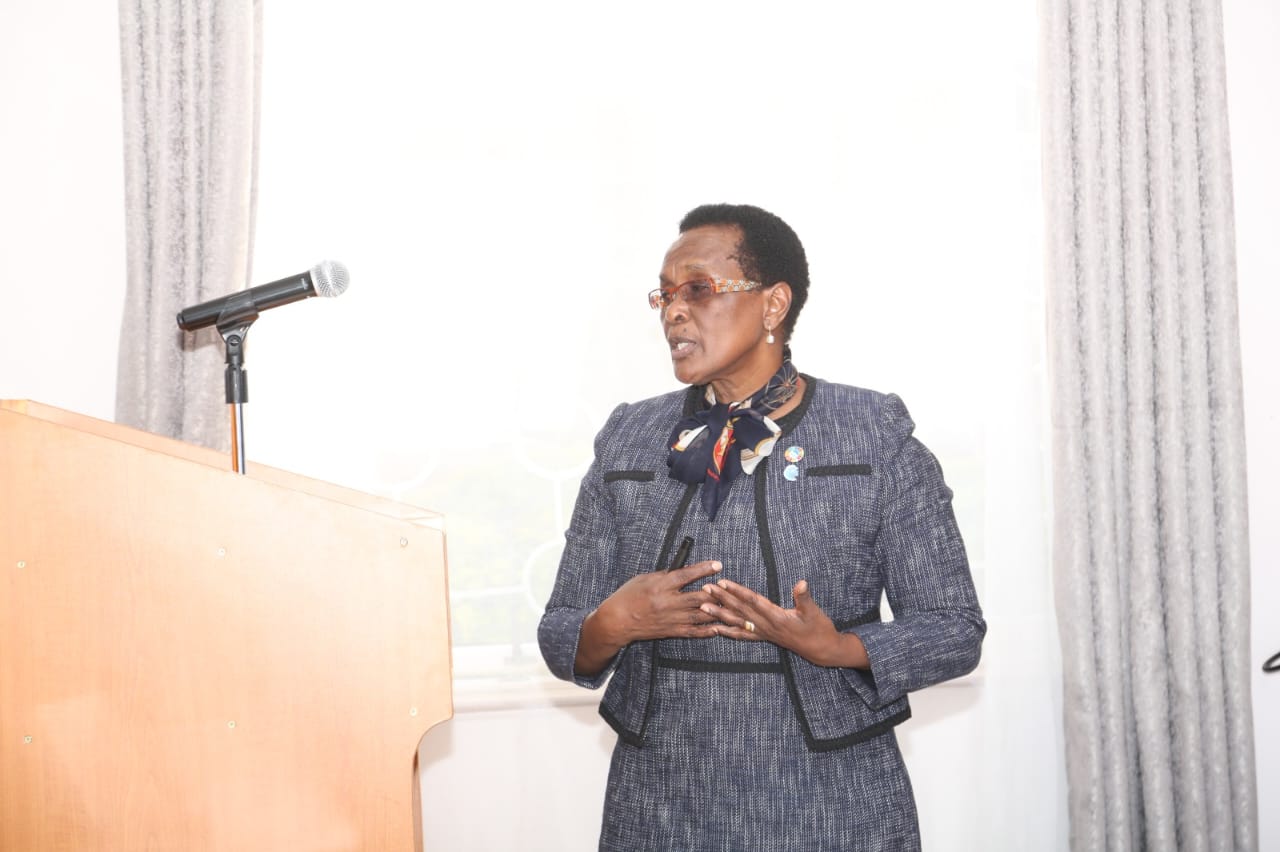
In the global push for diversity and inclusion, the maritime industry—historically one of the most male-dominated sectors—has often relied on policies and quotas to measure progress. However, a recent and profound intervention by Ambassador Nancy Karigithu, representing the Women in Maritime in Eastern and Southern Africa (WOMESA) at the 9th Annual Conference of the Association of African Maritime Administrations (AAMA) in Kampala, Uganda, has fundamentally shifted the conversation. Her message is clear and urgent: equality of opportunity on paper is not the same as equality in practice.
Karigithu’s insights, shared during a panel on Gender, Diversity, and Inclusion alongside IMO Secretary-General Arsenio Dominguez and other luminaries, cut through the bureaucratic noise. She argues that the greatest barriers to women’s advancement are not found in legislation, but in the everyday, often invisible, decisions made within the corridors of power. This is a critical distinction that every maritime administrator, CEO, and HR director on the continent must confront.
The Experience Paradox
The most striking observation from Karigithu’s address is what she terms the “experience paradox.” It is a common Catch-22 in the industry: women are often overlooked for career-defining technical assignments—such as ship inspections, casualty investigations, or participation in critical IMO committees—on the grounds that they lack the requisite experience. Yet, they are systematically denied the very assignments that generate that experience.
This is a systemic flaw in how African maritime institutions cultivate talent. If leadership continues to gatekeep high-stakes technical roles, the pipeline for female maritime executives will remain artificially narrow. True inclusion requires a deliberate dismantling of the “old boys’ network” that implicitly decides who is trusted with responsibility. It requires a commitment to distributing technical assignments equitably, ensuring that women are not merely present in the office, but are actively placed in the field where expertise is forged.
Measuring Authority, Not Just Representation
Karigithu’s framework for measuring progress is particularly insightful. She distinguishes between three critical stages of inclusion: representation, participation, and leadership.
· Representation: A seat at the table.
· Participation: A voice at the table.
· Leadership: The authority to shape the decisions made there.
Too many organizations stop at representation. They populate panels with women and proudly publish diversity statistics, yet fail to grant those women the authority to influence policy or command resources. As Karigithu notes, we must measure authority, not just representation. If a woman sits on a board but is never appointed to chair a committee or drive a strategic initiative, inclusion is merely performative.
The Power of Male Allyship
A pivotal moment of the Kampala panel was the testimony of IMO Secretary-General Arsenio Dominguez, who revealed that he has walked away from speaking engagements where no woman was on the panel—even as he was the sole man on their panel. This is the gold standard of male allyship. It demonstrates that true leadership involves using one’s privilege to enforce standards of equity. When the most powerful figures in global maritime refuse to participate in all-male platforms, they send a powerful message that the industry must change. Karigithu rightly noted that when leaders with influence insist on balanced stages, the sector takes notice.
A Blueprint for Institutional Change
Karigithu did not merely diagnose the problem; she proposed a pragmatic way forward. Her three priorities provide a roadmap for AAMA and WOMESA:
1. A formal framework for collaboration between WOMESA and AAMA to ensure women’s issues are integrated into the highest levels of maritime policy.
2. Concrete pathways to sea time, technical assignments, and scholarships. This directly addresses the experience paradox, ensuring women have the tangible qualifications required for promotion.
3. A joint mechanism for measuring progress and holding institutions accountable. Without metrics and accountability, diversity initiatives often become hollow promises.
Conclusion: The Ultimate Test of Inclusion
The African maritime sector is at a crossroads. With the blue economy expanding rapidly—driven by initiatives like the African Continental Free Trade Area (AfCFTA) and massive port infrastructure upgrades across the continent—the demand for skilled, capable leadership has never been higher. Africa cannot afford to exclude half of its talent pool.
Amb. Karigithu’s call to action serves as a vital reminder that the ultimate test of inclusion is not who has been permitted to enter, but who has been enabled to advance, empowered to decide, and held accountable for results. As AAMA and WOMESA move to institutionalize these priorities, the watchword must be “authority.” The maritime sector must stop merely inviting women to the table and start handing them the gavel.