


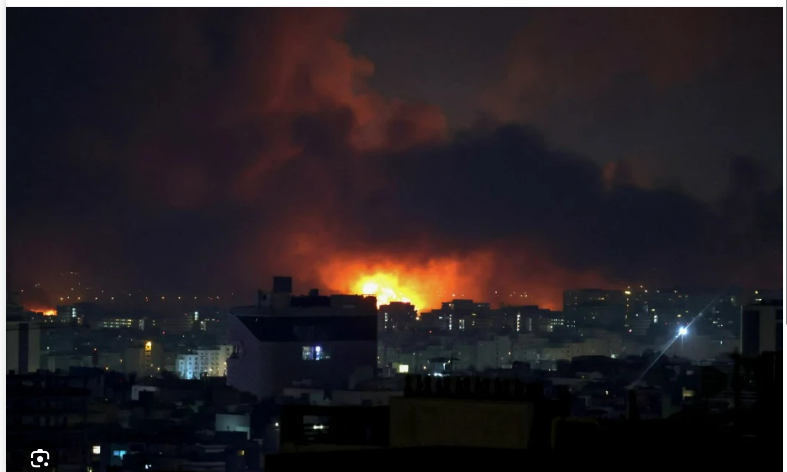
The war in Iran has continued to impact badly on the merchant maritime fleet with 17 vessels attacked since February 28.
The US-Israel versus Iran war is potentially the most devastating war on maritime vessels considering that the 17 vessels attacked translates to an attack of one vessel per day. At least two crew members in separate incidences have been killed and scores injured.
The United Kingdom Maritime Trade Organization (UKMTO), among other agencies that tracks and reports on maritime incidences, almost on real time, indicates that the 17 attacks occurred around the Strait of Hormuz, Persian Gulf, Gulf of Oman, Bahrain, and Fujairah (UAE), among other places.
Shipping companies are apprehensive as the war keeps escalating after President Donald Trump was reported on Sunday March 15, 2026 calling for support from allies while Iran was reported dismissing calls for negotiations and instead it heightened its military campaign to seize full control of the Strait of Hormuz.
Iran government has declared the Strait of Hormuz out of bound for any vessel without their permission, and the blockade is a revenge against the killing of Ayatollah Ali Khamenei and other senior government and military officials by US and Israel through bombings since February 28, 2026.
The following are some of the vessels that have suffered attacks: Mv MKD VYOM, a Marshall Islands-flagged crude tanker hit by a projectile off the Omani coast in north of Muscat whereby a crew member was killed;
Mv Hercules Star, a Gibralter-flagged oil bunkering tanker was stuck by a projectile in northwest of UAE’s Saqr in Ras Al Khaimah whereby the vessel caught fire but it was extinguished;
Mv Skylight, a Palau-flagged tanker reported to be US-sanctioned was attacked in the Strait of Hormuz in the north of Oman’s Kumzar whereby four crew members were injured while 16 others were evacuated;
Mv Stena Imperative, a US flagged products tanker, was stuck by two projectiles while on a dry dock at the port of Bahrain, whereby the attack triggered fire and prompted crew evacuation;
Mv Libra Trader, a Marshall Islands-flagged crude oil tanker was attacked near the port of Fujairah.
Other attack incidences involved Mv Gold Oak, a Panama-flagged bulker off the port of Fujairah; Mv Safeen Prestige, a Maltese-flagged container ship; Mv Sonangol Namibe, a Bahamas-flagged crude oil tanker was hit with explosives while anchoring at Iraq’s Khor al Zubeir port.
Also in the Strait of Hormuz a tugboat a tug boat was together with the ill fated Mv Safeen Prestige was also hit by a projectile while in the Persian Gulf there were reported crew injuries and evacuation from a drilling rig Arabia III.
An unnamed vessel was struck by a projectile in the Persian Gulf suffering structural damage on March 10. On the following day fire broke out on board Mv Mayuree Naree, a Thailand-flagged carrier after it was attacked within the Strait of Hormuz 11 nautical miles north of Oman.
On March 11, up to four vessels were attacked – Mv One Majesty, Mv Star Gwyneth, Mv Safesea Vishnu, and Mv Zefyros. One was attacked near UAE’s Ras Al Khaimah, the second one in Dubai and the other two Gulf near Iraq. A crew member for Mv Safesea Vishnu was reportedly killed in the attack. On March 12, Mv Source Blessing was attacked near Jebeil Ali upon which fire broke out on board.
The attacks on merchant vessels do not only damage the vessels, but also they impact on shipping industry at large. For instance, the attacks around the Strat of Hormuz has witnessed the traffic from the usual 138 vessels daily to just two vessels a day. This reflects a trade crisis for seaway that facilitates movement of 20 per cent of the world’s oil.
The Joint Maritime Information Centre (JMIC) was reported declaring the regional maritime threat level as “critical”. The targeting of vessels of all types regardless of whether they are connected to US or Israel has greatly hampered sea trade in the region and beyond.
Another critical impact involves a widespread electronic interference, including GPS spoofing and jamming, thereby affecting navigation systems. This has caused hundreds of vessels to reporting false positions, further hampering smooth shipping.