


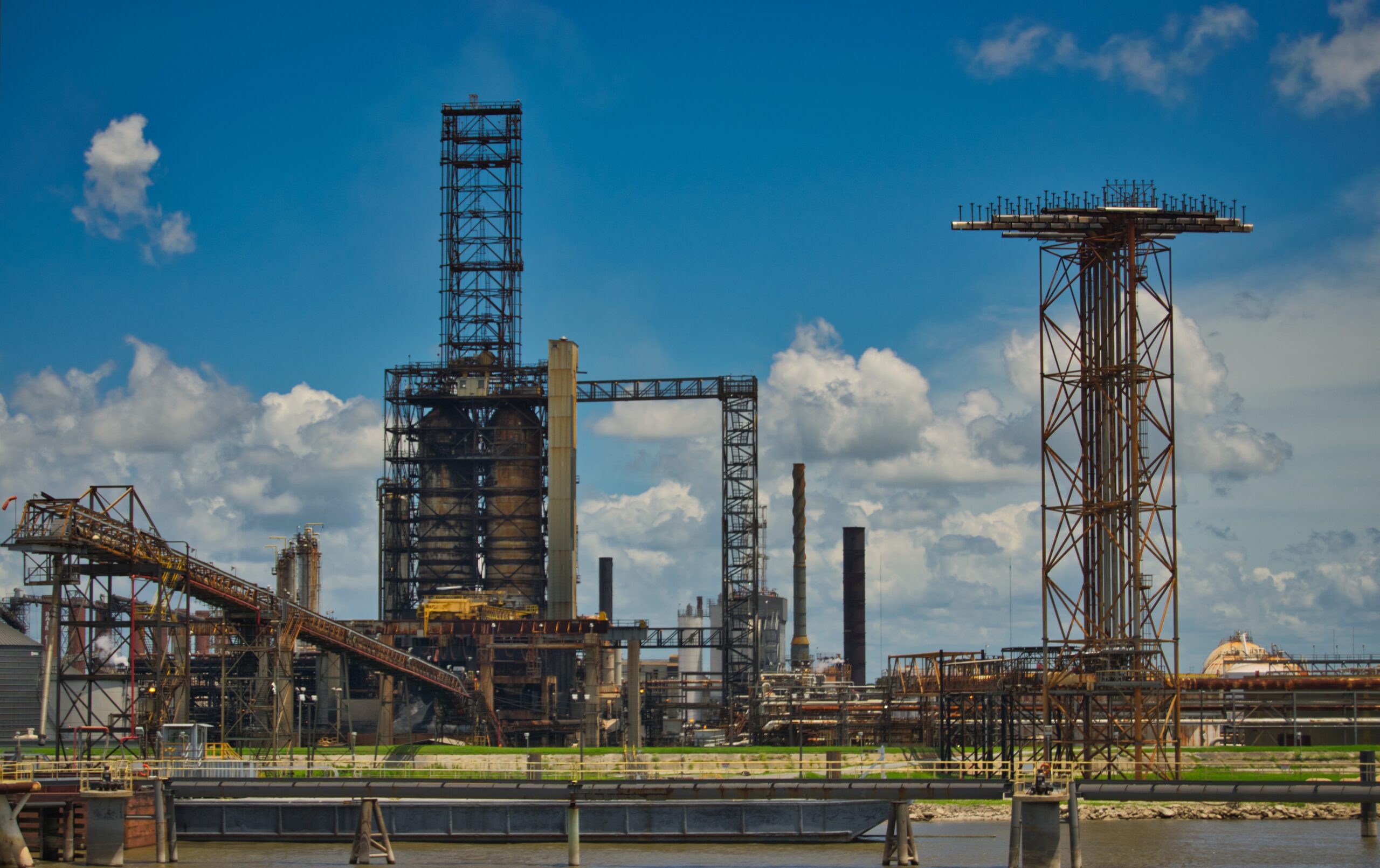
In 1969, the discovery of the Ekofisk field, one of the largest offshore oil deposits ever found, threatened to rewrite Norway’s destiny overnight. For a modest Scandinavian nation, it was the ultimate jackpot—the kind of windfall that has historically transformed countries, but just as often, destabilized them.
We know the familiar contours of this story. When a nation strikes oil, a predictable fever sets in. Wealth flows fast, government spending balloons, grandiose projects rise from the desert, and a mirage of short-term prosperity masks the rot of deeper structural weaknesses.
The usual result is economic distortion, gaping inequality, and a precipitous decline once the resource finally sputters out. Nations like Nigeria, Venezuela, and Libya are good examples of such — what happens when natural wealth becomes a curse rather than a blessing.
But Norway, standing on the precipice of that same fate, observed these trajectories and chose a radically different path. It was a path rooted not in the urgency of consumption, but in the discipline of restraint.
Eye on posterity
In 1990, the Norwegian Parliament established the Government Pension Fund Global. It was a mechanism with a deceptively simple mission: to ensure that the oil beneath the North Sea would benefit not just the present generation, but every Norwegian to come. It was a bold and, at the time, deeply counterintuitive act of national self-denial.
The principle was elegant in its simplicity: all surplus petroleum revenue would be channeled into a fund, which would then be invested globally across a vast, diversified portfolio. The government would be permitted to withdraw only a small, carefully calculated portion annually—initially capped at 4%, later reduced to a more sustainable 3%—to be spent on the public good. The rest would remain invested, not merely preserved, but grown for the future.
Skepticism was a given. Why, critics demanded, would a nation squirrel away wealth for unborn generations when there were pressing needs today and taxes that could be cut? The logic of immediate gratification is a powerful political force.
Yet, Norway’s leadership held firm to a long-term vision, embedding a powerful moral claim into the bedrock of its economic policy: that future citizens hold an equal title to the country’s natural inheritance. This intergenerational justice became the fund’s spiritual and economic foundation.
Sowing the seed
When the first deposit of $150 million was made in 1996, consistency became the nation’s greatest strength. Year after year, oil revenues were faithfully siphoned into the fund.
Year after year, those billions were invested in global markets—across equities, bonds, and real estate in over 70 countries. And year after year, a succession of governments from across the political spectrum resisted the siren song of deviation, even when the political pressure was immense.
Every election cycle brought demands for more spending. Every economic downturn created a chorus of voices insisting the reserves be tapped. Every crisis manufactured its own justification for an exception. Yet, with remarkable institutional integrity, Norway adhered to its framework. This steadfastness proved just as vital as the financial strategy itself.
Equally critical was the fund’s investment philosophy. It shunned the casino of high-risk speculation. Instead, managers adopted a patient, broad-based approach, gradually acquiring small stakes in thousands of companies worldwide—today, nearly 9,000 of them. The fund, in essence, chose to mirror global economic growth, relying not on outsmarting the market, but on the enduring power of diversification, patience, and scale.
The results are staggering. By 2000, the fund sat at $50 billion. A decade later, it had multiplied tenfold to $500 billion. It crossed the trillion-dollar threshold in 2017. Today, it exceeds $2 trillion, making it the largest sovereign wealth fund the world has ever seen. For a population of just 5.5 million people, this represents an almost incomprehensible financial cushion, a per-capita inheritance that secures the nation’s future.
But perhaps the most striking statistic is this: more than half of the fund’s value has come not from pumping oil, but from investment returns. Norway has successfully converted a finite, depleting resource into a perpetual, self-sustaining financial asset. The fund now generates more income from its global portfolio than the country earns from extracting its own oil and gas. The rigs in the North Sea could fall silent tomorrow, and the wealth would continue to flow.
The fund’s reach is now so vast that it owns roughly 1.5% of every publicly traded company on the planet, holding major stakes in giants like Apple, Microsoft, and Amazon.
In a subtle but profound way, global consumption—every iPhone purchase, every cloud-computing subscription—funnels a small dividend back to the Norwegian people, embedding the nation permanently into the fabric of the world economy.
Lesson to Kenya
For a country like Kenya, standing on the cusp of its own extractive revolution, the story of Norway is not just an inspiration—it is a mirror reflecting its own potential and a warning against the path not taken.
Since the discovery of oil in Turkana in 2012 and the discovery of vast mineral resources like titanium and rare earth elements, Kenya has stood at a similar precipice. The construction of a legal framework, including the 2014 and the latest 2025 Draft Sovereign Wealth Fund Bill, proves that the technical understanding is there. But as the Norwegian example shows, a law on paper is not the same as a legacy for the people.
The first, and most vital, lesson for Kenya lies in the distinction between institutional integrity and political impulse. Norway’s greatest achievement wasn’t the fund itself, but the discipline that protected it from the whims of every election cycle.
Kenya’s history, unfortunately, is littered with scandals where public funds were misappropriated—the Goldenberg and NYS affairs serve as painful markers of how easily wealth can be drained when safeguards are weak.
Deferring self interest
The 2025 Draft Bill proposes a board that includes political appointees, but to truly mirror Norway’s success, the day-to-day management must be insulated from political pressure and placed in the hands of independent, skilled professionals. The fund must be ring-fenced, untouchable by the short-term impulses that so often derail even the best intentions.
Closely related is the question of patience, the ultimate currency that Norway possessed in abundance. When Kenya first discovered oil, experts warned against the “spend it now” mentality that has trapped so many resource-rich nations. Norway’s fund took decades to reach meaningful size; it deliberately refrained from significant spending until the principal was so vast that it became self-sustaining.
Kenya must view its oil and minerals not as immediate cash to plug budget deficits—especially now, when the nation is navigating difficult fiscal waters and working closely with the IMF—but as seed capital for a distant future. It is precisely in moments of economic temptation, when a quick injection of cash seems most urgent, that the future is won or lost.
Urithi on paper
Kenya’s proposed three-part structure—comprising a Stabilization fund, a Strategic Infrastructure fund, and the Urithi (Future Generations) fund—is academically sound and thoughtfully designed. Yet the political reality is that Kenya still grapples with significant poverty and a considerable debt burden.
The temptation to raid the infrastructure component for short-term political gain will be immense, and resisting that pull will require the very same institutional integrity that Norway cultivated. Every project funded must be governed by strict, transparent rules to avoid the inflated contracts and corruption that have plagued past development efforts.
There is also a beautiful irony in Norway’s wealth that Kenya would do well to study: by investing almost entirely outside its own borders, Norway now owns 1.5% of every publicly listed company on the planet. It profits from global consumption, from the success of economies far removed from the North Sea.
Kenya’s proposed Urithi Fund wisely prohibits heavy investment in domestic markets to avoid overheating the local economy. If managed with discipline, Kenya’s future generations won’t rely solely on Kenyan taxes or Kenyan enterprise; they will hold a stake in the entire world economy, owning shares in the very industries that drive global progress.
Finally, Norway’s model succeeded because it answered a fundamental question with clarity and fairness: who owns the wealth? The answer was everyone, equally, across generations. In Kenya, resource discovery has too often led to community conflict, as seen in Turkana and Kwale, where tensions over who benefits have simmered beneath the surface.
A sovereign wealth fund that is transparent, well-governed, and perceived as fair can help de-escalate such tensions. Ensuring that counties receive their share and that local communities feel the benefits without disrupting the national savings pool is not just a political necessity—it is a moral one.
Benefits for eternity
Norway’s oil will eventually run out. Whether that happens in thirty or fifty years is, in a sense, irrelevant. By the time the last barrel is extracted, the country will have built a financial engine capable of sustaining its prosperity indefinitely. The oil was never the real treasure; it was merely the seed capital for a far more durable asset.
In the end, Norway’s achievement is not in finding oil, but in transforming a temporary geological advantage into a permanent national legacy. It serves as a powerful rejoinder to the shortsightedness that grips so many resource-rich nations. It is a reminder that the true measure of wealth is not how quickly it is spent, but how wisely it is stewarded.
In choosing to invest in its future rather than exhaust its present, Norway did something most nations never do: it chose patience over impulse, stewardship over consumption, and, ultimately, its grandchildren over itself.
Norway’s rigs will eventually fall silent, but their returns will flow forever. Kenya’s rigs are just warming up. The choice for Nairobi is the same one that faced Oslo in 1990: spend the windfall on the urgent today, or invest it for the generations who will inherit the country tomorrow.
If Kenya can find the discipline to manage its Urithi—its inheritance—with even a fraction of Norway’s restraint, it will prove that Africa is not destined to be a cautionary tale, but can instead be the architect of its own perpetual prosperity.