


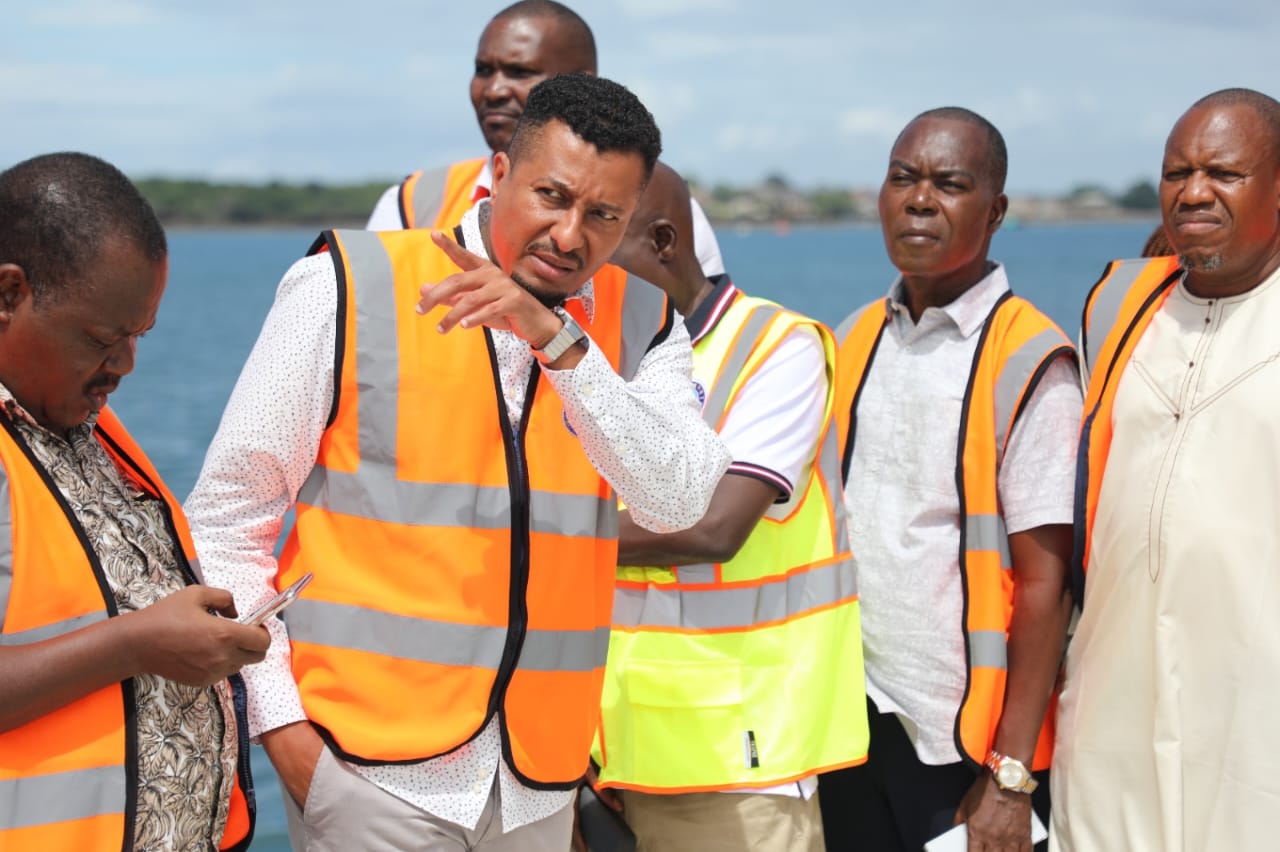
At first glance, the recent inspection tour of the Shimoni Fish Port by Principal Secretary for Transport, Mohamed Daghar, might seem like a routine administrative exercise—another government official ticking off a completed infrastructure project. But beneath the surface lies a deeper, more consequential narrative about Kenya’s evolving relationship with its maritime resources and the long-overdue awakening of its coastal economy.
Shimoni, historically a quiet coastal outpost known more for its proximity to the Kisite-Mpunguti Marine Park than for industrial activity, is now being repositioned as a strategic node in Kenya’s blue economy. The presence of senior Kenya Ports Authority (KPA) officials—led by General Manager of Cargo Operations Dr. Sudi Mwasinago, on behalf of CEO Capt. William Ruto—underscores the institutional weight behind this transformation. This is not merely a fisheries project; it is a logistics, trade, and economic diversification initiative with national implications.
Completed in June 2025 and handed over to KPA in mid-July, the Shimoni Fish Port represents a deliberate shift in how Kenya approaches its marine resources. For decades, the country’s fisheries sector has been marked by underinvestment, post-harvest losses, and limited value addition. Fisherfolk have operated largely at the mercy of rudimentary systems—selling fresh catch at low margins, often without access to cold storage or reliable markets. The result has been a paradox: a country with vast coastal potential importing fish to meet domestic demand. Shimoni is designed to close that gap.
The port’s infrastructure tells a compelling story. A fully equipped jetty enhances landing efficiency and safety. A fish processing plant introduces the critical element of value addition—transforming raw catch into export-ready products. Cold storage facilities, ice flake machines, and a blast freezer address one of the most persistent challenges in the fisheries value chain: preservation. These are not ornamental additions; they are the backbone of a modern fisheries economy.
But infrastructure alone does not guarantee transformation. The real question is whether Shimoni will catalyze systemic change or simply stand as another underutilized asset—a fate that has befallen too many well-intentioned projects across the continent. For Shimoni to succeed, it must be embedded within a broader ecosystem of policy coherence, market access, and community integration. The promise of boosting fish production and exports will only be realized if local fishermen are effectively organized, trained, and connected to these new facilities. Without this human dimension, the port risks becoming an enclave of potential rather than a driver of inclusive growth.
There is also the question of scale. Shimoni alone cannot shoulder the burden of revitalizing Kenya’s fisheries sector. However, it can serve as a model—a proof of concept demonstrating what is possible when infrastructure, governance, and market dynamics align. If replicated strategically along the coast—from Lamu to Mombasa to Kwale—Kenya could finally begin unlocking the full value of its 640-kilometer coastline.
Equally significant is the port’s potential to strengthen trade linkages. In an era where regional and global markets increasingly demand traceability, quality assurance, and timely delivery, facilities like Shimoni position Kenya to compete more effectively. The integration of cold chain logistics means that fish products can reach international markets in optimal condition, opening doors to higher-value export destinations. This is not just about increasing volumes; it is about elevating standards and capturing better prices.
Tourism, too, stands to benefit. Shimoni’s proximity to marine parks and its emerging identity as a fisheries hub create opportunities for niche tourism experiences—seafood trails, cultural exchanges, and marine-based activities that go beyond traditional beach tourism. In this sense, the port becomes a bridge between economic sectors, reinforcing the interconnected nature of the blue economy.
Yet, as with all infrastructure projects, governance will be the ultimate determinant of success. KPA’s stewardship of the facility will be closely watched. Efficiency, transparency, and responsiveness to stakeholder needs must define its management approach. The involvement of experienced maritime professionals within KPA is encouraging, but institutional performance must translate into tangible outcomes for the communities the port is meant to serve.
There is also a strategic dimension that cannot be ignored. As global attention increasingly turns to maritime resources—whether for food security, energy, or trade—countries that invest early and wisely will secure a competitive advantage. Kenya’s neighbors, including Tanzania and Mozambique, are making similar moves to develop their coastal and offshore assets. Shimoni, therefore, is not just a local project; it is part of a regional race to harness the economic potential of the Indian Ocean.
The visit by PS Daghar should thus be seen as more than ceremonial. It is an opportunity to reaffirm government commitment, identify operational gaps, and ensure that the project transitions smoothly from completion to full functionality. Inspections, when conducted with rigor and followed by action, can serve as critical checkpoints in the lifecycle of public investments.
Ultimately, Shimoni Fish Port embodies both promise and responsibility. It promises to uplift livelihoods, enhance trade, and redefine Kenya’s coastal economy. But it also carries the responsibility of delivering on these expectations in a sustainable and inclusive manner.
Kenya has long spoken of the blue economy as the next frontier of growth. With projects like Shimoni, the rhetoric is finally taking physical form. The challenge now is to ensure that this form translates into function—and that the benefits extend beyond policy documents and official tours to the fishermen casting their nets at dawn, the traders navigating new markets, and the communities that have waited too long to share in the wealth of the sea.
If managed well, Shimoni could mark the beginning of a quiet but profound reimagining of Kenya’s maritime future. If mismanaged, it risks becoming yet another missed opportunity. The difference will lie not in the infrastructure itself, but in the choices made from this point forward.