


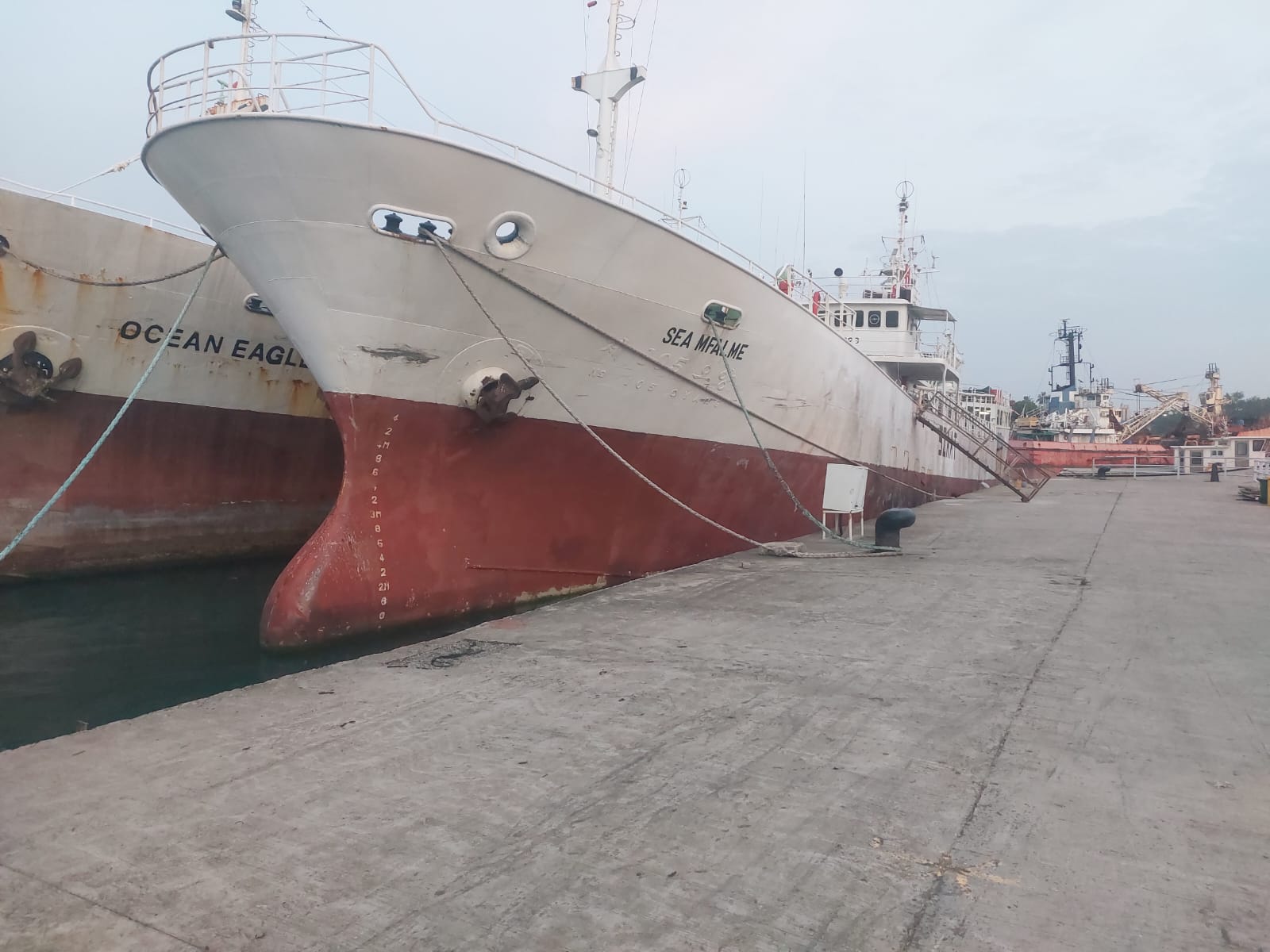
When the Kenya Maritime Authority (KMA) issued its press release on 16 April 2026 acknowledging the detention of M/V Sea Mfalme in the United Republic of Tanzania, it chose its words with considerable care. The statement confirmed that a Kenyan-flagged vessel had been detained, that the matter was under review, and that established intergovernmental frameworks were being engaged. What it did not say—and what has since come to light—is that the vessel was carrying seventy undocumented migrants when Tanzanian authorities moved against it. That single omission transforms what might otherwise have been a routine port State control incident into something of an altogether different and more troubling character.
The detention of M/V Sea Mfalme is not, in the first instance, a story about one vessel or one voyage. It is a story about the robustness of Kenya’s maritime regulatory architecture, the credibility of its flag State obligations, and the seriousness with which the country’s authorities are prepared to confront the most dangerous and exploitative trade operating in the waters of the Western Indian Ocean. Migrant smuggling at sea—the use of vessels to transport undocumented persons across international boundaries for profit—sits at the intersection of maritime law enforcement, international humanitarian law, and organised crime. For a flag State, the implication of its registered tonnage in such activity is not merely embarrassing. It is a direct challenge to the integrity of the registry itself.
Under the United Nations Convention on the Law of the Sea and the Protocol against the Smuggling of Migrants by Land, Sea and Air—a supplementary instrument to the 2000 Palermo Convention—Kenya, as the flag State of M/V Sea Mfalme, bears primary jurisdiction over the vessel and its conduct on international waters. Tanzania’s decision to detain the vessel falls within its rights as a coastal and port State, particularly if the vessel was operating within its territorial sea or entered a Tanzanian port. The legal frameworks are clear. What is less clear, and what demands urgent accounting, is how a Kenyan-registered vessel came to be engaged in moving seventy undocumented persons through the waters of a neighbouring EAC member state without the matter having attracted the attention of the KMA’s regulatory machinery beforehand.
This question strikes at the heart of flag State responsibility. A ship registry is not merely an administrative catalogue of vessels flying a national flag. It is, in international maritime law and practice, an instrument of sovereign responsibility. When Kenya registers a vessel, it assumes the obligation to ensure that the ship is seaworthy, properly crewed, correctly documented, and operated in accordance with applicable international conventions. The International Maritime Organization’s flag State performance assessment frameworks—most notably the IMO Member State Audit Scheme—exist precisely to hold flag States accountable for the rigour with which they discharge these obligations. A detention arising from migrant smuggling raises an immediate question: did the KMA conduct adequate due diligence on the vessel’s ownership, its operational patterns, and the commercial activities of those to whom the Kenyan flag was extended?
To its credit, the KMA press release affirms the Authority’s commitment to safeguarding the credibility of Kenya’s ship registry. But credibility is not sustained by affirmation alone. It is sustained by demonstrated regulatory rigour—by the willingness to ask hard questions of vessel operators, to conduct meaningful inspections, and, where necessary, to withdraw the privilege of Kenyan registration from those who abuse it. If the investigation now underway reveals that M/V Sea Mfalme’s involvement in migrant smuggling was not an isolated act of opportunism but a pattern of operation that should have been visible to an attentive regulator, then the KMA will face not merely reputational pressure but fundamental questions about the adequacy of its oversight systems.
There is, too, a dimension to this incident that extends beyond the bilateral and regulatory. Tanzania and Kenya are partners within the East African Community, a regional integration framework whose maritime dimension—including shared coastline management, port interconnectivity, and blue economy cooperation—depends on a foundation of mutual regulatory trust. The detention of a Kenyan-flagged vessel carrying undocumented migrants in Tanzanian waters is precisely the kind of incident that, if handled poorly, can strain that trust. The invocation in the KMA’s statement of “intergovernmental and regulatory frameworks” suggests that diplomatic channels are being engaged alongside legal ones—a prudent approach, but one that must not be allowed to dilute the accountability that this incident demands.
The seventy individuals found aboard M/V Sea Mfalme are not abstractions in a regulatory dispute. They are human beings who, in all likelihood, paid substantial sums to criminal networks for the prospect of passage—and who now find themselves detained in a foreign country, their fates subject to processes they do not control and cannot readily navigate. The humanitarian dimension of this incident must not be lost in the maritime governance discourse. Kenya, Tanzania, and the relevant UN agencies—including UNHCR and IOM—have obligations toward these individuals that are independent of whatever criminal proceedings may follow against the vessel’s operators. How those obligations are discharged will itself be a measure of both countries’ commitment to the human rights frameworks they have endorsed.
For Kenya’s maritime sector more broadly, this incident is a sobering moment. The country has invested considerable political capital in its blue economy ambitions—in positioning itself as a hub of maritime activity, a credible registry State, and a leader in Indian Ocean maritime security. Those ambitions are not served by a ship registry that can be used as cover for criminal operations. Nor are they served by a regulatory response that prioritises optics over accountability. What the sector needs from the KMA now is not diplomatic language, but a clear, time-bound commitment to a thorough investigation—one whose findings are made public, whose consequences are proportionate, and whose lessons are visibly incorporated into the Authority’s regulatory practice.
The credibility of Kenya’s flag State is a collective asset. It underpins the international acceptability of Kenyan seafarers’ certificates, the standing of Kenyan-owned vessels in foreign ports, and the broader reputation of the country within the IMO framework. That asset is not so robust that it can absorb repeated blows without consequence. The KMA’s response to the detention of M/V Sea Mfalme will be read—by regional partners, the international maritime community, and Kenya’s own maritime professionals—as a statement of what the Authority believes the Kenyan flag is worth. It would be wise to ensure that response rises to the gravity of the moment.