


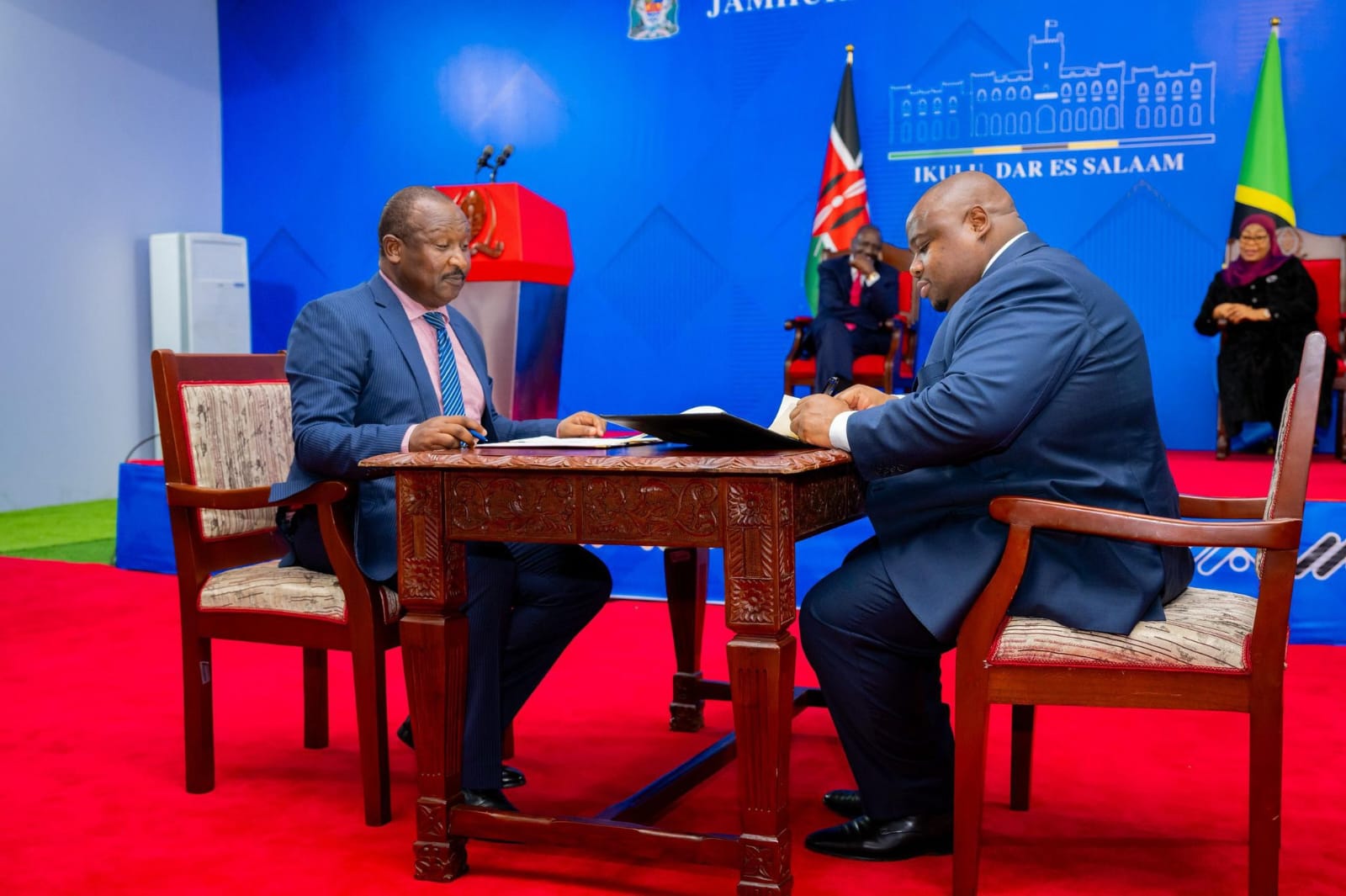
Kenya and Tanzania recently entered into a Memorandum of Understanding, which provides for recognition of maritime certificates from both countries and coordination of water transport management.
The MOU was signed at State House in Dar es Salaam under the leadership of Presidents William Ruto and Samia Suluhu Hassan.
Operationalized by Omae Nyarandi, the agreement signals a deliberate shift toward regulatory harmonization in a region long fragmented by disjointed maritime systems.
The move marks a strategic inflection point for the future of maritime governance in East Africa.
At its heart, the mutual recognition of maritime certificates tackles a persistent barrier for East African seafarers: limited labor mobility. For decades, mariners have navigated not only oceans but also bureaucratic silos, where qualifications earned in one country were rarely accepted in another.
Aligning certification standards will enable Kenya and Tanzania to unlock a shared labor market for seafarers, marine engineers, and port professionals. This long-overdue reform promises to expand employment opportunities while raising the quality of the region’s maritime human capital.
Also, the MoU lays the groundwork for harmonized safety protocols, training benchmarks, and vessel operations between two of the region’s most strategically positioned maritime nations.
In an era where compliance with global conventions—such as those of the International Maritime Organization—is non-negotiable, regional alignment is no longer optional; it is essential. A cohesive regulatory environment reduces substandard shipping practices, strengthens port state control mechanisms, and enhances East Africa’s credibility along international shipping corridors.
The economic stakes are equally high. The ports of Mombasa and Dar es Salaam serve as vital gateways for landlocked economies across East and Central Africa. Better coordination in water transport management can streamline cargo movement, slash turnaround times, and lower the cost of doing business. In today’s fiercely competitive global logistics landscape, such efficiencies are not merely desirable—they are decisive.
But the promise of this MoU will ultimately be judged by its execution. Harmonization on paper must translate into uniform enforcement on the water. That requires sustained institutional collaboration between the Kenya Maritime Authority and the Tanzania Shipping Agencies Corporation, investment in training institutions, and the political will to resolve discrepancies in interpretation and practice.
A broader regional question also looms. If successfully implemented, this bilateral framework could become a template for the entire East African Community. A truly integrated maritime regime—spanning certification, safety, and port operations—would position East Africa as a unified maritime bloc, capable of negotiating more effectively in global shipping and trade arenas.
Still, caution is warranted. Mutual recognition must not become a race to the bottom, where standards are diluted for convenience. Instead, it should drive a race to the top—compelling maritime training institutions in both countries to meet and exceed international benchmarks. The global credibility of East African seafarers depends on it.