


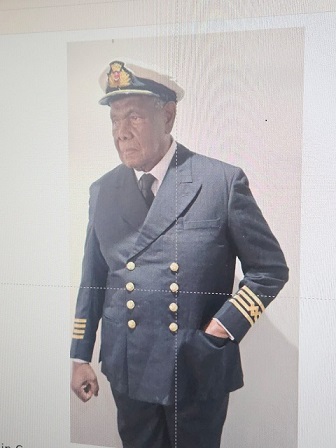
In an era when Kenya’s maritime heritage is often reduced to port statistics and blue economy rhetoric, the recent publication of Captain Musa M. Ittiso’s memoir arrives like a long-awaited monsoon—refreshing, overdue, and laden with hard-earned wisdom.
As one of East Africa’s most accomplished merchant mariners, Ittiso offers more than a personal story; he delivers an essential chapter in Kenya’s post-independence narrative of self-assertion on the global stage. The 400-page book is titled My Seafaring Career and Beyond: An Autobiography.
Qualified as a Master Mariner at Southampton in 1968—barely five years after Kenya gained independence—Ittiso shattered what contemporaries rightly called a colonial glass ceiling. In an industry where command positions were largely reserved for Europeans and a select few Asians, a young East African earning the right to captain foreign ocean-going vessels under rigorous UK standards was a major feat.
The biography vividly details the grueling training, the solitude of the sea, the subtle and not-so-subtle prejudices encountered aboard, and the exhilaration of navigating vast oceans—offering a firsthand window into that pivotal transition from colonial subject to global professional.
A life at sea, a legacy on shore
What makes Ittiso’s account compelling is its breadth. Born into the vibrant coastal culture of Zanzibar and Mombasa, he carried the seafaring DNA of the Swahili world—dhow traders, Indian Ocean cosmopolitans—into the modern merchant marine.
The memoirs recount not only technical mastery of navigation, cargo management, and crisis response but also the deeply human elements: the cultural negotiations required when commanding multinational crews, the immense weight of responsibility during storms or mechanical failures, and the quiet pride of returning home with stories that inspired younger generations.
In his post-sea career, Captain Ittiso transitioned into pivotal shore-based roles, most notably as Managing Director of Protection & Indemnity (P&I) Kenya Limited. In this capacity, he has served as a steady hand guiding East African shipping interests through the complexities of international maritime law, insurance, and risk management.
His work has helped safeguard vessels in some of the world’s busiest—and occasionally most perilous—waters, from the Western Indian Ocean to the Gulf of Aden.
The memoirs reflect thoughtfully on these shifts: from the romance and rigor of life underway to the bureaucratic and commercial realities of port operations. They also touch on Kenya’s evolving maritime infrastructure—the challenges of port efficiency, the transformative potential of the Lamu Port-South Sudan-Ethiopia Transport (LAPSSET) corridor, and the persistent skills gap that continues to hinder fuller Africanization of the sector.
Timely book
At a time when Kenya and the broader East African region are aggressively courting the blue economy—fisheries, offshore energy, shipping, and tourism—Captain Ittiso’s reflections serve as both inspiration and cautionary tale. He embodies excellence without apology.
His qualification in 1968 was not gifted; it was earned through competence that transcended race and origin. In today’s discourse around equity and localization, his story reminds us that true empowerment comes through mastery, not mandates.
The book will prove invaluable to researchers, historians, maritime training institutions, policymakers, marine cadets, maritime transport economists, public policy experts, the business community, and current and future generations of seafarers across Africa.
It stands as both a historical record and a practical guide, preserving institutional memory while illuminating pathways for the sector’s continued Africanization and growth.
The book also candidly addresses the barriers that remain. How many young Kenyans today, equipped with ambition and aptitude, still face structural hurdles in accessing world-class maritime training? How can we better support cadets and officers so that Ittiso’s singular breakthrough becomes a well-trodden path?
Undoubtedly, his memoirs is bound to ignite renewed investment in institutions like the JKUAT,Dar Es Salaam Maritime Institute,Mount Kenya University Maritime Academy,Bandari Maritime Academy and the Technical University of Mombasa, where his name already carries significant weight.
Furthermore, in an age of climate anxiety and geopolitical tensions at sea, voices like Ittiso’s—seasoned by decades of practical experience—offer grounded perspective. The Indian Ocean is not an abstract highway; it is a lived reality of trade winds, piracy threats (however diminished), supply chain vulnerabilities, and environmental stewardship.
Coastal cosmopolitanism
Beyond policy and profession, Ittiso’s life celebrates Mombasa and the Kenyan coast as crucibles of global connection. His story weaves together African resilience, Islamic maritime traditions, British professional standards, and a distinctly Kenyan pragmatism. It stands as a powerful rebuke to any narrow nationalism that would diminish the hybrid vigor of coastal Kenya.
As an editorial voice rooted in the region, we applaud this publication. Memoirs of this nature humanize history. They move maritime affairs from dry technical reports into the realm of lived experience—ambition, sacrifice, and triumph. Captain Ittiso did not simply sail ships; he navigated an era of profound transformation.
For young dreamers in Kibera or Likoni, for maritime students in Mombasa, Ghana , Cape Verde,Dar Es Salaam and for policymakers in Nairobi, the memoirs of Capt. Musa Ittiso should be required reading.
He vividly reminds us that Kenya’s place on the world’s oceans was never inevitable—it was claimed by individuals of courage and skill. In sharing his voyage, Captain Ittiso has not only closed a personal chapter but opened new horizons for the nation’s maritime future.
The tides of history wait for no one. Thanks to pioneers like him, Kenya stands better positioned to ride them.